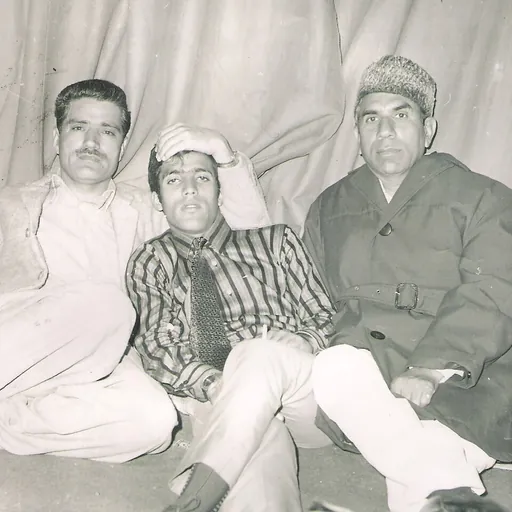
Maqbool Bhat
Kashmiri separatist
About Maqbool Bhat
Lived 1938 – 1984 (aged 45).
Maqbool Bhat (18 February 1938 – 11 February 1984) was a Kashmiri separatist, who founded the National Liberation Front (NLF), which was a precursor to the present day Jammu Kashmir Liberation Front (JKLF). He is called the "Father of the Nation of Kashmir (Baba-e-Qaum)” by the locals. He was arrested and sentenced to a double death sentence. He was executed by hanging on 11 February 1984 in Tihar Jail in Delhi.
Early life Muhammad Maqbool Bhat was born on 18 February 1938 in the Trehgam in the Kashmir Valley of the princely state of Kashmir and Jammu in British India (now Jammu and Kashmir, India) into a Kashmiri Muslim family. His father was called Ghulam Qadir Bhat. His mother died when Maqbool was 11 years old, and his father remarried.
After studying locally, Bhat studied at the St. Joseph's School and College in Baramulla, where he graduated with a Bachelor of Arts degree in History and Political Science around 1957.
Political career
The feudal system under the princely state and the politics of Sheikh Abdullah after independence shaped Bhat's political views. During the college days, he was involved with the student activities of the Plebiscite Front (founded by Mirza Afzal Beg when Sheikh Abdullah was in prison for canvassing for independence). In December 1957, Sheikh Abdullah was released, leading to agitations. He was rearrested in April 1958. The student activists of the Plebiscite Front were also targeted at this time, causing Maqbool Bhat to leave for Pakistan in August 1958.
Bhat joined the Peshawar University, studying for an MA Urdu Literature in Peshawar, Pakistan He worked for some time as a journalist for the local newspaper Anjaam. In 1961, Bhat contested in the 'Basic Democracy' elections introduced by President Ayub Khan's military regime, and won the Kashmiri diaspora seat from Peshawar. The elected government of K. H. Khurshid lasted till 1964, when Pakistan forced its resignation.
In April 1965, the Azad Kashmir Plebiscite Front was formed in Muzaffarabad at the initiative of Abdul Khaliq Ansari, its president, and Amanullah Khan, its general secretary. Maqbool Bhat was appointed as the publicity secretary, owing to his journalistic background. Journalist Arif Jamal states that, the participants drove to an unguarded location of the Kashmir Line of Control at Suchetgarh and, bringing back soil from the Indian-held Kashmir, took an oath that they would work exclusively for the liberation of Jammu and Kashmir.
Amanullah Khan and Maqbool Bhat also wanted to set up an armed wing for the Plebiscite Front, but the proposal did not get the majority support in the Plebiscite Front. Undeterred, they established an underground group called National Liberation Front (NLF), obtaining some support for it in August 1965. The group was fashioned after the Algerian Front de Libération Nationale. Major Amanullah, a former soldier in the Azad Kashmir forces, was in charge of the armed wing while Amanullah Khan and Mir Abdul Qayoom took charge of the political and financial wings. Maqbool Bhat was made responsible for the overall coordination. All the members swore in blood that they would be ready to sacrifice their lives for the objective of the NLF, viz., to create conditions in Jammu and Kashmir that enable its people to demand self-determination. The organisation was successful in recruiting members from Azad Kashmir, and obtained backing from the bureaucracy of the state. Long after their release, Bhat was still suspected of being a double agent. Pakistan extended little support to the other Indian youth that crossed over into Azad Kashmir for arms and training. Praveen Swami suggests that, as Pakistan was waging a covert war through its own network in Jammu and Kashmir, it did not want those official operations jeopardised by the amateur operators of the NLF.
Ganga hijacking Hashim Qureshi, a Srinagar resident who went to Peshawar on family business in 1969, met Maqbool Bhat and got inducted into the NLF. He was given an ideological education and lessons in guerrilla tactics in Rawalpindi. In order to draw the world's attention to the Kashmiri independence movement, the group planned an airline hijacking fashioned after the Dawson's Field hijackings by the Popular Front for the Liberation of Palestine. Hashim Qureshi, along with his cousin Ashraf Qureshi, was ordered to execute one. A former Pakistani air force pilot Jamshed Manto trained him for the task. However, Qureshi was arrested by the Indian Border Security Force when he tried to reenter into Jammu & Kashmir, India via LoC with arms and equipment. He negotiated his way out by claiming to help find other conspirators that were allegedly in the Indian territory, sought an appointment in the Border Security Force to provide such help. Maqbool Bhat sent Qureshi replacement equipment for the hijacking, but it fell into the hands of a double agent, who then turned it over to the Indian authorities. Undeterred, the Qureshis made look-alike explosives out of wood and hijacked an Indian Airlines plane called Ganga on 30 January 1971.
The hijackers landed the plane at Lahore and demanded the release of 36 NLF prisoners lodged in Indian jails. However, they succumbed to pressure from the airport authorities and ended up releasing all the passengers and the crew. Years later, Ashraf Qureshi admitted that they were naive and didn't realise that "the passengers were more important than the actual plane." Pakistan's Prime Minister Zulfikar Bhutto showed up at the airport and paid a handsome tribute to the hijackers. Indian Government then refused to carry out the demands. The plane lay on the tarmac for eighty hours, during which the Pakistani security personnel thoroughly searched the air plane and removed papers and postal bags they found in it. Eventually, upon the advice of the authorities, Hashim Qureshi burnt the plane down.
For some time, the Qureshis were lauded as heroes. After India reacted by banning overflight of Pakistani planes over India, the Pakistani authorities claimed that the hijack was staged by India, and arrested the hijackers and all their collaborators. A one-man investigation committee headed by Justice Noorul Arifeen declared the hijacking to be an Indian conspiracy, citing Qureshi's appointment in the Border Security Force. In addition to the hijackers, Maqbool Bhat and 150 other NLF fighters were arrested. Seven people were eventually brought to trial (the rest being held without charges). The High Court acquitted them of treason charges. Hashim Qureshi alone was sentenced to seven years in prison. Ironically, Ashraf Qureshi was released even though he was an equal participant in the hijacking. This is said to have been a deal made by Zulfikar Bhutto, by now the President of Pakistan, who declared that he would convict one hijacker but release the other.
Amanullah Khan was also imprisoned for 15 months in a Gilgit prison during 1970–72, accused of being an Indian agent. He was released after protests broke out in Gilgit. Thirteen of his colleagues were sentenced to 14 years in prison, but released after a year. According to Hashim Qureshi, 400 activists of the Plebiscite Front and NLF were arrested in Pakistan after the Ganga hijacking.
Legacy Five years after Bhat's hanging, the Jammu Kashmir Liberation Front (JKLF) launched a militant movement for the separation of the UT of Jammu & Kashmir from India. Since his death, the JKLF has demanded that the mortal remains of the party's founder, which were buried inside the Tihar Jail, be handed over. Separatist leaders also call for shutdown each year, which is observed in the Valley to mark his anniversary of death. JKLF announced a ceasefire in 1994.
On 4 November 1989, JKLF militants allegedly shot dead judge Neelkanth Ganjoo, who had presided over the Amar Chand murder trial, and declared sentence of death on Maqbool Bhat.
Don’t just read it —
keep it.
Full-length biographies made to live with: read them, listen on the way to work, watch them tonight.
- E-book
- Audio
- Video
Instant download · yours to keep · every purchase keeps this site free
Important facts
People in Maqbool Bhat's life
Named in this biography and alive at the same time
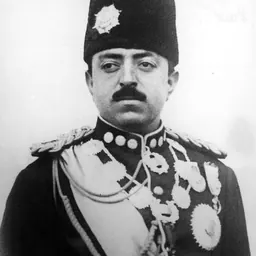

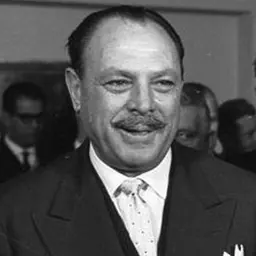



Contemporaries
People whose lives overlapped Maqbool Bhat's



Frequently asked questions
Who was Maqbool Bhat?
Kashmiri separatist (1938-1984)
When was Maqbool Bhat born?
Maqbool Bhat was born on 18 February 1938 in Srinagar.
When did Maqbool Bhat die?
Maqbool Bhat died on 11 February 1984 in New Delhi.
What was Maqbool Bhat known for?
Maqbool Bhat was known for Kashmiris.
Sources & further reading
Cite this page
APA: Biography.guide. (2026). Maqbool Bhat. https://biography.guide/maqbool-bhat/
MLA: "Maqbool Bhat." Biography.guide, https://biography.guide/maqbool-bhat/.
Chicago: "Maqbool Bhat." Biography.guide. https://biography.guide/maqbool-bhat/.
Data last updated: 2026-09-23 · Spot an error? Report a correction.
Portrait: Wikimedia Commons · author & licence
Page generated 2026-09-27 05:08 UTC