
About Mao Kun
Lived 1512 – 1601 (aged 88–89). Mao Kun was a Chinese politician, essayist, bibliophile, literary critic and writer.
Mao Kun (1512–1601) was a Ming dynasty Chinese writer, collector, and government official.
Biography Mao Kun was from Gui'an County (present-day Wuxing, Zhejiang) in eastern Ming China. He spent his youth studying the Confucian classics and successfully passed the civil service examinations, eventually achieving the highest level—the palace examination—and earning the jinshi degree in 1538. He then embarked on his official career, starting as a magistrate in Qingyang and later in Dansi. He was later transferred to the Ministry of Rites as a secretary and also worked in the Bureau of Records of the Ministry of Personnel. He also served in various provinces, including as an assistant to the prefect of Guangping, assistant commander of the regional defense command in Guangxi, assistant provincial administrator of Henan, and vice commander of the regional defense command in Daming. Due to injuries sustained in battle, he retired from government service and focused on his literary pursuits.
He was part of a group of writers, including Tang Shunzhi, Wang Shenzhong, and Gui Youguang, who held the works of Tang and Song period authors in high regard, in contrast to the earlier and later Seven Masters of the Ming who praised poets from the High Tang era and earlier, as well as Han authors in prose. He compiled the anthology Tang–Song badajia wenchao , which featured works by eight renowned Tang and Song writers: Han Yu, Liu Zongyuan, Ouyang Xiu, Su Shi, Su Xun, Su Zhe, Wang Anshi, and Zeng Gong. This anthology gained widespread popularity and was used as a source of texts by these authors in many schools. He also delved into literary theory, believing that writing was a manifestation of the Way (Dao). He believed that in order to find the Way, a writer should first study the works of more recent authors and then gradually move back to the masters of antiquity.
He was credited with creating the Mao Kun map, which was included in the military encyclopedia Wubei Zhi, compiled by his grandson Mao Yuanyi. The map, consisting of 40 sheets, depicts the maritime route from the mouth of the Yangtze River through Southeast Asia and the Indian Ocean to the Persian Gulf and Africa.
Don’t just read it —
keep it.
Full-length biographies made to live with: read them, listen on the way to work, watch them tonight.
- E-book
- Audio
- Video
Instant download · yours to keep · every purchase keeps this site free
Important facts
People in Mao Kun's life
Named in this biography and alive at the same time



Related people
Same field, nearest in time
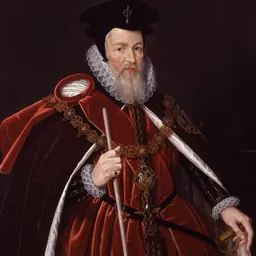
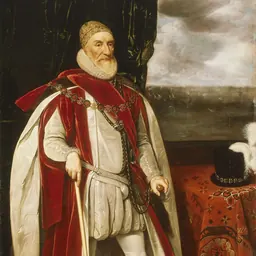
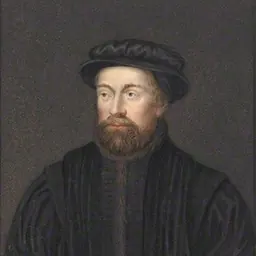
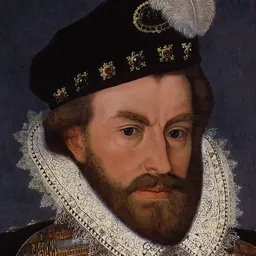
Contemporaries
People whose lives overlapped Mao Kun's




Frequently asked questions
Who was Mao Kun?
Ming dynasty politician and scholar (1512–1601)
When was Mao Kun born?
Mao Kun was born in 1512.
When did Mao Kun die?
Mao Kun died in 1601.
What was Mao Kun's occupation?
Mao Kun was a politician, essayist, bibliophile, literary critic and writer.
What nationality was Mao Kun?
Mao Kun was Chinese.
Sources & further reading
Cite this page
APA: Biography.guide. (2026). Mao Kun. https://biography.guide/mao-kun/
MLA: "Mao Kun." Biography.guide, https://biography.guide/mao-kun/.
Chicago: "Mao Kun." Biography.guide. https://biography.guide/mao-kun/.
Data last updated: 2026-09-20 · Spot an error? Report a correction.
Page generated 2026-09-27 05:10 UTC