
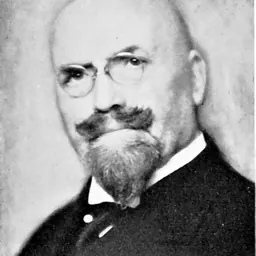
Manuel Jiménez Moreno "Chicuelo"
Spanish bullfighter
About Manuel Jiménez Moreno "Chicuelo"
Lived 1902 – 1967 (aged 65). Manuel Jiménez Moreno "Chicuelo" was a Spanish matador and bullfighter.
Early 1940s
World War II was now gripping the world, but not Spain, which chose to sit this new war out. Even though Chicuelo had cut off a tail in Seville a year earlier, in the 1940 season, he did not perform at the Maestranza bullring owing to financial differences with the company. He travelled to Latin America, returning to Venezuela specifically, performing three afternoons at the Nuevo Circo de Caracas: on 14 January, alongside Antonio García "Maravilla" in a mano a mano, fighting bulls from the Marquis of Villamarta ranch; on 21 January, with Joaquín Rodríguez "Cagancho" and José Ignacio Sánchez Mejías, who received the alternativa from "Chicuelo" (considered invalid in Spain; bulls from the Rosalía Surga cattle ranch were fought); on 28 January, bulls from the Don Felipe Bartolomé ranch were fought by the matadors Chicuelo, José Ignacio Sánchez Mejías, and Jaime Pericás.
The 1941 season brought ten corridas Chicuelo's way, and the 1942 season brought 14. The press-sponsored bullfights in Seville on 4 June 1942 saw him once again claim two ears and a tail. The bulls were from the Carlos Núñez ranch, and he shared the billing with Manuel Álvarez "El Andaluz" and Antonio Bienvenida. and a subalterno.
In the earlier half of the 1940s, their son Juanito (Juan Jiménez Castro) drowned in the River Guadalquivir at María Trifulca Beach. He was the most mischievous, the most likeable, the one who had the most friends in La Alameda. The master, skilled in cheating death, a man from head to toe, silently cried his sorrow at the chalet door. In his right hand he held a bundle of clothes tied with a belt… Juanito's friends, who brought the bad news, looked sadly at the bullfighter, not daring to speak. It was an August night… The brotherhood's roots go back to 1431, and it has been influential enough to figure in the city's history over the last several centuries. Its headquarters are at the Basílica de Jesús del Gran Poder ("Basilica of Jesus of the Great Power"), which stands at the Plaza de San Lorenzo in Seville.
Dora died on 26 April 1965 at the age of 62 of a "cerebral thrombosis". Chicuelo thus spent his last couple of years as a widower. He died in Seville on 31 October 1967 at the age of 65.
Chicuelina The chicuelina is a bullfighting move performed with the cape (not the muleta). It is performed by addressing the bull from the front, holding the cape with both arms open and in a half-extended position. When the bull charges, the bullfighter does a half turn on himself in the opposite direction to the bull's charge, so that his body is wrapped by the cape, with the animal passing by on one side. This pass owes its name to this article's subject, the Sevillian bullfighter Manuel Jiménez, whose nickname "Chicuelo" is the source. He was also the first to perform the manoeuvre, at the Valencia bullring in 1924, although his recognition spread after he performed it during a pass in the Plaza de las Ventas in Madrid in 1925. A variation is the so-called chicuelina al paso or galleo por chicuelinas, in which the bullfighter performs the pass several times in a row while walking, to direct the bull towards a particular spot in the bullring.
Tributes
On 21 July 2009, Seville's mayor, Alfredo Sánchez Monteseirín, unveiled a bronze sculpture in Chicuelo's honour on the city's Alameda de Hércules measuring almost six metres tall counting the pedestal. Unsurprisingly, it shows him performing the move named after him: the chicuelina. Attending the ceremony were several bullfighting luminaries from Seville, including Curro Romero. Also on hand was the sculptor himself, Alberto Germán Franco, from Huelva. "I have made Chicuelo doing the chicuelina as only he knew how," he said, "because there are many ways to do them, but the position he took was explained to me by the members of the commission, as well as his son Rafael."
At the Monumental in Mexico City, Chicuelo has been immortalized in a statue that likewise shows him performing the chicuelina.
In 1973, the current fairgrounds where the Seville Fair is held were established on land that was formerly part of the Guadalquivir's riverbed, after the fair had been held since its beginnings at Saint Sebastian's Meadow (Prado de San Sebastián). A new street grid was laid out at the new site, and the streets were each named after famous bullfighters from Seville; one of the north-south streets has been named Calle Manuel Jiménez "Chicuelo".
There is one other tribute in Seville to Chicuelo – and his father, too – at the former's birthplace, Calle Betis 30 (formerly 11 at the time of his birth). It is an azulejo, a ceramic plaque of sorts using blue glaze for images and text. Chicuelo was born, the azulejo says, "to make the art of bullfighting more beautiful".
In literature
Some minor literature, mainly biographical in its orientation, was published about Chicuelo in the 1920s, as witnessed by the two flanking images of booklet covers in this section (neither of which is as long as 30 pages), but he later received major literary attention from a prominent writer. Chicuelo was one of the many bullfighters whom Ernest Hemingway mentioned in his 1932 non-fiction book Death in the Afternoon. Whatever the azulejo on Calle Betis may say about the man who was born there, Hemingway had the following things to say about him — things that are rather at odds with how others remember him (see next section): Chicuelo was the son of a matador of that same name who had been dead some years from tuberculosis. He was reared, trained and launched and managed as a matador by his uncle, Zocato, who had been a banderillero of the old school and was a good business man and a heavy drinker. Chicuelo was short, unhealthily plump, without a chin, with a bad complexion, tiny hands and with the long eyelashes of a girl. Trained in Sevilla and then on the ranches around Salamanca he was as perfect a miniature bullfighter as could be manufactured and he was about as authentic a bullfighter, really, as a little porcelain statuette. Chicuelo was wonderful until he was first touched by a bull. Then, utterly cowardly if the bull offered any difficulties, he was good about twice a year thereafter, only giving all his repertoire when he found a bull without any bad ideas that would move past him without deviation as though it were mounted on rails. In between the beauty of his performances with the mechanically perfect bull that he awaited all season, and his occasional, nerved up, good, scientific work with a difficult bull came some of the saddest exhibitions of cowardice and shamelessness it would be possible to see. Hemingway also saw Chicuelo as having a "feeble, whipped look".
Impact on bullfighting Chicuelo performing one of the naturales that he linked together, something that Nieto found unusual for the time. Luis Nieto, the Spanish writer and bullfighting critic, had a few particular things to say about what Manuel Jiménez Moreno "Chicuelo" did for bullfighting as it is known today. This is an excerpt: Chicuelo represents an essential link in Sevillian bullfighting. He is linked to the brilliant Juan Belmonte. And if the man from Triana (Belmonte) shortens the terrain, the man from Alameda (Jiménez) provides the link. In Madrid he amazed the bull Corchaíto in his bullfight, linking together several naturales (a kind of pass); something unusual in bullfighting until then. Within what is understood by the Sevillian school, bullfighting with naturalness and grace, not lacking in depth, Chicuelo was a forerunner of the same. Graceful with the cape, his bullfights with the muleta were marked by harmony. And he is one of the bullfighters who mark the new direction of bullfighting, in which the hand is lowered on the muleta to achieve greater control and aesthetics. Rafael Chicuelo explains that his father "has been the most artistic bullfighter I have known. In addition to the chicuelina, he also introduced the pass from the side and the delantal . But above all, with his bullfighting with his feet together, he is the forerunner of the Sevillian school. At the Maestranza he cut off up to five tails. From 1919 to 1931 he fought several bullfights each season in Seville. He should have a monument to him." His artistic dimension was so great that the following sevillanas were sung: El arte del toreo vino del cielo/ y en la tierra su mejor intérprete lo es/ Manuel Jiménez Chicuelo. (The art of bullfighting came from heaven/ and on earth its best interpreter is/ Manuel Jiménez Chicuelo.) The rest is accessible (in Spanish) through "External links" below.
At least one critic at the time, Federico M. Alcázar, considered Chicuelo's performance with the bull Corchaíto "the greatest faena in bullfighting". Writing originally in the newspaper El Imparcial, Alcázar used notably hyperbolic language in describing Chicuelo's various moves and the crowd's reactions thereto, and concluded his piece thus: It has been the work of a god, of an enlightened one, of a sublime and brilliant madman…. Hail, Chicuelo! Hail to your sovereign art! When everything is erased and lost in the history of bullfighting, that faena will remain as a memorable summit, which will raise its solitary peak to infinity.
That afternoon in Madrid, when Chicuelo fought Corchaíto, the groundwork was laid for a new kind of bullfighting that had never before been seen.
Ignacio de Cossío Pérez de Mendoza, a writer who has written a great deal on the subject of bullfighting, has been not so much hyperbolic as analytical in his diction, but nonetheless clearly sees Chicuelo as a founder of the style of bullfighting seen in the world's bullrings today: It only took him eight afternoons, in which he alternated with Gallito, to capture better than anyone of his generation that innovative, linked and encyclopaedic bullfighting on the one hand; and on the opposite horn, shortening distances when the occasion called for it, on the other. Joselito already said it after an afternoon shared in Écija: "Chicuelo is the most dangerous bullfighter I have ever known." Without knowing it, on that afternoon in Madrid he laid the foundations of a new bullfighting never seen before. Each of the twenty muletazos he recited he linked with another, converting the constant attacks of the bull into five series finished with chest passes, ornaments and hand changes with both hands. From that faena de muleta with those masterful naturales linked in a circle without changing position, he entered into a new artistic and circular dimension. From then on, all his colleagues imitated him, like his godson Manolete, and they still do today. Chicuelo is, by his own merits, the architect of modern bullfighting and represents the personified fusion of the eternal bullfighting of José and Juan. His work is the greatest contribution to bullfighting that has ever existed or will ever exist. From that afternoon onwards, the bull was chosen more towards that type of modern bullfighting and even years later the peto (padding for the picador's horse) would be imposed to transform an art of blood and fire into that celebration of pure science that Chicuelo knew so well. It may be the case that more bullfighters appear with a different interpretation and personality in the style of bullfighting, but the fundamental bullfighting technique invented by Chicuelo has hardly changed.
Don’t just read it —
keep it.
Full-length biographies made to live with: read them, listen on the way to work, watch them tonight.
- E-book
- Audio
- Video
Instant download · yours to keep · every purchase keeps this site free
Important facts
People in Manuel Jiménez Moreno "Chicuelo"'s life
Named in this biography and alive at the same time



Related people
Same field, nearest in time

Contemporaries
People whose lives overlapped Manuel Jiménez Moreno "Chicuelo"'s


Frequently asked questions
Who was Manuel Jiménez Moreno "Chicuelo"?
Spanish bullfighter (1902-1967)
When was Manuel Jiménez Moreno "Chicuelo" born?
Manuel Jiménez Moreno "Chicuelo" was born on 15 April 1902 in Seville.
When did Manuel Jiménez Moreno "Chicuelo" die?
Manuel Jiménez Moreno "Chicuelo" died on 31 October 1967 in Seville.
What was Manuel Jiménez Moreno "Chicuelo"'s occupation?
Manuel Jiménez Moreno "Chicuelo" was a matador and bullfighter.
What nationality was Manuel Jiménez Moreno "Chicuelo"?
Manuel Jiménez Moreno "Chicuelo" was Spanish.
Sources & further reading
· Wikipedia: Manuel Jiménez Moreno "Chicuelo"
· DBpedia: Chicuelo (bullfighter)
Cite this page
APA: Biography.guide. (2026). Manuel Jiménez Moreno "Chicuelo". https://biography.guide/manuel-jimenez-moreno-chicuelo/
MLA: "Manuel Jiménez Moreno "Chicuelo"." Biography.guide, https://biography.guide/manuel-jimenez-moreno-chicuelo/.
Chicago: "Manuel Jiménez Moreno "Chicuelo"." Biography.guide. https://biography.guide/manuel-jimenez-moreno-chicuelo/.
Data last updated: 2026-09-20 · Spot an error? Report a correction.
Page generated 2026-09-27 05:25 UTC