
About Manuel González Flores
Lived 1833 – 1893 (aged 59). Manuel González Flores was a Mexican politician and military personnel.
Early life and military career Manuel del Refugio González Flores was born in Matamoros, Tamaulipas, Mexico, on 17 June 1833. However, he was baptized on the 18th, a day after his birth, as José Manuel del Refugio González Flores. His parents were Fernando González and Eusebia Flores de la Garza. For part of his childhood, he lived in the ranch El Moquete. and resigned on 15 November 1879, at the same time as Secretary of Justice Protasio Tagle. On 12 January of the same year, he arrived in Tequila, Jalisco. On 17 January, he arrived in Tepic. His staff during this period included two figures who would later be notable in Mexican history: Colonel Bernardo Reyes, a future general and governor of Nuevo León, and Captain Victoriano Huerta, a future president of Mexico. The methods González Flores used to suppress the uprising in Tepic have been described as "violent and questionable".
González had an ambitious agenda, much of which was a continuation of that of Díaz, seeking economic development. Díaz's principal policies were concessions to foreign interests (Europe and especially the U.S.), renewed relations with European powers, and internal peace. Following the long period of political instability since Mexican independence, peace could lay the groundwork for foreign investment and infrastructure development. A slogan for the era of Porfirio Díaz was "order and progress," which González followed. Key changes in the legal code opened the way for foreign investment and exports from Mexico. In particular a new mining code (1884) eliminated the state's ownership to subsoil rights dating to the colonial era, giving full rights to owners of property to both surface and subsoil rights by legally acquiring land. It "proved to be a bonanza both to Mexican landowners and to foreign investors". The law also encouraged settlement, The expanded armed forces and the will to take of northern national territory that Apache Indians de facto controlled saw their final defeat, thereby opening up a region for settlement and economic development. A dispute with Guatemala over Chiapas and Soconusco was resolved peacefully in Mexico's favor, securing much of its southern area. However, the rebellious Maya Indians in Yucatán, in a conflict known as the Caste War of Yucatán, continued under González's presidency.
Under González, Mexico re-established relations with European powers (Britain, France, Germany), which was an important means to offset U.S. power in Mexico as well as gain access to European capital. Mexican relations with Great Britain were renewed, once Mexico recognized the long-standing British bond debt from the Conservative government. The considerable sum of £11.5 million would be a drain on the empty national treasury, with the announcement coming during a financial downturn in Mexico. This concession provoked protests from Congress, and riots in the capital put down forcefully and brutally, damaging González's reputation. Aiding in the economic expansion of Mexico was the founding of the Banco Nacional de México, with French bankers playing an important role. The preference for ties with Europe was reinforced with Mexico's adoption on 20 December 1882, of the metric system of measurements, created under French emperor Napoleon, rather than the British/U.S. measurements.
During his administration, the railway from Mexico City to the border city of Paso del Norte (modern-day Ciudad Juárez) was constructed, a key factor in U.S. investment in Mexico and ending the deliberate policy of keeping the U.S. at bay through the obstacle of the northern desert. Lerdo had delayed the railway expansion northward, saying "Between weakness and strength the desert." Along with the expansion of the railway network, Mexico inaugurated its first submarine cable.
In 1882, he issued nickel coins, replacing silver coinage, which produced the inflation rate and prompted the devaluation of the currency, or the president of the Permanent Commission, in the event that the Senate was in recess.
At the end of his full four-year term, he stepped down from presidency and was succeeded by Porfirio Díaz, who had not been re-elected to consecutive terms as president, but following the González interregnum, Díaz would remain in power until ousted in 1911 with the outbreak of the Mexican Revolution in 1910. Díaz's denigration of González's achievements as president and the charges of corruption have led to his basic eclipse in Mexican history. His biographer Don M. Coerver's full scholarly study of his presidency is an exception.
After the presidency After his term as president, González was charged with misappropriation of public funds by Congress in 1885 and the case was referred to a Grand Jury, but the charges were dropped three years later, on 30 October 1888. Rather than being punished by the legal system, González was elected governor of Guanajuato "unanimously" in 1884 and served three terms in office until his death by pancreatic cancer in 1893, He made a failed attempt to succeed President Díaz in 1887. He was buried in the Rotonda de las Personas Ilustres (Rotunda of Illustrious People) on 8 May 1893.
Don’t just read it —
keep it.
Full-length biographies made to live with: read them, listen on the way to work, watch them tonight.
- E-book
- Audio
- Video
Instant download · yours to keep · every purchase keeps this site free
Important facts
People in Manuel González Flores's life
Named in this biography and alive at the same time
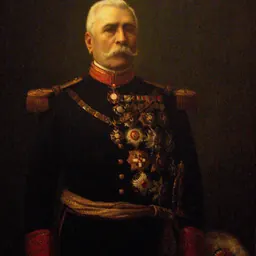
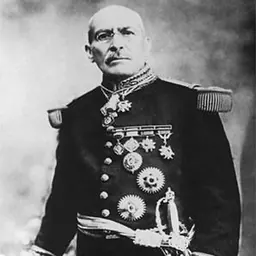

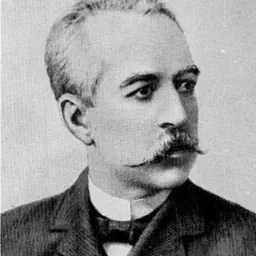
Related people
Same field, nearest in time



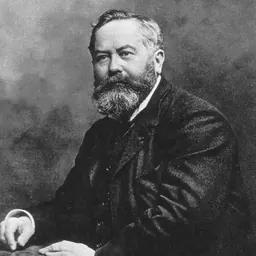


Contemporaries
People whose lives overlapped Manuel González Flores's




Frequently asked questions
Who was Manuel González Flores?
President of Mexico (1833–1893)
When was Manuel González Flores born?
Manuel González Flores was born on 18 June 1833 in Heroica Matamoros.
When did Manuel González Flores die?
Manuel González Flores died on 10 April 1893 in Chapingo.
What was Manuel González Flores's occupation?
Manuel González Flores was a politician and military personnel.
What nationality was Manuel González Flores?
Manuel González Flores was Mexican.
Sources & further reading
· Wikipedia: Manuel González Flores
· DBpedia: Manuel González Flores
Cite this page
APA: Biography.guide. (2026). Manuel González Flores. https://biography.guide/manuel-gonzalez-flores/
MLA: "Manuel González Flores." Biography.guide, https://biography.guide/manuel-gonzalez-flores/.
Chicago: "Manuel González Flores." Biography.guide. https://biography.guide/manuel-gonzalez-flores/.
Data last updated: 2026-09-26 · Spot an error? Report a correction.
Page generated 2026-09-27 05:13 UTC