
About Manuel de la Cámara y Libermoore
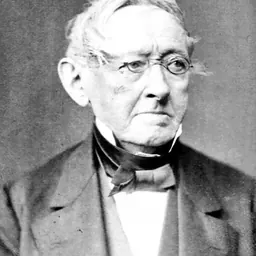
Lived 1835 – 1920 (aged 84). Manuel de la Cámara y Libermoore was a Spanish naval officer.
Admiral Manuel de la Cámara y Livermoore (or Libermoore) (7 May 1836 – 4 January 1920) was a Spanish naval officer. He saw service in many of Spain′s wars of the second half of the nineteenth century and is most notable for commanding a large naval squadron that made an abortive attempt to relieve Spanish forces in the Philippine Islands during the Spanish–American War.
Early life Cámara was born at Málaga, Spain, on 7 May 1836 into a family of merchants. His father was a Spanish merchant mariner and sea captain, and his mother was English.
Naval career
Early career
After graduation from the naval academy, Cámara entered the Spanish Navy as a midshipman at Cádiz in 1852 and made a cruise aboard a training ship with his fellow midshipmen before he was commissioned as an officer in the Spanish Navy during which he served on the general staff of French Navy Vice Admiral Edmond Jurien de La Gravière. In that year, the Chincha Islands War with Peru — joined later by Bolivia, Chile, and Ecuador — broke out in the southeastern Pacific Ocean. Transferring to the more modern screw frigate to serve as her sailing master and navigator and promoted to teniente de navío (ship-of-the-line lieutenant) in 1865 while aboard Villa de Madrid, In command of a battery of guns on Villa de Madrid′s main deck, Cámara played an active and conspicuous role in the battle, the guns under his command firing until they ran out of ammunition.
After the Chincha Islands War ended in 1866, Cámara received rapid promotion.
Promoted to capitán de fragata (frigate captain) in 1876, Cámara took command of the corvette , but he was relieved of command because of complaints by Africa′s officers and was reprimanded by the captain general of the Department of Cartagena. He held that position until January 1888. The division departed Cádiz Two of Spain's most powerful warships, the battleship and the brand-new armored cruiser , were not available when the war began, the former undergoing reconstruction in a French shipyard and the latter not yet delivered from her builders. However, both were rushed into service and assigned to Cámara's squadron. One mission of the squadron, in the absence of any other direction, was to guard the Spanish coast against raids by the United States Navy.
During a meeting of senior Spanish naval officers in Madrid on 23 April 1898, Cámara voted with the majority to send the squadron of Vice Admiral Pascual Cervera y Topete to the Caribbean. Pelayo and Emperador Carlos V each were individually more powerful than any of Dewey's ships, and the possibility of their arrival in the Philippines was of great concern to the United States, which hastily arranged to dispatch 10,000 additional U.S. Army troops to the Philippines and send two U.S. Navy monitors to reinforce Dewey. His orders directed him to depart Cádiz with Pelayo (his flagship), Emperador Carlos V, the auxiliary cruisers Patriota and Rapido, the destroyers Audaz, Osado, and Proserpina, the transports Buenos Aires, Panay, Alfonso XII, and Antonio Lopez, and four colliers carrying 20,000 tons of coal. He was to detach Alfonso XII and Antonio Lopez near Gibraltar after dark so that they could proceed to the Caribbean, then take the rest of his force to the Philippines via Gibraltar, Port Said, Suez, Socotra (at which point the colliers were to be detached to return to Cartagena), the Laccadive Islands, and Ceylon. After that, he was told to coal either along the coast of Sumatra or in Singapore or Batavia, and then either make an optional stop at Labuan, Borneo, or proceed directly to Mindanao. Once in the Philippines, he was to disperse (to places such as Balabac, Jolo, Basilan, and Zamboanga) or concentrate his squadron as best he saw fit to ensure the safe arrival of the troops. Then he was to deal with Dewey's squadron.
Cámara sortied from Cádiz on 16 June 1898, passed Gibraltar on 17 June 1898 (first detaching Alfonso XII and Antonio Lopez for their independent voyages to the Caribbean as ordered), and arrived at Port Said on 26 June 1898. There he requested permission to transship coal. Further complicating matters for Cámara, the British government, which effectively controlled Egypt at the time, informed him on 29 June that his squadron was not permitted to coal in Egyptian waters, on the grounds that it had enough coal to return to Spain and that any coaling activity it undertook in Egypt would violate Egyptian and British neutrality, and that he would have to return to sea within 24 hours. Cámara complied. On the return voyage, Cámaras squadron departed Suez on 11 July 1898 for Spain, where it arrived at Cartagena, Spain, on 23 July and then made its way back to Cádiz.
In August 1903, at his own request, Cámara was transferred to the reserve list and retired from the navy. Thus in retirement Cámara′s rank became almirante (admiral) on that date.
Personal life Cámara married Emma Díaz Gayen (1857–1935) He is buried in the Cemetery of San Miguel in Málaga.
Honors and awards Awards Cámara received include:
25px Honorary assistant of the Military House of S.M. King D. Alfonso XIII
Don’t just read it —
keep it.
Full-length biographies made to live with: read them, listen on the way to work, watch them tonight.
- E-book
- Audio
- Video
Instant download · yours to keep · every purchase keeps this site free
Important facts
People in Manuel de la Cámara y Libermoore's life
Named in this biography and alive at the same time


Related people
Same field, nearest in time

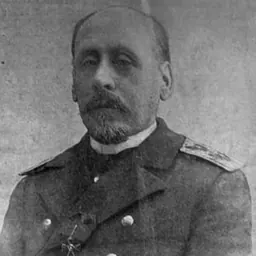
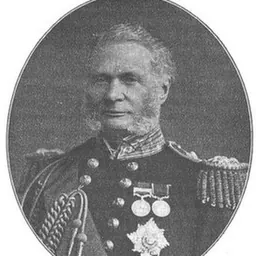
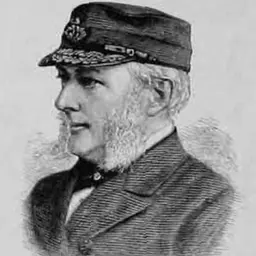

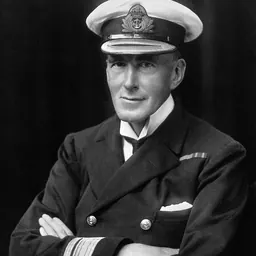
Contemporaries
People whose lives overlapped Manuel de la Cámara y Libermoore's




Frequently asked questions
Who was Manuel de la Cámara y Libermoore?
Spanish admiral
When was Manuel de la Cámara y Libermoore born?
Manuel de la Cámara y Libermoore was born on 7 May 1835 in Málaga.
When did Manuel de la Cámara y Libermoore die?
Manuel de la Cámara y Libermoore died on 4 January 1920 in Málaga.
What was Manuel de la Cámara y Libermoore's occupation?
Manuel de la Cámara y Libermoore was a naval officer.
What nationality was Manuel de la Cámara y Libermoore?
Manuel de la Cámara y Libermoore was Spanish.
Sources & further reading
· Wikipedia: Manuel de la Cámara y Libermoore
· DBpedia: Manuel de la Cámara
Cite this page
APA: Biography.guide. (2026). Manuel de la Cámara y Libermoore. https://biography.guide/manuel-de-la-camara-y-libermoore/
MLA: "Manuel de la Cámara y Libermoore." Biography.guide, https://biography.guide/manuel-de-la-camara-y-libermoore/.
Chicago: "Manuel de la Cámara y Libermoore." Biography.guide. https://biography.guide/manuel-de-la-camara-y-libermoore/.
Data last updated: 2026-09-20 · Spot an error? Report a correction.
Page generated 2026-09-27 05:21 UTC