
Manuel Carvalheiro
Portuguese filmmaker, documentary filmmaker, screenwriter, independent film producer, essayist, chronicler and cinema critic
About Manuel Carvalheiro
Lived 1950 – 2019 (aged 68). Manuel Carvalheiro was a Portuguese film director, screenwriter, film producer, essayist, critic and film criticism.
Manuel Carvalheiro (Lisbon, 30 December 1950 – Lisbon, 21 April 2019) was a Portuguese filmmaker, documentary filmmaker, screenwriter, independent film producer, essayist, columnist and film critic. He was the first Portuguese film theorist.
Early life and education Carvalheiro was born in Lisbon on 30 December 1950, during the Portuguese dictatorship. He was the only child of Maria de Lourdes da Silva Ferreira, a paediatrician, and Manuel Teixeira Dias Carvalheiro, an economics graduate, mathematician, and a member of the Portuguese Communist Party, at a time when Communism was perceived as the best political system available, and the only defence against fascism. The family was originally from Figueira da Foz and republican. His paternal grandfather, a bookshop owner, and his paternal aunt and uncle, both lawyers in Coimbra, were all political prisoners.
His parents married on 1 January 1949 and were part of the Communist-led resistance against the fascist regime in Portugal. Their home in Lisbon was used as a safe house for the secret meetings of prominent Communist party leaders, but following a string of political arrests, the family moved to colonial Angola initially settling in Silva Porto before moving to Luanda. His father was the headmaster of Luanda's Industrial and Commercial School, the co-founder of the Cine-club de Luanda, an important film society, and a member of the executive board of the "Angola Cultural Society". Carvalheiro's parents, although prominent members of Portuguese colonial society, moved in Luanda's cultural and literary circle encouraging the work of native writers and poets and supporting Angolan cultural identity and independence movements at the highest level. Consequently, Carvalheiro grew up in a politically charged and cultural environment where he enjoyed more freedom than in mainland Portugal.
Carvalheiro, who held a lifelong passion for photography, was first given a camera aged eight during a trip with his father to Belgian Congo and French Congo, taking both aerial and Congo River crossing photographs. As a teen, he spent a school year in Figueira da Foz, Portugal, and grew closer to his paternal uncle, an amateur photographer and cinephile who would later co-found the Figueira da Foz International Film Festival. Carvalheiro travelled to most European capitals with his parents and went to the 1967 Venice Film Festival.
Career While at university in Angola he became a film critic for the Luanda University Cinema Circle and for a major colonial newspaper. Aged nineteen and at the peak of the Portuguese Colonial War, he dropped out of the second year of a chemical engineering degree to study cinema in Paris, France, with Jean Rouch, at the Laboratoire Audio-visuel of the Ecole Pratique des Hautes Etudes from which he graduated. Juliet Berto into his Lisbon apartment, at Rua dos Lusíadas. Carvalheiro took part in the historic 1 May parade immortalised in the collective film The People in Arms, co-directed by Glauber Rocha. They worked on Free Lisbon, their unfinished film, shot in the days that followed the Carnation Revolution.
In 1976 Carvalheiro defended his thesis Reflections on Eisensteinian Theory in Cinema at the École des Hautes Etudes en Sciences Sociales (EHESS) under the guidance of film theorist Christian Metz. Later, he helped Rocha settle in Sintra with his wife and children, working together on Napoleon's Empire, a script that never materialised, as Glauber Rocha died shortly after.
In 1985 his doctoral thesis on Le cinéma intellectuel: Mutations de la théorie Eisensteinienne, guided by Christian Metz, was granted a Mention Très Bien from the École des Hautes Etudes en Sciences Sociales (EHESS) and gave rise to a book published in Portugal, in 1989. on Carvalheiro's road trip to Lisbon in the aftermath of the Carnation Revolution. It was later turned into a film, Off to the Revolution by a 2CV, that won the Golden Leopard at the Locarno International Film Festival, in 2001.
He died of sepsis and was buried on 25 April 2019, at the Prazeres Cemetery in Lisbon, a resting place for many famous Portuguese personalities.
1972 — Glauber Rocha (co-directed with Manuel Madeira) 1974 – Free Lisbon (co-directed with Glauber Rocha, unfinished) 1976 – The Diary of a Contaminated (short film)
Awards and nominations CICAE Award, 1982
Ficts Fest, Choice of the Public Award, 1998
Don’t just read it —
keep it.
Full-length biographies made to live with: read them, listen on the way to work, watch them tonight.
- E-book
- Audio
- Video
Instant download · yours to keep · every purchase keeps this site free
Important facts
People in Manuel Carvalheiro's life
Named in this biography and alive at the same time
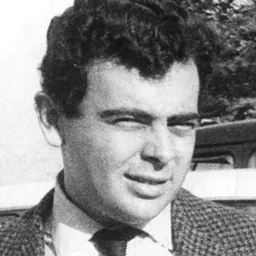


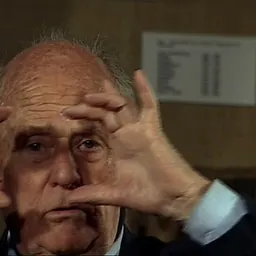


Related people
Same field, nearest in time


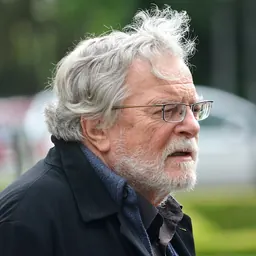
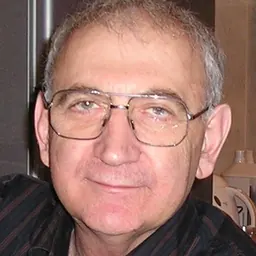
Contemporaries
People whose lives overlapped Manuel Carvalheiro's


Frequently asked questions
Who was Manuel Carvalheiro?
Portuguese filmmaker, documentary filmmaker, screenwriter, independent film producer, essayist, chronicler and cinema critic (1950-2019)
When was Manuel Carvalheiro born?
Manuel Carvalheiro was born on 30 December 1950 in Lisbon.
When did Manuel Carvalheiro die?
Manuel Carvalheiro died on 21 April 2019 in Lisbon.
What was Manuel Carvalheiro's occupation?
Manuel Carvalheiro was a film director, screenwriter, film producer, essayist, critic and film criticism.
What nationality was Manuel Carvalheiro?
Manuel Carvalheiro was Portuguese.
Sources & further reading
· Wikipedia: Manuel Carvalheiro
Cite this page
APA: Biography.guide. (2026). Manuel Carvalheiro. https://biography.guide/manuel-carvalheiro/
MLA: "Manuel Carvalheiro." Biography.guide, https://biography.guide/manuel-carvalheiro/.
Chicago: "Manuel Carvalheiro." Biography.guide. https://biography.guide/manuel-carvalheiro/.
Data last updated: 2026-09-20 · Spot an error? Report a correction.
Page generated 2026-09-27 05:05 UTC