
Manuel Bartolomé Ferreyros
Peruvian diplomat, writer and politician
About Manuel Bartolomé Ferreyros
Lived 1793 – 1872 (aged 79). Manuel Bartolomé Ferreyros was a Peruvian diplomat, writer, politician, journalist and poet.
Manuel Bartolomé Ferreyros de la Mata (August 24, 1793 — September 24, 1872) was a Peruvian politician, diplomat and writer. He was three times Minister of Foreign Affairs in various governments (1835, 1839–1841 and 1849–1851) and twice Minister of Finance (1838 and 1839–1841). He was also entrusted with numerous diplomatic posts. A prominent internationalist, he presided over the first American Congress that met in Lima, in 1847–1848, during the first government of Ramón Castilla. He was also a deputy in various Constituent Congresses of the Republic: that of 1822 (of which he was secretary); that of 1839 (of which he was president) and that of 1860.
Biography His parents were Manuel Ferreyros y Pérez, Spanish, and María Andrea de la Mata y Ulloa, from Lima. He studied at the Colegio de San Ildefonso. At the age of fifteen he entered the customs accounting service as a meritorious employee, being successively promoted to clerk (1808), third officer (1816) and second officer (1821).
Despite being an employee at the service of the viceregal government, he did not hesitate to join the cause of Independence and signed the declaration act that the people of Lima approved in an open town hall on July 15, 1821. He presented a memorandum to the Patriotic Society on fishing (March 5, 1822). President José de la Riva Agüero deported him with seven other parliamentarians, but soon after he rejoined Congress.
Back in Lima, he was appointed General Director of Customs (1833). Once the dictatorship of Lieutenant Colonel Felipe Santiago Salaverry was established, he served it as Minister of Government and Foreign Relations, from May 20 to June 24, 1835. After Salaverry's defeat and death, he went to Ecuador, where he wrote the newspaper El Ariete, in whose pages he fought the Peru-Bolivian Confederation (1838).
He returned to Peru with the Restoring Army of Peru, which, allied with the Chileans, attacked the Confederate government. When Gamarra formed his provisional government in Lima, he was appointed Minister of Finance in absentia (August 24, 1838), a position that was filled by another. And although he was again appointed to occupy said portfolio on July 29, 1839, he had to leave it promptly because he was elected deputy to represent Lima in the General Constituent Congress meeting in Huancayo (from August 15 to November 28, 1839). assembly of which he became president.
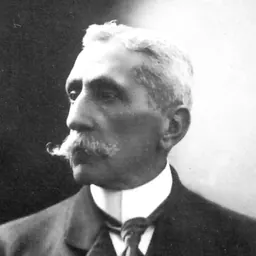
Gamarra, recognizing his merits as a statesman, appointed him Minister of Government and Foreign Relations, a position he held from November 23, 1839, to July 12, 1841. One of his great achievements was the signing with the representative of Brazil in Lima Mr. Duarte Da Ponte Ribeyro, of a "peace, friendship, trade and navigation treaty". This marked the formal beginning of Peru's relations with said South American power (July 8, 1841). Apart from the navigation and trade agreements, as well as the way in which the corresponding transactions should be carried out, it was agreed with regard to the arrangement of limits "to carry it out as soon as possible according to the uti possidetis of 1821", with the Commitment to make changes or territorial compensation, according to the agreement between the parties. The following day a Postal Convention was signed, with the participation of the same diplomats.
He was director of the Post Office (1841); member of the Council of State (1845–1849), of which he was 2nd vice-president; and delegate of Peru in the American Congress that at that time met in Lima to establish the tranquility and security of the American peoples (1847–48).
With the representatives of Chile and New Granada he negotiated the payment of the debts of the War of Independence, thus honoring the commitment made by Peru in return for the aid provided by the liberating armies, despite the opposition of some voices, who considered that since independence had been a joint continental enterprise and where Peruvians contributed more than any other people with the blood of their children, the government should not pay anything.
At the end of the first government of Castilla, he was again appointed Minister of Foreign Affairs, a position he held from August 25, 1849, to April 20, 1851.
In 1855 he was appointed general director of the Treasury and presided over the operations of consolidation of the internal debt. He was also appointed General Director of Studies and as such guided the reorganization of the educational system carried out by the second government of Castilla. Likewise, he was a member of the Junta designated to agree on the Continental Treaty, whose purpose was to organize a joint front of the South American nations in the face of the interventionist threat of the European powers.
He was accredited as a plenipotentiary minister in Ecuador (1858–1859) and in Bolivia (1859). He was also an honorary member of the Lima Bar Association, a member of the jury for Supreme Court liability cases, president of the fiscal examination board to investigate consolidation fraud, and a member of the National Statistics Council.
Works As a literary writer, he left a scattered body of work that no historian of Peruvian literature has attempted to analyze. José Toribio Polo included his poetry in Parnaso Peruano (1916); but other critics such as Luis Alberto Sánchez did not give relevance to his poetic creation. In 1916 his poems were published by Ricardo Tizón y Bueno, as well as in 1991, by Dr. Wu Brading.
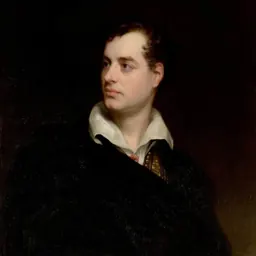
Ferreyros also produced a prose translation of Lord Byron's Childe Harold, which was published posthumously in the Revista de Lima (1873).
But, apart from his literary attempts, Ferreyros left behind other interesting productions: combat journalism, pamphlets, articles and notes on matters of national interest, such as his defense of Ramón Castilla against the Ecuadorian Pedro Montalvo. They are not works that necessarily have a literary brilliance, but they harbor a solid dialectic and a deep patriotic love.
Family Married to María Josefa Basilia Senra y Echevarría, he was the father of numerous children. Two of his children stood out:
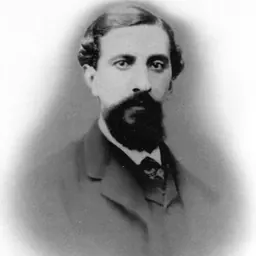
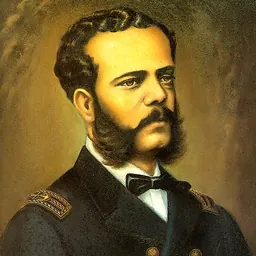
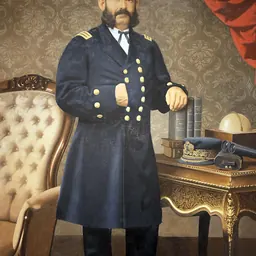
Manuel Ferreyros Senra (1833–1876), sailor, one of the "Four Aces of the Peruvian Navy", along with Miguel Grau, Aurelio García y García and Lizardo Montero. Carlos Ferreyros Senra (1843–1910), also a sailor, participated in the naval campaign of the War of the Pacific, having an outstanding performance during the naval campaign serving aboard the Pilcomayo gunboat.
Another lesser-known son of his was Eusebio Demetrio Ferreyros Senra (1847–1868), also a sailor, who died during the Arica tsunami of 1868, when the corvette on which he served ran aground.
Don’t just read it —
keep it.
Full-length biographies made to live with: read them, listen on the way to work, watch them tonight.
- E-book
- Audio
- Video
Instant download · yours to keep · every purchase keeps this site free
Important facts
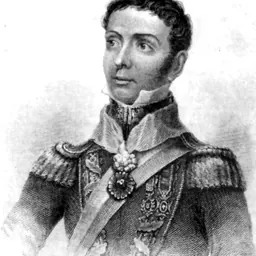
People in Manuel Bartolomé Ferreyros's life
Named in this biography and alive at the same time


Related people
Same field, nearest in time



Contemporaries
People whose lives overlapped Manuel Bartolomé Ferreyros's




Frequently asked questions
Who was Manuel Bartolomé Ferreyros?
Peruvian diplomat, writer and politician
When was Manuel Bartolomé Ferreyros born?
Manuel Bartolomé Ferreyros was born on 24 August 1793 in Lima.
When did Manuel Bartolomé Ferreyros die?
Manuel Bartolomé Ferreyros died on 24 September 1872 in Lima.
What was Manuel Bartolomé Ferreyros's occupation?
Manuel Bartolomé Ferreyros was a diplomat, writer, politician, journalist and poet.
What nationality was Manuel Bartolomé Ferreyros?
Manuel Bartolomé Ferreyros was Peruvian.
Sources & further reading
· Wikipedia: Manuel Bartolomé Ferreyros
· DBpedia: Manuel Bartolomé Ferreyros
Cite this page
APA: Biography.guide. (2026). Manuel Bartolomé Ferreyros. https://biography.guide/manuel-bartolome-ferreyros/
MLA: "Manuel Bartolomé Ferreyros." Biography.guide, https://biography.guide/manuel-bartolome-ferreyros/.
Chicago: "Manuel Bartolomé Ferreyros." Biography.guide. https://biography.guide/manuel-bartolome-ferreyros/.
Data last updated: 2026-09-20 · Spot an error? Report a correction.
Page generated 2026-09-27 05:27 UTC