
Manuel Alvar
Spanish dialectologist, romanist and hispanist
About Manuel Alvar
Lived 1923 – 2001 (aged 78). Manuel Alvar was a Spanish dialectologist, romanist, hispanist, historian and university teacher.
Manuel Alvar (July 8, 1923 – August 13, 2001) was a Spanish linguist, historian, and university professor who specialized in the study of dialectology and philology of the Spanish language. Throughout his career, Alvar oversaw and influenced the creation of many Spanish linguistic atlases; maps which recorded speech variations in a given geographical area. He served as Director of the Real Academia Española for four years and was a member of language academies throughout Europe and Latin America. He began his studies at the Universidad de Zaragoza, where he was a student of José Manuel Blecua, a renowned Spanish philologist. published in his 1953 work El Dialecto Aragonés.
For Alvar's later publication, "Atlas lingüístico y etnográfico de Aragón" (1979-1983), he and his team transcribed words pronounced in isolation, elicited from residents of the Aragón region. He used a similar method to elicit data from people living in the Canary Islands and published a linguistic atlas of this dialect in 1975. Alvar has also been criticized for using overly traditional field methods in his dialectology studies, for example focusing on forms in isolation rather than in context, or leaving out morphosyntactic variables. Alvar was also a member of the Academia Colombiana de la Lengua (specializing in the use of Spanish in Colombia and counseling the Colombian government in language affairs and regulations), la Academia Argentina de Letras (which is closely affiliated with the Royal Spanish Academy as a member of the Association of Spanish Language Academies), and la Academia Mexicana de la Lengua (likewise dedicated to the conservation and purity of the Spanish language as well as increasing the study of Spanish, according to its stated objectives). Alvar was also a member of several historical and cultural academies, including the Real Academia de la Historia, appointed to serve as director in 1999 (replacing Luis Díez del Corral). The Academia studies history "ancient and modern, political, civil, ecclesiastical, military, scientific, of letters and arts, of civilization, and of the culture of the Spanish people." Beginning in 1963, Alvar also served as director of the CSIC Department of Linguistic Geography and Dialectology,
Legacy
Influence He was the principal investigator along with the University of Wisconsin in developing the Spanish Medieval Dictionary in 1978. In dialectology Alvar wrote, directed, or coordinated the development of many linguistic atlases and Spanish-language research published in Spain and Latin America during the second half of the 20th century, including the Atlas Lingüístico y Etnográfico de Andalucía (ALEA), the Atlas Lingüístico de España y Portugal (ALEP), the Atlas Lingüístico de Castilla y León (ALCyL), and the Linguistic and Ethnographical Atlas of Argentina (AleCuyo). Alvar served as a member of the Executive Committee of the Atlas Linguarum Europae (ALE) in Holland in 1971, a linguistic atlas supported by UNESCO which includes Altaic languages, Basque, Indo-European languages, Ibero-Caucasian languages, Semitic languages and Uralic languages. Forty-seven national committees and four minority language committees worked on this atlas. Other important atlases Alvar has worked on include an Atlas Lingüístico de Andalucía (1957–1959).
In his work on Spanish in the United States, he worked closely with the Comité Conjunto Hispano-Norteamericano to develop an atlas there, and in 1991 produced one of the most comprehensive atlases of the Latin America, Atlas Lingüístico de Hispanoamérica. after it requested that Spain revoke its law that all typewriters, computers and printers sold domestically include the tilde, a Spanish diacritical mark. Alvar declared that "he tilde is our tradition and our identity." He also received criticism for a statement he made in 1991 about indigenous languages, stating, "Mexico knew better than anybody else the value of having a language that unifies, that liberates the indigenous communities from their backwardness and misery...the path to freedom runs through hispanization."
Awards and recognition Manuel Alvar received many prestigious awards during his life, and after his death has been honored with awards given in his name. He lectured throughout the world, and received numerous degrees honoris causa.
Major publications Manuel Alvar published works in more than 170 books and 600 scientific articles throughout his lifetime, below are listed some of his most-cited works.
1947: "Dialectical Boundaries in the Pyrenees" 1953: "El dialecto aragonés" (The Aragon dialect) 1960: Texto hispánicos dialectales (Text of Spanish Dialects) 1961: Atlas lingüístico y etnográfico de Andalucia (Linguistic and Ethnographic Atlas of Andalusia) 1969: Variedad y unidad del español (Variety and Uniformity of Spanish) 1976: "El dialecto riojano" (The Rioja dialect) 1977: Estudios lingüísticos sobre la Amazona colombiana (Linguistic Studies of the Colombian Amazon) 1996: Manual de dialectología hispánica: el español de América (Manual of Spanish Dialectology: the Spanish of the Americas) 1996: Manual de dialectologia hispánica: el español de España (Manual of Spanish Dialectology: the Spanish of Spain)
Don’t just read it —
keep it.
Full-length biographies made to live with: read them, listen on the way to work, watch them tonight.
- E-book
- Audio
- Video
Instant download · yours to keep · every purchase keeps this site free
Important facts
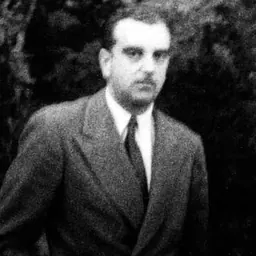
People in Manuel Alvar's life
Named in this biography and alive at the same time

Related people
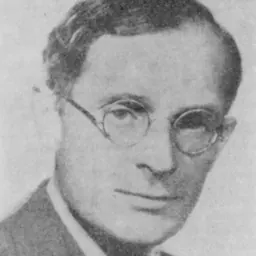
Same field, nearest in time





Contemporaries
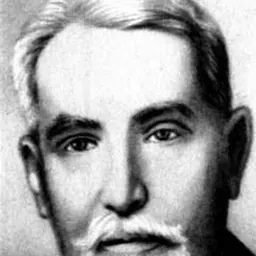
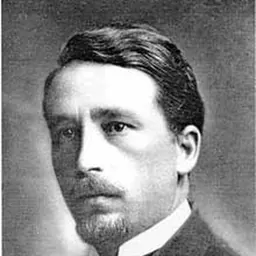
People whose lives overlapped Manuel Alvar's



Frequently asked questions
Who was Manuel Alvar?
Spanish dialectologist, romanist and hispanist (1923–2001)
When was Manuel Alvar born?
Manuel Alvar was born on 8 July 1923 in Benicarló.
When did Manuel Alvar die?
Manuel Alvar died on 13 August 2001 in Madrid.
What was Manuel Alvar's occupation?
Manuel Alvar was a dialectologist, romanist, hispanist, historian and university teacher.
What nationality was Manuel Alvar?
Manuel Alvar was Spanish.
Sources & further reading
Cite this page
APA: Biography.guide. (2026). Manuel Alvar. https://biography.guide/manuel-alvar/
MLA: "Manuel Alvar." Biography.guide, https://biography.guide/manuel-alvar/.
Chicago: "Manuel Alvar." Biography.guide. https://biography.guide/manuel-alvar/.
Data last updated: 2026-09-22 · Spot an error? Report a correction.
Page generated 2026-09-27 05:00 UTC