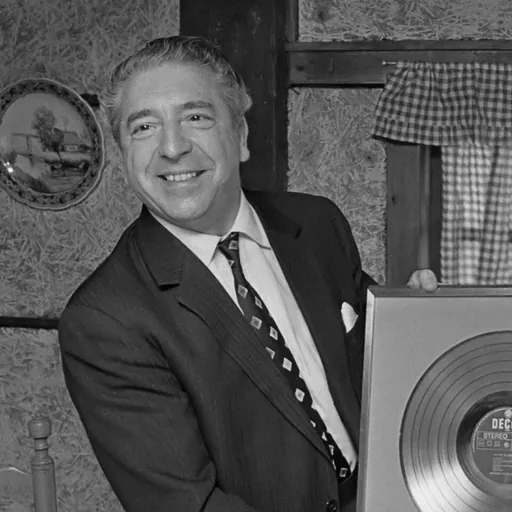
About Mantovani
Lived 1905 – 1980 (aged 74). Mantovani was an Italian and British conductor, composer and conductor (music).
Annunzio Paolo Mantovani (; 15 November 1905 – 30 March 1980) was an Italian British conductor, composer and light orchestra–styled entertainer with a cascading strings musical signature.
The book British Hit Singles & Albums stated that Mantovani was "Britain's most successful album act before the Beatles ... the first act to sell over one million stereo albums and [have] six albums simultaneously in the US Top 30 in 1959".
Biography
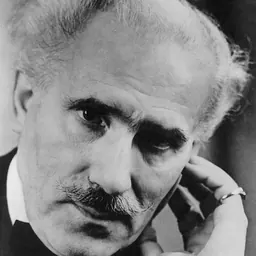
Mantovani was born on 15 November 1905 in Venice, Italy, into a musical family. His father, Benedetto Paolo "Bismarck" Mantovani, was a violinist and served as the concertmaster of La Scala opera house's orchestra in Milan, under the baton of Arturo Toscanini.
Mantovani was also musical director for a large number of musicals and other plays, including Noël Coward's Pacific 1860 (1946) and Vivian Ellis's musical setting of J. B. Fagan's And So to Bed (1951). After the war, Mantovani concentrated on recording and eventually gave up live performance altogether. He worked with arranger and composer Ronald "Ronnie" Binge, who developed the "cascading strings" effect (also known as the "Mantovani sound"). Mantovani's records were regularly used for demonstration purposes in stores selling hi-fi stereo equipment, as they were produced and arranged for stereo reproduction. He became the first person to sell a million stereophonic records. In 1952, Binge ceased to arrange for Mantovani but the distinctive sound of the orchestra remained.
Mantovani recorded for Decca and London Records, the United States arm of the Decca Record Company, exclusively. "Cara Mia" (with him and his orchestra backing David Whitfield) in 1954; "Around the World" in 1957; and "Main Theme from Exodus (Ari's Theme)" in 1960. Mantovani made his last recordings in the mid-1970s.
Mantovani died at a care home in Royal Tunbridge Wells, Kent, on 30 March 1980; he was 74 years old. His style survived through an ever-changing variety of musical styles prompting Variety to call him "the biggest musical phenomenon of the twentieth century".
From 1961 to 1971, David McCallum Sr was the leader of Mantovani's orchestra. At this time, his son David McCallum Jr was at the height of his acting fame, prompting Mantovani to introduce his leader to audiences with the quip, "We can afford the father but not the son!"
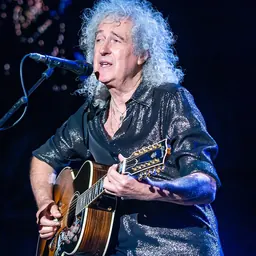
Mantovani is referred to by name in The Kinks song "Prince of the Punks" and Don Black and Andrew Lloyd Webber’s "Letter Home to England" in Tell Me on a Sunday. He also had a big influence on Brian May, Queen guitarist.
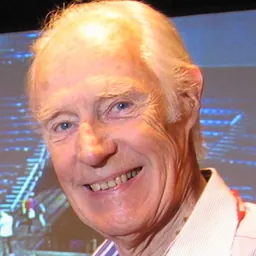
During his lifetime, Mantovani did not always get respect from his fellow musicians. When George Martin first suggested overdubbing Paul McCartney's recording of "Yesterday" with strings, McCartney's initial reaction, according to Martin, was that he did not want it sounding like Mantovani. Martin therefore used a more classical sound, employing a string quartet.
Posthumous publishing Much of his catalogue has reappeared on CD. There are also many compilations. A large number of CDs are available containing unauthorized recordings, billed as Mantovani or Mantovani Orchestra; for example, the CD titled "The Mantovani Orchestra" released in 1997 contained a track from the 1980s Andrew Lloyd Webber musical "Cats", which would have required posthumous conducting on the part of Mantovani. There have also been CDs released under the Mantovani name of recordings made by others while Mantovani was still alive.
Following Mantovani's death in 1980, the Mantovani Estate continues to authorize numerous concerts worldwide and recordings using original and newly commissioned arrangements.
Discography
Selected albums Waltzing with Mantovani (1951) An Album of Favourite Waltzes (1952) The Music of Victor Herbert (1953) Plays Tangos (1953) Christmas Carols (1953) Song Hits from Theatreland (1955) Film Encores (1957) Gems Forever (1958) Strauss Waltzes (re-recording, 1958) Continental Encores (1959) Film Encores, Vol. 2 (1959) American Scene (1959) All-American Showcase (1959) Songs to Remember )1960) Mantovani Plays Music from Exodus and Other Great Themes (1960) Italia Mia (1961) American Waltzes (1962) Latin Rendezvous (1963)
Selected filmography Sing as You Swing (1937) French Without Tears (1940) Guitars of Love (1954) A Heart Full of Music (1955)
Don’t just read it —
keep it.
Full-length biographies made to live with: read them, listen on the way to work, watch them tonight.
- E-book
- Audio
- Video
Instant download · yours to keep · every purchase keeps this site free
Important facts
People in Mantovani's life
Named in this biography and alive at the same time



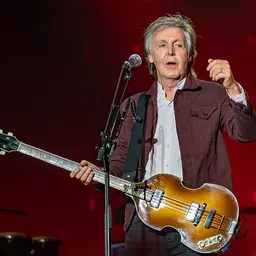
Related people
Same field, nearest in time


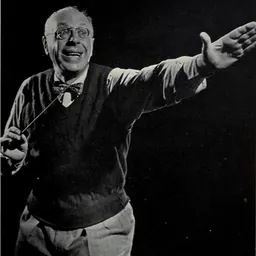

Contemporaries
People whose lives overlapped Mantovani's



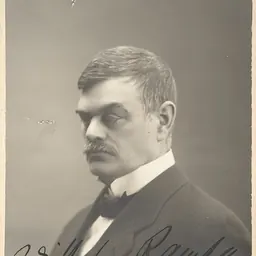

Frequently asked questions
Who was Mantovani?
Anglo-Italian conductor, composer and light orchestra-styled entertainer
When was Mantovani born?
Mantovani was born on 15 November 1905 in Venice.
When did Mantovani die?
Mantovani died on 29 March 1980 in Royal Tunbridge Wells.
What was Mantovani's occupation?
Mantovani was a conductor, composer and conductor (music).
What nationality was Mantovani?
Mantovani was Italian and British.
Sources & further reading
Cite this page
APA: Biography.guide. (2026). Mantovani. https://biography.guide/mantovani/
MLA: "Mantovani." Biography.guide, https://biography.guide/mantovani/.
Chicago: "Mantovani." Biography.guide. https://biography.guide/mantovani/.
Data last updated: 2026-09-20 · Spot an error? Report a correction.
Portrait: Wikimedia Commons · author & licence
Page generated 2026-09-27 04:58 UTC