
About Manoutchar III Jakéli
Lived 1591 – 1625 (aged 33–34). Manoutchar III Jakéli was a politician.
Manuchar III Jaqeli (; 1591–1625), of the House of Jaqeli, was the last atabeg of the principality of Samtskhe, nominally ruling between 1607 and 1625.
Biography Manuchar was the son of Manuchar II Jaqeli and his wife, Helen, daughter of Simon I of Kartli. As a child, he accompanied his father, Manuchar II Jaqeli, when the latter settled at the Safavid Iranian court, then located at Qazvin. Later, when the Iranian royal court had already been moved to Isfahan, his mother Helen had been making efforts in order for her son to be able to succeed as the next atabeg. She discussed the matter at court with then incumbent Safavid Shah Abbas I , Alexander II of Kakheti, as well as the Portuguese diplomat Antonio de Gouvea. With Manuchar III living at the court, Helen herself received "virtually nothing" from Abbas I, although she had offered him sovereignty over Samtskhe.
Having been confirmed in 1607 as ruler of Samtskhe by Abbas I, Manuchar III continued to fight the Ottomans in a similar fashion to his father. However, he ceased his activities in 1608, when due to the circumstances, he was forced to flee to Kartli. Following his father's death in 1614, Manuchar III now officially claimed the title of atabeg of Samtskhe and made active efforts to incite anti-Ottoman sentiments in the area. Later, in 1624, he battled against the Ottoman pasha of Erzurum; shortly after, he moved to Kartli once again. There, he supported Giorgi Saakadze against the Iranians, and was reputable at the Battle of Marabda. In 1625, he resumed relations with the Ottomans, who subsequently confirmed him as atabeg of Samtskhe; when he actually returned to Samtskhe however, he was killed (poisoned) by his own uncle Beka Jaqeli, better known as Sefer Pasha.
Manuchar III was the last Christian ruler of Samtskhe; upon his death in 1625, the Ottomans completely incorporated the western part of the principality of Samtskhe as a pashalik. In 1639, by the Treaty of Zuhab, they also gained the eastern part, which had been under Safavid control. The members of the House of Jaqeli, who had been at the head of the principality for centuries, converted to Islam, and remained in power as hereditary pashas in the Ottoman service.
Don’t just read it —
keep it.
Full-length biographies made to live with: read them, listen on the way to work, watch them tonight.
- E-book
- Audio
- Video
Instant download · yours to keep · every purchase keeps this site free
Important facts
Family & relationships
People in Manoutchar III Jakéli's life
Named in this biography and alive at the same time

Related people
Same field, nearest in time

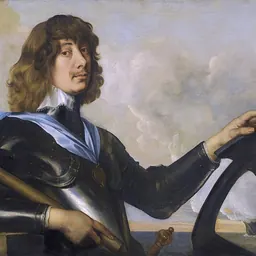
Contemporaries
People whose lives overlapped Manoutchar III Jakéli's


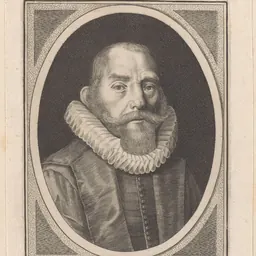
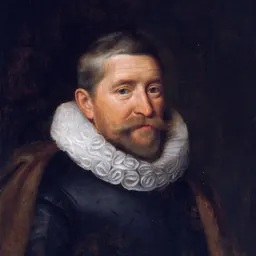
Frequently asked questions
Who was Manoutchar III Jakéli?
prince of Samtskhe
When was Manoutchar III Jakéli born?
Manoutchar III Jakéli was born in 1591.
When did Manoutchar III Jakéli die?
Manoutchar III Jakéli died in 1625.
What was Manoutchar III Jakéli's occupation?
Manoutchar III Jakéli was a politician.
What nationality was Manoutchar III Jakéli?
Manoutchar III Jakéli's recorded nationality: Samtskhe atabegate.
Sources & further reading
· Wikipedia: Manoutchar III Jakéli
· DBpedia: Manuchar III Jaqeli
Cite this page
APA: Biography.guide. (2026). Manoutchar III Jakéli. https://biography.guide/manoutchar-iii-jakeli/
MLA: "Manoutchar III Jakéli." Biography.guide, https://biography.guide/manoutchar-iii-jakeli/.
Chicago: "Manoutchar III Jakéli." Biography.guide. https://biography.guide/manoutchar-iii-jakeli/.
Data last updated: 2026-09-20 · Spot an error? Report a correction.
Page generated 2026-09-27 05:04 UTC