
About Manolo Sanlúcar
Lived 1943 – 2022 (aged 78). Manolo Sanlúcar was a Spanish guitarist, composer and musician.
Manolo Sanlúcar (born Manuel Muñoz Alcón; 24 November 1943 – 27 August 2022) was a Spanish flamenco composer, guitarist and teacher. He was one of the major figures in the development of the modern flamenco guitar, and a substantial part of his career was devoted to treating flamenco as a compositional language for concert, orchestral and theatrical forms.
Alongside Paco de Lucía, Niño Ricardo and Sabicas, Sanlúcar is commonly cited as one of the flamenco composers who broadened the harmonic, formal and concert possibilities of flamenco in the second half of the twentieth century. His best-known works include Fantasía para guitarra y orquesta, Trebujena, Medea, Tauromagia, Soleá, Aljibe and Locura de brisa y trino.
Early life and training Sanlúcar was born Manuel Muñoz Alcón in Sanlúcar de Barrameda, in the province of Cádiz, in 1943. He grew up in a flamenco family: his father, Isidro Muñoz, was a guitarist and became his first teacher. The work's libretto was adapted by Miguel Narros from Seneca, with sets by Andrea D’Odorico and costumes by Narros. The Instituto Nacional de las Artes Escénicas y de la Música's dance portal likewise describes Medea as one of the important theatrical dance works in the Spanish repertory and identifies Sanlúcar as its composer.
Sanlúcar later composed Soleá, another work associated with the Ballet Nacional de España and listed among his symphonic and stage works.
Locura de brisa y trino, released in 2000, was inspired by the poetry of Federico García Lorca and featured a reduced group rather than the large orchestral forces some listeners had expected from Sanlúcar's previous work.
His final studio album, La voz del color, appeared in 2008 and has been described as a tribute to the painter Baldomero Romero Ressendi.
In 2007 he published his memoir El alma compartida. Google Books lists the book as an illustrated volume published by Editorial Almuzara in 2007, with 495 pages and ISBN 9788496968219.
In his later years Sanlúcar devoted himself to La guitarra flamenca, Manolo Sanlúcar, an audiovisual and written didactic project on flamenco. The Ayuntamiento de Sanlúcar de Barrameda described the work as an artistic-didactic history of flamenco, written, directed, produced and presented by Sanlúcar after fifteen years of work and with the participation of more than forty artists.
He was named Favourite Son of the Province of Cádiz in 2016 and Favourite Son of Sanlúcar de Barrameda.
After his death, the Escuela de Flamenco de Andalucía used his name for the Premios Internacionales del Flamenco "Manolo Sanlúcar". A 2024 announcement by the Ayuntamiento de Sanlúcar de Barrameda described the prizes as a recognition for artists, musicians, researchers and promoters of flamenco, and stated that previous editions had honoured Sanlúcar in 2020.
Death Sanlúcar died on 27 August 2022 in Jerez de la Frontera, at the age of 78. Obituaries described him as one of the leading flamenco guitarists and composers of his generation and emphasized his role in expanding flamenco beyond the solo guitar repertory.
Selected works Concert, orchestral and stage works Fantasía para guitarra y orquesta Ven y sígueme / Un gitano llamado Mateo Trebujena, concert work for guitar and orchestra Testamento andaluz Medea, ballet, music for the Ballet Nacional de España Soleá, ballet Aljibe, flamenco symphony for guitar, orchestra, voices and percussion La Gallarda, on a libretto by Rafael Alberti Viva la Blanca Paloma, soundtrack for a Japanese documentary Mariana Pineda, ballet for guitar and chamber orchestra La guitarra flamenca, Manolo Sanlúcar, didactic audiovisual work
Selected discography 1968: Recital flamenco 1970: Inspiraciones 1971: Mundo y formas de la guitarra flamenca, vol. I 1971: Mundo y formas de la guitarra flamenca, vol. II 1972: Mundo y formas de la guitarra flamenca, vol. III 1975: Sanlúcar 1976: Sentimiento 1977: Fantasía para guitarra y orquesta 1978: ...Y regresarte (Homenaje a Miguel Hernández) 1979: Manolo Sanlúcar en Japón 1980: Candela 1981: Azahares 1982: Al viento 1982: Ven y sígueme 1984: Trebujena 1985: Testamento andaluz 1987: Medea 1987: Dos guitarras flamencas with Sabicas 1988: Tauromagia 1989: Soleá 1992: Aljibe 2000: Locura de brisa y trino 2008: La voz del color
Don’t just read it —
keep it.
Full-length biographies made to live with: read them, listen on the way to work, watch them tonight.
- E-book
- Audio
- Video
Instant download · yours to keep · every purchase keeps this site free
Important facts
People in Manolo Sanlúcar's life
Named in this biography and alive at the same time
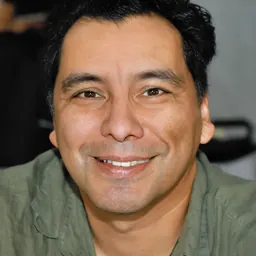
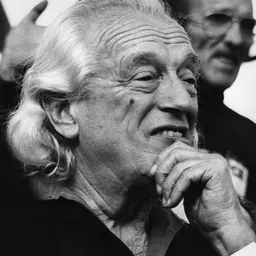

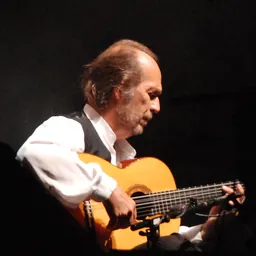




Related people
Same field, nearest in time
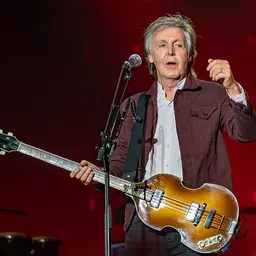



Contemporaries
People whose lives overlapped Manolo Sanlúcar's

Frequently asked questions
Who was Manolo Sanlúcar?
Flamenco composer and guitarist (1943–2022)
When was Manolo Sanlúcar born?
Manolo Sanlúcar was born on 24 November 1943 in Sanlúcar de Barrameda.
When did Manolo Sanlúcar die?
Manolo Sanlúcar died on 27 August 2022 in Jerez de la Frontera.
What was Manolo Sanlúcar's occupation?
Manolo Sanlúcar was a guitarist, composer and musician.
What nationality was Manolo Sanlúcar?
Manolo Sanlúcar was Spanish.
Sources & further reading
Cite this page
APA: Biography.guide. (2026). Manolo Sanlúcar. https://biography.guide/manolo-sanlucar/
MLA: "Manolo Sanlúcar." Biography.guide, https://biography.guide/manolo-sanlucar/.
Chicago: "Manolo Sanlúcar." Biography.guide. https://biography.guide/manolo-sanlucar/.
Data last updated: 2026-09-26 · Spot an error? Report a correction.
Page generated 2026-09-27 05:15 UTC