
Mamoru Uchida
Japanese ophthalmologist
About Mamoru Uchida
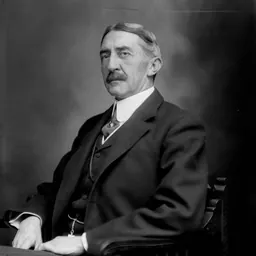
Lived 1900 – 1982. Mamoru Uchida was a Japanese ophthalmologist, kikuchi Keifuen Sanatorium, matsuoka Hoyoen Sanatorium and nagashima Aiseien Sanatorium, known for Tanka.
was an ophthalmologist who worked for leprosy patients at Kyushu Sanatorium (Kikuchi Keifuen Sanatorium), Nagashima Aiseien Sanatorium, and Matsuoka Hoyoen Sanatorium. He taught leprosy patients tanka, in these sanatoriums. Later, he studied social welfare as a professor at Kumamoto Junior College. He extensively studied the history of leprosy, and presented many documents to the Kumamoto Prefectural Library as Uchida Library; 338 items were shown at an exhibition of Hansen's disease and literature in 2003.
Pseudonym He used the name "Morito Uchida (内田 守人)" in literature.
Biography In 1900, he was born in Kikuchi District, Kumamoto Prefecture. He graduated from Kumamoto Medical School in 1924 and entered the Kyushu Sanatorium. In 1934, he became a Ph.D. for his study on murine leprosy. He found a large house where 23% of mice were infected with murine leprosy. He studied leprosy patients around the Honmyoji temple. In three sanatoriums, he taught tanka which consists of five units (often treated as separate lines when Romanized or translated). He helped many tanka poets in compiling their tanka books.
After the war, he returned to Kumamoto and in 1950, became a professor at Kumamoto Junior College. He studied social welfare and wrote several books. He was the president of the 1965 Congress of social welfare association. He died in 1982.
Tanka
Uchida found that patients with leprosy who led miserable life had found hopes and pleasure in making tanka. He helped many tanka poets in compiling their tanka books. And the books he wrote and complied amounted to 40 books.
Medical achievements He wrote 34 medical papers in Japanese. He obtained his Ph.D. on his studies on eye diseases of mice infected with murine leprosy. Eye diseases in murine leprosy. Report 1-4. (1932)(1933). Uchida M. 3-4, 4-3. He studied leprosy patients in Honmyoji temple. He insisted that the popularization of water supply service was effective in reducing leprosy.
Books He wrote many books in Japanese, recorded in the Japanese version of Wikipedia. Mitsuda Kensuke A history of welfare activities in Kumamoto Prefecture A history of welfare activities in Kyushu Yukarino Minoru o Machite (1976) edited by Mamoru Uchida. Riddell and Wright Memorial Home for the Aged. Kumamoto. (410 pages).
Honors In 1971, he was given the Order of the Sacred Treasure, 4th Class, for the administration of social welfare and for education.
Criticism He was so active in everything, so that they said "Uchida pollutions".
Don’t just read it —
keep it.
Full-length biographies made to live with: read them, listen on the way to work, watch them tonight.
- E-book
- Audio
- Video
Instant download · yours to keep · every purchase keeps this site free
Important facts
Related people
Same field, nearest in time

Contemporaries
People whose lives overlapped Mamoru Uchida's




Frequently asked questions
Who was Mamoru Uchida?
Japanese ophthalmologist
When was Mamoru Uchida born?
Mamoru Uchida was born in 1900 in Kikuchi district.
When did Mamoru Uchida die?
Mamoru Uchida died in 1982 in Kumamoto.
What was Mamoru Uchida's occupation?
Mamoru Uchida was an ophthalmologist, kikuchi Keifuen Sanatorium, matsuoka Hoyoen Sanatorium and nagashima Aiseien Sanatorium.
What was Mamoru Uchida known for?
Mamoru Uchida was known for Tanka.
What nationality was Mamoru Uchida?
Mamoru Uchida was Japanese.
Sources & further reading
Cite this page
APA: Biography.guide. (2026). Mamoru Uchida. https://biography.guide/mamoru-uchida/
MLA: "Mamoru Uchida." Biography.guide, https://biography.guide/mamoru-uchida/.
Chicago: "Mamoru Uchida." Biography.guide. https://biography.guide/mamoru-uchida/.
Data last updated: 2026-09-22 · Spot an error? Report a correction.
Page generated 2026-09-27 05:09 UTC