
About Mahta Moghaddam
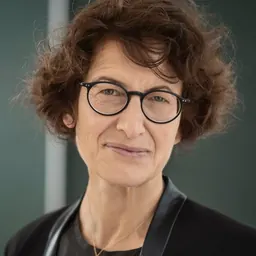
Mahta Moghaddam was an Iranian and American researcher.
Mahta Moghaddam is an Iranian-American electrical and computer engineer and William M. Hogue Professor of Electrical Engineering in the Ming Hsieh Department of Electrical and Computer Engineering at the University of Southern California Viterbi School of Engineering. Moghaddam is also the president of the IEEE Antennas and Propagation Society and is known for developing sensor systems and algorithms for high-resolution characterization of the environment to quantify the effects of climate change. She also has developed innovative tools using microwave technology to visualize biological structures and target them in real-time with high-power focused microwave ablation.
Early life and education Moghaddam grew up in Iran with her sister, Bita Moghaddam, and her parents.
Moghaddam then moved to the United States in 1982 to start her undergraduate education at the University of Kansas. She graduated with a Bachelors of Science in Electrical Engineering in 1986 with the Highest Distinction. Her thesis was titled “Forward and Inverse Scattering Problems in the Time Domain”. These technologies allowed her to characterize soil and canopy moisture as well as permafrost using airborne synthetic aperture radar (AIRSAR). She found that using a classification algorithm to identify the predominant scattering mechanism, focusing on the branch layer, and subsequently deriving moisture content from a parametric model, allowed her to retrieve model parameters from AIRSAR data. She found that her estimated values were within 14% of the measured values, but taking into account measurement error on the ground and via radar, her results show that the estimations closely track the measurements.
Moghaddam's accomplishments at the University of Michigan In 2003, Moghaddam joined the Electrical Engineering and Computer Science Faculty at the University of Michigan, Ann Arbor as an associate professor. She was appointed to tenured Associate Professor in 2006 and became a full professor of Electrical Engineering and Computer Science at the University of Michigan in 2009. She also continued her efforts in creating tools to map soil moisture, and generally characterize Earth's land-cover which is critical for understanding and tracking climate change.
Since Moghaddam also focused her research program on improved medical imaging technologies, in 2008 Moghaddam published her investigation of a new tool to better reconstruct 3D images using time-domain data. Her results represented a promising tool for detecting breast cancer.
Leadership and research at the University of Southern California In 2012, Moghaddam was recruited to the University of Southern California to begin her role as a Professor of Electrical Engineering. Moghaddam helped design a synthetic aperture radar instrument that sent pulses of polarized radio waves towards earth, hit permafrost, and bounced back in different polarizations. The group designed an image guidance system that uses radio frequency waves to provide physicians with real-time, 3-dimensional temperature maps to identify cancers for destruction with ablation therapy. For their entrepreneurship, they won the top prize at the USC Viterbi Maseeh Entrepreneurship Prize Competition and their goal is to launch this product by 2021. This technology will enhance targeting and treating of brain diseases and disorders from tumors to epilepsy since it allows real-time monitoring during ablation preventing the need for further rounds of treatment. They integrated the magnetic induction system with machine learning techniques to be able to accurately detect a wide range of human motions, even under water.
Leadership and titles In 2018, Moghaddam was elected president of the Institute of Electrical and Electronics Engineers (IEEE) Antennas and Propagation Society. The IEEE Antennas and Propagation Society is one of the largest IEEE societies. The USC Interim President, Wanda Austin, reported that her imagination in adapting microwave energy for the common good as allowed her to excel so dramatically in her career. Science Chair for the JPL Team X (Advanced Mission Studies Team) USNC-URSI (Under the US National Academies) Member-at-Large, 2018-2020 Chen, G., Stang, J., Haynes, M., Leuthardt, E., and Moghaddam, M., “Real-Time 3D Microwave Monitoring of Interstitial Thermal Therapy,” IEEE Transactions on Biomedical Engineering, March 2018. Yi, Y., Kimball, J. S., Chen, R., Moghaddam, M., Reichle, R. H., Mishra, U., Zona, D., and Oechel, W. C., “Characterizing permafrost soil active layer dynamics and sensitivity to landscape spatial heterogeneity in Alaska,” The Cryosphere Discuss., May 2017. Clewley, D., Whitcomb, J. B., Akbar, R., Silva, A. R., Berg, A., Adams, J. R., Caldwell, T., Entekhabi, D., and Moghaddam, M., “A Method for Upscaling In Situ Soil Moisture Measurements to Satellite Footprint Scale Using Random Forests,” IEEE Journal of Selected Topics in Applied Earth Observations and Remote Sensing, April 2017. Kim, SB, et al., “Surface soil moisture retrieval using the L-band synthetic aperture radar on-board the Soil Moisture Active Passive (SMAP) satellite and evaluation at core validation sites,” IEEE Trans. Geosci. Remote Sensing, vol. 55, no. 4, pp. 1897–1914, April 2017. Wang, Y., Stang, J., Yu, M., Tsvetkov, M., Wu, C.C., Qin, X., Chung, E., Moghaddam, M. and Wu, W., “Microwave Selective Heating Enhancement for Cancer Hyperthermia Therapy Based on Lithographically Defined Micro/Nanoparticles”, Advanced Materials Technologies, vol. 1, no. 3, June 2016. D. Clewley, J. Whitcomb, M. Moghaddam, K. McDonald, B. Chapman and P. Bunting, “Evaluation of ALOS PALSAR data for high-resolution mapping of vegetated wetlands in alaska”, Remote Sensing, vol. 7, no. 6, pp. 7272–7297, June 2015. Konings, A., D. Entekhabi, M. Moghaddam, and S. Saatchi, “The effect of variable soil moisture profiles on P-band backscatter,” IEEE Trans. Geosci. Remote Sensing, vol. 52, no. 10, pp. 6315–6325, October 2014. Ouellette, J., J. Johnson, S. Kim, J. van Zyl, M. Spencer, M. Moghaddam, L. Tsang, and D. Entekhabi, “A simulation study of compact polarimetry for radar retrieval of soil moisture,” IEEE Trans. Geosci. Remote Sensing, vol. 52, no. 9, pp. 5966–5973, September 2014. Khankhoje, U., M. Burgin, and M. Moghaddam, “On the accuracy of averaging radar backscatter coefficients for bare soils using the finite element method,” IEEE Geosci. Remote Sensing Lett., vol. 11, no. 8, pp. 1345–1349, August 2014. Haynes, M., S. Verweij, M. Moghaddam, and P. Carson, “Self-Characterization of Commercial Ultrasound Probes in Transmission Acoustic Inverse Scattering: Transducer Model and Volume Integral Formulation,” IEEE Trans. Ultrasonics, Ferroelectrics, and Frequency Control, vol. 61, no. 3, pp. 467–480, March 2014. Silva, A., M. Liu, and M. Moghaddam, 2012 “Power Management Techniques for Wireless Sensor Networks and Similar Low-Power Communication Devices Based on Non-Rechargeable Batteries,” J. Computer Networks and Communications. doi:10.1155/2012/757291 Tabatabaeenejad, A., and M. Moghaddam, “Retrieval of surface and deep soil moisture and effect of moisture profile on inversion accuracy,” IEEE Geosci. Remote Sensing Lett., vol. 8, no. 3, pp. 477– 481, May 2011. Haynes, M., and M. Moghaddam, “Multipole and S-parameter based antenna model,” IEEE Trans. Antennas Propagat., vol. 59, no. 1, pp. 225–235, January 2011. Tabatabaeenejad, A., and M. Moghaddam, “Inversion of dielectric properties of layered rough surface using the simulated annealing method,” IEEE Trans. Geosci. Remote Sensing, vol. 47, no. 7, pp. 2035–2046, July 2009. Whitcomb, J., M. Moghaddam, K. McDonald, J. Kellndorfer, and E. Podest, “Mapping wetlands of Alaska from L-band SAR imagery,” C. J. Remote Sensing, vol. 35, no. 1, pp. 54–72, February 2009. (Winner of Best Journal Paper Award for 2009) Moghaddam, M., E. Yannakakis, W. C. Chew, and C. Randall, “Modeling of the subsurface interface radar,” J. Electromagn. Waves Appl. vol. 5, no. 1, pp. 17–39, 1991. Moghaddam, M., W. C. Chew, B. Anderson, E. Yannakakis, and Q. H. Liu, “Computation of transient electromagnetic waves in inhomogeneous media,” Rad. Sci., vol. 26. no. 1, pp. 265–273, 1991.
Don’t just read it —
keep it.
Full-length biographies made to live with: read them, listen on the way to work, watch them tonight.
- E-book
- Audio
- Video
Instant download · yours to keep · every purchase keeps this site free
Important facts
Related people
Same field, nearest in time





Frequently asked questions
Who was Mahta Moghaddam?
Iranian-American electrical and computer engineer
When was Mahta Moghaddam born?
Mahta Moghaddam was born in Iran.
What was Mahta Moghaddam's occupation?
Mahta Moghaddam was a researcher.
What nationality was Mahta Moghaddam?
Mahta Moghaddam was Iranian and American.
Sources & further reading
Cite this page
APA: Biography.guide. (2026). Mahta Moghaddam. https://biography.guide/mahta-moghaddam/
MLA: "Mahta Moghaddam." Biography.guide, https://biography.guide/mahta-moghaddam/.
Chicago: "Mahta Moghaddam." Biography.guide. https://biography.guide/mahta-moghaddam/.
Data last updated: 2026-09-20 · Spot an error? Report a correction.
Page generated 2026-09-27 05:26 UTC