
About Mahendranath Gupta
Lived 1854 – 1932 (aged 77). Mahendranath Gupta was an Indian writer and professor, known for Paramahansa Yogananda and Sri Sri Ramakrishna Kathamrita.
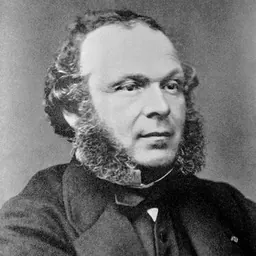
Mahendranath Gupta (14 July 1854 – 4 June 1932), (also popularly known as Shri M and Master Mahashay), was a disciple of Ramakrishna and a mystic himself. He was the author of Sri Sri Ramakrishna Kathamrita (5 vols.), a Bengali classic; in English, it is known as The Gospel of Sri Ramakrishna. He was also an early teacher to Paramahansa Yogananda, a famous 20th-century yogi, guru and philosopher. In his autobiography, Yogananda noted that Gupta ran a small boys' high school in Kolkata, and he recounted their visits, as they often traveled to the Dakshineshwar Kali Temple together. In 1874 he was married to Nikunja Devi, daughter of Thakur Charan Sen and a relative of Keshub Chandra Sen, a Brahmo Samaj leader. After some time working for the government and a merchant house, he began teaching English, Psychology, and Economics at various colleges. Eventually he became headmaster of Ishwar Chandra Vidyasagar's high school, where he was called "Master Mahashay"—just as he was often addressed in Ramakrishna's circle and later by Yogananda.
Meetings with Ramakrishna
As an adult, Mahendranath, like some of the other disciples of Ramakrishna, was connected with the Brahmo Samaj for several years. Mahendranath had lost his mother at a very early age and was experiencing domestic friction in the joint family. As the friction within the joint family increased, Mahendranath decided to commit suicide. At this critical juncture, Mahendranath's nephew took him to the temple garden of Dakshineswar Kali Temple, where Ramakrishna, a mystic and the chief priest of the Kali temple lived. It was here that Gupta met Ramakrishna for the first time and this meeting was a turning point in his life. Years later, when Mahendranath was asked about the greatest day in his life, he said, "the day I had my first darshan of Thakur [Ramakrishna] in February 1882." According to other traditional accounts, Mahendranath related that he may have met Ramakrishna for the first time when he was four years old and became separated from his mother while visiting the Dakshineswar Kali Temple. He began crying, and a blissful and youthful man came up and consoled him. He believed it to be Ramakrishna, who was then a priest at the Kali temple.
Sri Sri Ramakrishna Kathamrita
Shri M had the habit of maintaining a personal diary since the age of thirteen. M met Sri Ramakrishna in 1882 and, attracted by the latter's teachings, started to maintain a stenographic record of Sri Ramakrishna's conversations and actions in his diary, which finally took the form of a book Sri Sri Ramakrishna Kathamrita. Regarding his methodology M wrote,
quote|I wrote everything from memory after I returned home. Sometimes I had to keep awake the whole night...Sometimes I would keep on writing the events of one sitting for seven days, recollect the songs that were sung, and the order in which they were sung, and the samadhi and so on...Many a time I did not feel satisfied with my description of the events; I would then immediately plunge myself in deep meditation ...Then the correct image would arise...That is why in spite of the big gap in the physical sense, this story remains so fresh and lifelike in my mind as if it happened just now. The title Kathamrita, literally "nectarine words" was inspired by verse 10.31.9 from the Vaishnava text, the Bhagavata Purana. Both Sri Ramakrishna's wife, Holy Mother Sarada Devi, and Swami Vivekananda later testified to Mahendranath's faithfulness to Sri Ramakrishna's words. The first four volumes were published in 1902, 1904, 1908 and 1910 respectively and the fifth volume in 1932, delayed because of M's health problems. The Kathamrita contains the conversations of Sri Ramakrishna from 19/26 February 1882 to 24 April 1886, during M's visits. The Kathamrita is regarded as a Bengali classic Its translations of Kathamrita include works by Swami Nikhilananda (1942), Swami Abhedananda, and Dharma Pal Gupta.
Teacher to Paramahansa Yogananda Paramahansa Yogananda, a 20th-century philosopher and a yogi, was a student of Mahendranath Gupta. Mahendranath moved to 50 Amherst Street in Calcutta, where he ran a small boys' high school. It was also formerly Paramahansa Yogananda's family home—a site especially poignant to Yogananda because it was the site of his mother's death. In his Autobiography of a Yogi, Yogananda dedicated an entire chapter to describing his friendship with Mahendranath, whom he referred to as "Master Mahasaya," which was along spiritual rather than academic lines. Yogananda described Mahendranath as having a "silky white beard and large lustrous eyes" and described his personality thus: "His role in the world was humble, as befitted the greatest man of humility I ever knew. In this Amherst Street house, Master Mahasaya conducted a small high school for boys. No words of chastisement passed his lips; no rule and ferule maintained his discipline. Higher mathematics indeed were taught in these modest classrooms, and a chemistry of love absent from the textbooks. He spread his wisdom by spiritual contagion rather than impermeable precept. Consumed by an unsophisticated passion for the Divine Mother, the saint no more demanded the outward forms of respect than a child." Yogananda went on to describe several seemingly miraculous experiences with Mahendranath. Later, Yogananda said about him that "I would roll on the ground where he'd walked, so great was my love for him. I felt that even that ground had been sanctified."
Later life and death In 1922, M. lived in Mihijam, a town 144 miles from Kolkata, for nine months.
In 1932, when the fifth Volume of Kathamrita was at the printers Mahendranath died at his home, now called Kathamrita Bhavan, located near the Thanthania Kali Temple in Calcutta. Kathamrita Bhavan is a pilgrimage place for followers of Ramakrishna due to numerous visits there by Ramakrishna and Sarada Devi, and several relics associated with their lives.
Don’t just read it —
keep it.
Full-length biographies made to live with: read them, listen on the way to work, watch them tonight.
- E-book
- Audio
- Video
Instant download · yours to keep · every purchase keeps this site free
Important facts
People in Mahendranath Gupta's life
Named in this biography and alive at the same time


Related people
Same field, nearest in time


Contemporaries
People whose lives overlapped Mahendranath Gupta's




Frequently asked questions
Who was Mahendranath Gupta?
Indian yogi (1854–1932)
When was Mahendranath Gupta born?
Mahendranath Gupta was born on 14 July 1854 in Kolkata.
When did Mahendranath Gupta die?
Mahendranath Gupta died on 4 June 1932 in Kolkata.
What was Mahendranath Gupta's occupation?
Mahendranath Gupta was a writer and professor.
What was Mahendranath Gupta known for?
Mahendranath Gupta was known for Paramahansa Yogananda and Sri Sri Ramakrishna Kathamrita.
What nationality was Mahendranath Gupta?
Mahendranath Gupta was Indian.
Sources & further reading
· Wikipedia: Mahendranath Gupta
Cite this page
APA: Biography.guide. (2026). Mahendranath Gupta. https://biography.guide/mahendranath-gupta/
MLA: "Mahendranath Gupta." Biography.guide, https://biography.guide/mahendranath-gupta/.
Chicago: "Mahendranath Gupta." Biography.guide. https://biography.guide/mahendranath-gupta/.
Data last updated: 2026-09-26 · Spot an error? Report a correction.
Page generated 2026-09-27 05:16 UTC