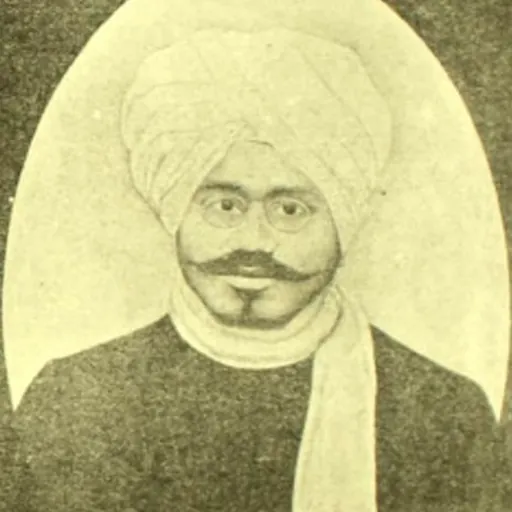
About Mahendra Pratap
Lived 1886 – 1979 (aged 92). Mahendra Pratap was an Indian author, politician and journalist.
Raja Mahendra Pratap Singh (1 December 1886 – 29 April 1979) was an Indian independence activist, politician, social reformer, and educationist. He was the president of the provisional government of India, established in Kabul in 1915, with the support of Indian nationalists and revolutionaries during World War I. He was nominated for the Nobel Peace Prize in 1932.
Born into the ruling family of Mursan in the Hathras district of the North-Western Provinces (now Uttar Pradesh), Singh was educated at Muhammadan Anglo-Oriental College, which later became Aligarh Muslim University. Singh participated in various nationalist and reform movements and spent several years in self-imposed exile engaged in political activities abroad. Singh also formed the executive board of India in Tokyo, Japan in 1940 during World War II. After India's independence, Singh served as a Member of Parliament representing Mathura in the Lok Sabha from 1957 to 1962. Singh established a number of educational institutions, including Prem Maha Vidyalaya in Vrindavan in 1909. He was popularly known as "Aryan Peshwa".
His legacy was commemorated by the government of India by on 1979 postage stamp of India. In Uttar Pradesh, the Raja Mahendra Pratap Singh University was founded in his honour in 2021. His father, Raja Ghanshyam Singh, was the ruler of Mursan. At the age of three, he was adopted by Raja Harnarayan Singh of Hathras. Although he did not complete his degree, his years at Aligarh exposed him to modern political and social ideas that shaped his reformist outlook.
In 1902, while still a student, Singh married Balveer Kaur, a Sikh princess from the princely state of Jind. He was deeply interested in religion, philosophy, and science, and was known for his broad humanist worldview.
Career Singh began his public life by focusing on educational and social reform. In 1906, he attended a session of the Indian National Congress, after which he became involved in the Indian independence movement.
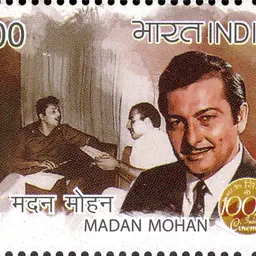
Prem Mahavidyalaya In 1909, Singh established India's first polytechnic college, Prem Mahavidyalaya in Vrindavan, with the dual vision of promoting education and nurturing nationalist thought. During the inauguration of Prem Mahavidyalaya, Madan Mohan Malaviya was also present. Over time, it evolved into an intellectual centre for revolutionary ideas and a meeting place for freedom fighters and Congress leaders.
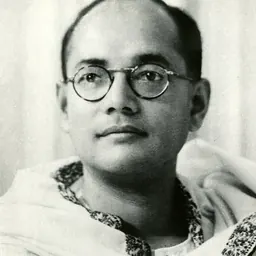
Prominent figures such as Subhas Chandra Bose, Rabindranath Tagore, Sarojini Naidu, C. F. Andrews, and Jawaharlal Nehru visited the college, leaving their remarks in its visitor book. Mahatma Gandhi spent a day there on 19 April 1915, recording his admiration for Singh's dedication to the national cause. Singh was influenced by the ideas of Dadabhai Naoroji, Bal Gangadhar Tilak, Maharaja of Baroda, and Bipin Chandra Pal, and actively supported the Swadeshi movement and opposed untouchability.
In 1914, Singh left Prem Mahavidyalaya to seek international backing for India's independence, publishing the periodical Nirbal Sevak from Dehradun and travelling through Germany, Bulgaria, Hungary, Turkey, Afghanistan, Russia, and Japan to advocate for the Indian independence movement before returning to India in 1946. The government operated from Afghanistan and sought diplomatic and military support, though it did not gain official recognition from the Afghan ruler. This initiative is considered one of the earliest attempts by Indians to assert sovereignty outside the subcontinent.
Following the Kabul mission, Singh spent several decades abroad, engaging in diplomatic and activist work across Europe and Asia. He met various leaders, including Kaiser Wilhelm II in Germany and Bolshevik leaders in Russia.
Singh's efforts in establishing the provisional government of India in Kabul (1915) received recognition from various leaders in the Indian independence movement. Mahatma Gandhi acknowledged Singh's contributions in a series of letters exchanged between them. Gandhi stated that Singh held a "special place" in his regard from 1915 and noted that he had been aware of the Hindu Jat leader since his time in South Africa. In his correspondence, Gandhi described Singh's dedication and patriotism as commendable.
Nomination for Nobel peace prize In 1929, Singh founded the World Federation, a platform promoting international cooperation, peace, and anti-imperial advocacy. In 1929, Singh donated 3.05 acres of land to Aligarh Muslim University for its expansion and development. In 1932, he was nominated for the Nobel Peace Prize by Swedish activist N. A. Nilsson for his contributions to international dialogue and anti-colonial activism.
During World War II, in 1940, Singh established the executive board of India in Tokyo, Japan. The organisation aimed to unite Indian nationalists abroad and coordinate efforts to secure support from the Axis powers for India's independence.
On 22 November 1957, Singh moved a bill in Lok Sabha to recognise the service of people like, Vinayak Damodar Savarkar, Barindra Kumar Ghosh, and Bhupendranath Datta. The bill was defeated, with 48 votes favouring it, and 75 against it. He, along with other members walked out of the Lok Sabha saying "I hope every Bengali and every Maratha will also walk out".
Electoral history
Legacy Singh was known for establishing the provisional government of India in Kabul in 1915, which aimed to secure international support for India's independence.
He was a prolific writer and thinker, advocating social harmony through his ethical-spiritual concept of "Prem-Dharam".
Don’t just read it —
keep it.
Full-length biographies made to live with: read them, listen on the way to work, watch them tonight.
- E-book
- Audio
- Video
Instant download · yours to keep · every purchase keeps this site free
Important facts
People in Mahendra Pratap's life
Named in this biography and alive at the same time
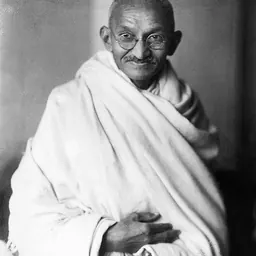


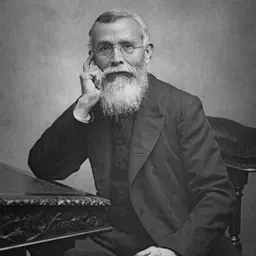
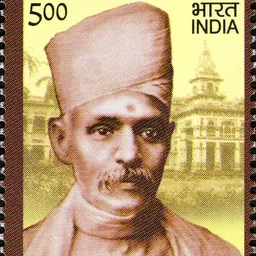
Related people
Same field, nearest in time



Contemporaries
People whose lives overlapped Mahendra Pratap's


Frequently asked questions
Who was Mahendra Pratap?
Indian activist and journalist (1886-1979)
When was Mahendra Pratap born?
Mahendra Pratap was born on 1 December 1886 in Hathras district.
When did Mahendra Pratap die?
Mahendra Pratap died on 29 April 1979.
What was Mahendra Pratap's occupation?
Mahendra Pratap was an author, politician and journalist.
What nationality was Mahendra Pratap?
Mahendra Pratap was Indian.
Sources & further reading
· DBpedia: Raja Mahendra Pratap Singh
Cite this page
APA: Biography.guide. (2026). Mahendra Pratap. https://biography.guide/mahendra-pratap/
MLA: "Mahendra Pratap." Biography.guide, https://biography.guide/mahendra-pratap/.
Chicago: "Mahendra Pratap." Biography.guide. https://biography.guide/mahendra-pratap/.
Data last updated: 2026-09-20 · Spot an error? Report a correction.
Portrait: Wikimedia Commons · author & licence
Page generated 2026-09-27 04:58 UTC