
About Mahāvīra
Lived 800 – 875. Mahāvīra was a mathematician.
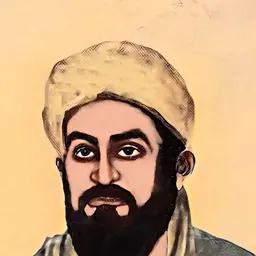
Mahāvīra (or Mahaviracharya, "Mahavira the Teacher") was a 9th-century Indian Jain mathematician possibly born in Mysore, in India. He authored Gaṇita-sāra-saṅgraha (Ganita Sara Sangraha) or the Compendium on the gist of Mathematics in 850 CE. He was patronised by the Rashtrakuta emperor Amoghavarsha. He separated astrology from mathematics. It is the earliest Indian text entirely devoted to mathematics. He expounded on the same subjects on which Aryabhata and Brahmagupta contended, but he expressed them more clearly. His work is a highly syncopated approach to algebra and the emphasis in much of his text is on developing the techniques necessary to solve algebraic problems. He is highly respected among Indian mathematicians, because of his establishment of terminology for concepts such as equilateral, and isosceles triangle; rhombus; circle and semicircle. Mahāvīra's eminence spread throughout southern India and his books proved inspirational to other mathematicians in Southern India. It was translated into the Telugu language by Pavuluri Mallana as Saara Sangraha Ganitamu.
He discovered algebraic identities like a3 = a (a + b) (a − b) + b2 (a − b) + b3. He also found out the formula for nCr as [n (n − 1) (n − 2) ... (n − r + 1)] / [r (r − 1) (r − 2) ... 2 * 1]. He devised a formula which approximated the area and perimeters of ellipses and found methods to calculate the square of a number and cube roots of a number. He asserted that the square root of a negative number does not exist. Arithmetic operations utilized in his works like Gaṇita-sāra-saṅgraha(Ganita Sara Sangraha) uses decimal place-value system and include the use of zero. However, he erroneously states that a number divided by zero remains unchanged.
Rules for decomposing fractions Mahāvīra's Gaṇita-sāra-saṅgraha gave systematic rules for expressing a fraction as the sum of unit fractions. This follows the use of unit fractions in Indian mathematics in the Vedic period, and the Śulba Sūtras' giving an approximation of equivalent to .
In the Gaṇita-sāra-saṅgraha (GSS), the second section of the chapter on arithmetic is named kalā-savarṇa-vyavahāra (lit. "the operation of the reduction of fractions"). In this, the bhāgajāti section (verses 55–98) gives rules for the following:
To express 1 as the sum of n unit fractions (GSS kalāsavarṇa 75, examples in 76):
To express 1 as the sum of an odd number of unit fractions (GSS kalāsavarṇa 77):
To express a unit fraction as the sum of n other fractions with given numerators (GSS kalāsavarṇa 78, examples in 79):
To express any fraction as a sum of unit fractions (GSS kalāsavarṇa 80, examples in 81): Choose an integer i such that is an integer r, then write
and repeat the process for the second term, recursively. (Note that if i is always chosen to be the smallest such integer, this is identical to the greedy algorithm for Egyptian fractions.)
To express a unit fraction as the sum of two other unit fractions (GSS kalāsavarṇa 85, example in 86): where is to be chosen such that is an integer (for which must be a multiple of ).
To express a fraction as the sum of two other fractions with given numerators and (GSS kalāsavarṇa 87, example in 88): where is to be chosen such that divides
Some further rules were given in the Gaṇita-kaumudi of Nārāyaṇa in the 14th century.
Don’t just read it —
keep it.
Full-length biographies made to live with: read them, listen on the way to work, watch them tonight.
- E-book
- Audio
- Video
Instant download · yours to keep · every purchase keeps this site free
Important facts
Related people
Same field, nearest in time





Contemporaries
People whose lives overlapped Mahāvīra's



Frequently asked questions
Who was Mahāvīra?
mathematician
When was Mahāvīra born?
Mahāvīra was born in 800 in India, Mysore.
When did Mahāvīra die?
Mahāvīra died in 875 in Indian subcontinent.
What was Mahāvīra's occupation?
Mahāvīra was a mathematician.
Sources & further reading
· DBpedia: Mahāvīra (mathematician)
Cite this page
APA: Biography.guide. (2026). Mahāvīra. https://biography.guide/mahavira/
MLA: "Mahāvīra." Biography.guide, https://biography.guide/mahavira/.
Chicago: "Mahāvīra." Biography.guide. https://biography.guide/mahavira/.
Data last updated: 2026-09-20 · Spot an error? Report a correction.
Page generated 2026-09-27 05:24 UTC