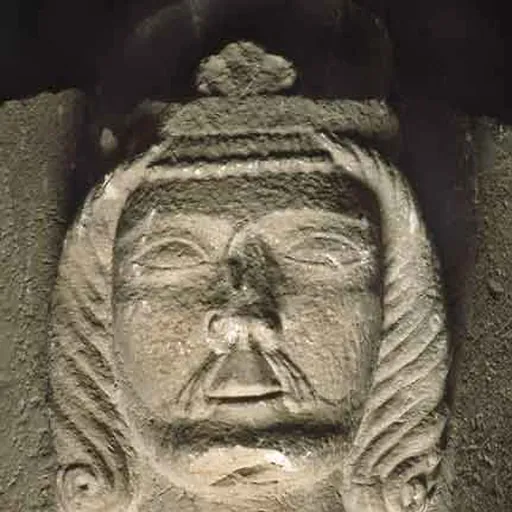
Magnus III of Sweden
King of Sweden from 1275 to 1290
About Magnus III of Sweden
Lived 1240 – 1290 (aged 49–50). Magnus III of Sweden was a Swedish king.
Magnus Ladulås (, ), also known as Magnus Birgersson ( – 18 December 1290), was King of Sweden from 1275 until his death in 1290.
A son of Birger Jarl and Ingeborg Eriksdotter, Magnus became king after he and his brother Erik Birgersson rebelled against their elder brother, King Valdemar, in 1275. Valdemar was defeated at the Battle of Hova, and Magnus was acclaimed king later that year. Following Magnus's death in 1290, he was succeeded by his ten-year-old son Birger, during whose minority Sweden was governed by a regency headed by Torgils Knutsson.
Medieval Swedish kings did not use regnal numbers as part of their title. In modern literature he may be referred to as either Magnus I or Magnus III.
Epithet The origin of the epithet Ladulås is not known for certain, due to the lack of source material from the latter half of the 14th century. It appears widely in written documents from the beginning of the 15th century, with the Visby Chronicle from 1412 being the oldest datable document. Lilla rimkrönikan from gives the traditional explanation, ascribing the epithet to the Ordinance of Alsnö. This act by Magnus freed the yeomanry from the duty to provide sustenance for travelling nobles and bishops, and "locked the barns". Early life
Magnus was born around 1240 as the second son of Birger Jarl (1200–66) and Princess Ingeborg, daughter of King Erik Knutsson and sister of King Erik Eriksson of Sweden. The early life of Magnus is poorly documented, but he seems to have received an extensive education.
When Birger died in 1266, Magnus assumed his title as the Duke of Sweden. The title was not accompanied by any unified territory, but by a number of scattered estates and rights to collect taxes and fines. He also received Nyköping Castle in Södermanland.
There is no indication that he would have received the powers of his father.
In 1276, Magnus married Helvig, daughter of Gerard I of Holstein. Through her mother, Elizabeth of Mecklenburg, Helvig was a descendant of Christina, the putative daughter of King Sverker II. A papal annulment of Magnus' alleged first marriage and a dispensation for the second (necessary because of consanguinity) were issued ten years later, in 1286. Helvig later acted as regent, probably 1290–1302 and 1320–1327.
Magnus died when his sons were yet underage. Magnus ordered his kinsman Torkel Knutsson, the Lord High Constable of Sweden as the guardian of his heir, the future King Birger, who was about ten years old at father's death.
Modern research In spring 2011, archaeologists and osteologists from the Stockholm University were granted permission to open one of the royal tombs in the Riddarholmen Church, traditionally believed to contain the remains of Magnus Ladulås and some of his relatives. An osteological and odontological examination revealed the presence of five male and two female skeletons. Preliminary studies indicated a notable sickly disposition in one skeleton, previously presumed to belong to Magnus Ladulås based on descriptions of his ailments. Contrary to expectations, radiocarbon dating indicated that the skeletons were from the 15th and early 16th centuries, and could not belong to the king and his family.
Issue From his alleged first (annulled) marriage to an unknown woman: Erik (born c. 1275 – c. 1277)
From his second marriage to Helvig of Holstein: Ingeborg (1277 – 1319); married King Eric VI of Denmark. Birger (1280 – 1321), King of Sweden from 1290 to 1318 Erik (c. 1282 – 1318), duke, father to King Magnus Eriksson; the Erik's Chronicle'' is named after him Valdemar (after 1282 – 1318), Duke of Finland. Erik and Valdemar died of starvation 1318 at Nyköping Castle while imprisoned by his brother, King Birger. Rikissa (c. 1285 after 1347), Abbess of the convent of St. Clare's Priory, Stockholm.
Don’t just read it —
keep it.
Full-length biographies made to live with: read them, listen on the way to work, watch them tonight.
- E-book
- Audio
- Video
Instant download · yours to keep · every purchase keeps this site free
Important facts
People in Magnus III of Sweden's life
Named in this biography and alive at the same time


Related people
Same field, nearest in time


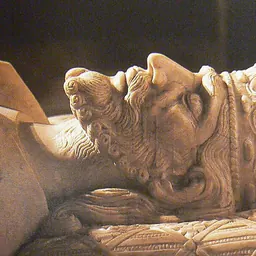



Contemporaries
People whose lives overlapped Magnus III of Sweden's
Frequently asked questions
Who was Magnus III of Sweden?
King of Sweden from 1275 to 1290
When was Magnus III of Sweden born?
Magnus III of Sweden was born in 1240.
When did Magnus III of Sweden die?
Magnus III of Sweden died on 18 December 1290 in Visingsö.
What was Magnus III of Sweden's occupation?
Magnus III of Sweden was a king.
What nationality was Magnus III of Sweden?
Magnus III of Sweden was Swedish.
Sources & further reading
· Wikipedia: Magnus III of Sweden
Cite this page
APA: Biography.guide. (2026). Magnus III of Sweden. https://biography.guide/magnus-iii-of-sweden/
MLA: "Magnus III of Sweden." Biography.guide, https://biography.guide/magnus-iii-of-sweden/.
Chicago: "Magnus III of Sweden." Biography.guide. https://biography.guide/magnus-iii-of-sweden/.
Data last updated: 2026-09-23 · Spot an error? Report a correction.
Portrait: Wikimedia Commons · author & licence
Page generated 2026-09-27 05:05 UTC