
Magnus Backes
German art historian and historical preservationist
About Magnus Backes
Lived 1930 – 2019 (aged 88–89). Magnus Backes was a German art historian and preservationist.
Magnus Backes (17 September 1930 – 21 May 2019) was a German art historian and historic preservationist. From 1983 to 1991, he succeeded Werner Bornheim gen. Schilling and Hartmut Hofrichter as the third of the General Directorate for Cultural Heritage Rhineland-Palatinate Rheinland-Pfalz in Mainz.
Life Origin and education Born in Cologne, Backes first attended a grammar school in Bonn before taking up studies in history of art and archaeology at the Rheinische Friedrich-Wilhelms-Universität Bonn there. In 1957, he was awarded a Dr. phil. with Heinrich Lützeler for his thesis , ein rheinisch-hessischer Barockarchitekt and his dissertation was also awarded the Paul Clemen Scholarship.
Career Following his studies and doctorate, Backes found employment from 1958 to 1961 as curator at Marksburg, which is owned by the German Castles Association. These years had a lasting influence on his further life, but also on his work as a monument conservator. It was at Marksburg, the only hilltop castle on the Middle Rhine that had remained undestroyed over the centuries, that he met his future wife, whom he married in 1960. His work on this monument "probably decided his career path, to deal directly and practically with the monuments of history and to make them clear to people, to make them understandable and, last but not least, to preserve them for future generations." his office grew to up to 160 employees at times, with simultaneous restructuring towards decentralisation.
In addition to his official activities, during which he developed, among other things, a financing model for the launch of the in Rhineland-Palatinate, Backes also belonged to numerous organisations, associations and corporations. The external reputation was just as important to him as the "internal consolidation" and expansion of the office he led. His vice-presidency in the German National Committee of ICOMOS for several years should be mentioned. At the level of UNESCO, he represented the Federal Republic of Germany during the talks held in Australia concerning the inclusion of the Speyer Cathedral and the Würzburg Residence (1981) to the World Heritage List.
Backes, who also received teaching assignments at the universities of Applied Sciences in Koblenz University of Applied Sciences, Augsburg University of Applied Sciences and at the , was also responsible for the initiative to found the Institute for Stone Conservation for Hesse, Rhineland-Palatinate and Saarland. at the age of 88.
Publications
Don’t just read it —
keep it.
Full-length biographies made to live with: read them, listen on the way to work, watch them tonight.
- E-book
- Audio
- Video
Instant download · yours to keep · every purchase keeps this site free
Important facts
People in Magnus Backes's life
Named in this biography and alive at the same time

Related people
Same field, nearest in time
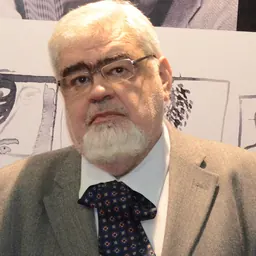


Contemporaries
People whose lives overlapped Magnus Backes's



Frequently asked questions
Who was Magnus Backes?
German art historian and historical preservationist
When was Magnus Backes born?
Magnus Backes was born in 1930 in Cologne.
When did Magnus Backes die?
Magnus Backes died on 21 May 2019 in Wiesbaden.
What was Magnus Backes's occupation?
Magnus Backes was an art historian and preservationist.
What nationality was Magnus Backes?
Magnus Backes was German.
Sources & further reading
Cite this page
APA: Biography.guide. (2026). Magnus Backes. https://biography.guide/magnus-backes/
MLA: "Magnus Backes." Biography.guide, https://biography.guide/magnus-backes/.
Chicago: "Magnus Backes." Biography.guide. https://biography.guide/magnus-backes/.
Data last updated: 2026-09-20 · Spot an error? Report a correction.
Page generated 2026-09-27 05:10 UTC