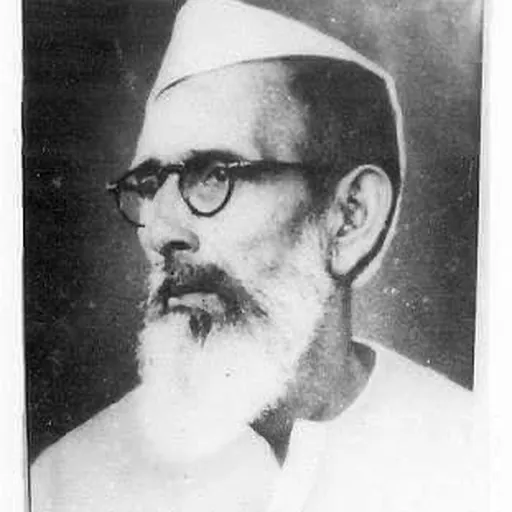
About Maghfoor Ahmad Ajazi
Lived 1900 – 1966 (aged 66). Maghfoor Ahmad Ajazi was an Indian poet, freedom fighter, writer, social worker, political activist and trade unionist, known for All-India Jamhur Muslim League.
Maghfoor Ahmad Ajazi (3 March 1900 – 26 September 1966) was an Indian political activist and statesman, and prominent figure in the Indian independence movement.
Early life Ajazi was born on 3 March 1900 in village Dihuli, Block Sakra of District Muzaffarpur, in British India. His father Maulana Hafizuddin Husain and grandfather Imam Bakhsh were zamindars and his mother's name was Mahfoozunnisa. His maternal grandfather Reysat Husain was an advocate in Sitamarhi.
He through Ajaz Husain Budayuni, the Khalif of Fazle Rahman Ganj Muradabadi, acquire title of 'Ajazi'. His elder brother Manzoor Ahsan Ajazi was also a freedom fighter. He had only one sister, Noorun Nisa.
Ajazi received his elementary and religious education from Madrasa-e-Imdadia, Darbhanga and then joined North Brooke Zila School, Darbhanga, from where he was expelled for opposing the Rowlatt Act. He passed the matriculation examination from Pusa High School and took admission in B.N. College, Patna, for higher studies. He was married to Azizul Fatima. After nikah, marriage ceremony which was attended by Shafi Daudi, Binda babu (later on Speaker, Bihar Assembly) and Deep babu (later on cabinet minister, Bihar), was completely transformed into a public meeting for freedom struggle where slogans against British rule in India and pro-freedom slogans were raised. When his sister promised to take out muthia and donated the dues, he agreed to take meal.
He attended the AICC session held at Ahmedabad in 1921 and supported Hasrat Mohani's motion on 'Complete Independence', which was opposed by Mahatma Gandhi and failed. "The Hindu", English Daily in its article published on 2 March 2022 entitled "Colonial's Rule's Impact :Wipe Out British Raj's Ethos" says "Sri Aurbindo advocating for Poorna Swaraj in 1907, going against the proposal of colonial Self-Government given by Dadabhai Naoroji. Hasrat Mohani, Bal Gangadhar Tilak, Maghfoor Ahmad Ajazi, and Bipin Chandra Pal reinforced this call for Complete Independence" Ajazi was not in support of the dominion status for India as many people in the Congress wanted at that time. He was always of the opinion that India should not remain under British imperialism for any significant amount of time and that the Raj had no moral right to subjugate Indians. This was the reason that he went against many Congress leaders of his time who were contented with dominion status and he instead wholeheartedly supported the motion of Complete Independence for India. In the Gaya Congress session of 1922, Ajazi met C. R. Das and made fervent electoral campaigns for the Congress candidates in the municipal polls. In 1923, a special session of the Congress took place in Delhi presided over by Abul Kalam Azad. During this session, an issue of sitting arrangement came up whereby the delegates from Bihar were not given seats in the front row. Ajazi registered his strong objection to this discriminatory arrangement after which Bihari delegates were also given appropriate seats. His protest was admittedly on the issue of self-respect of the Biharis and due to his attitude of not accepting any discrimination among people based on their faith, caste or place of origin.
He represented the Central Khilafat Committee at the All Parties Conference and All Muslim Parties Conferences on Nehru Report along with Shaukat Ali, Begum Md. Ali, Abdul Majid Daryabadi, Azad Subhani, Abul Muhasin Muhammad Sajjad and others. On the direction of Md Ali Jauhar, he took charge of the Khilafat Committee Calcutta. He along with Rajendra Prasad worked extensively in relief operations during the 1934 Nepal–India earthquake which was one of the worst earthquakes in India's history. He operated several relief camps providing the affected people with food and shelter. In 1941 he joined the Individual Civil Disobedience and started mobilizing people. During one such mobilization in Muzaffarpur while he was leading a peaceful protest, the local police resorted to lathi charge because of which Ajazi and his followers suffered serious injuries. He asserted his politics against the divisive politics of 1940s. He didn't give in despite increasing communalization of Indian landscape in the run up to the independence and remained firm in his belief that Muslims and Hindus can take the nation forward through co-operation and working together for the common good. Govt. of India has decorated his photograph in Azadi Ke Deewane Museum of Lal Qila, Delhi with caption "Opposed Jinnah's Two Nation Theory and founded All India Jamhur Muslim League to counter it".
Post-independence activism
He was the chairman of the Urdu Conference of Muzaffarpur held in 1960, in which for the first time a resolution was passed demanding that Urdu be accepted as an official language in Bihar.
Ajazi established Anjuman Khuddam-e-Millat, based on the pattern of Sir Syed's Educational society.
Death Ajazi died on 26 September 1966 in Muzaffarpur at his own residence Ajazi House. Thousands of people attended his Namaz-e-Janaza(funeral) which was performed at historic Tilak Maidan, the land bought by the donations made by Ajazi himself and now serves as the headquarters of District Congress Committee. It was the largest gathering ever for a funeral procession in the city's history. He was buried in Qazi Mohammadpur Qabristan. Author Kalam Haidry and novelist and journalist Moin Shahid called him "Baba-e-Urdu, Bihar" (Father of Urdu in BIhar) for his services towards Urdu language. Journalist and poet Wafa Malikpuri described him an old 'Mujahid' (crusader) for Urdu language. Muzaffarpur Municipal Board named the road leading to his residence as "Dr. Ajazi Marg".
Tributes by Govt. of India Govt. of India has recognised him as one of the Unsung Heroes of Indian Freedom Struggle on the eve of Amrit Mahotsav of Independence. Govt. of India has decorated his photograph in Azadi Ke Diwane Museum of Lal Qila, Delhi with caption "Opposed Jinnah's Two Nation Theory and founded All India Jamhur Muslim League to counter it".
Don’t just read it —
keep it.
Full-length biographies made to live with: read them, listen on the way to work, watch them tonight.
- E-book
- Audio
- Video
Instant download · yours to keep · every purchase keeps this site free
Important facts
People in Maghfoor Ahmad Ajazi's life
Named in this biography and alive at the same time
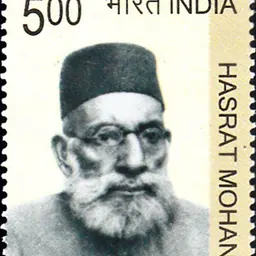
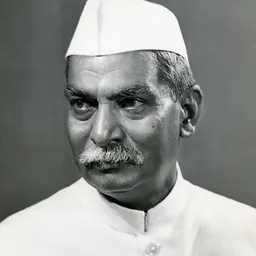

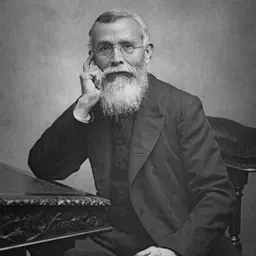

Related people
Same field, nearest in time
Contemporaries
People whose lives overlapped Maghfoor Ahmad Ajazi's





Frequently asked questions
Who was Maghfoor Ahmad Ajazi?
Indian freedom fighter and political activist (1900-1966)
When was Maghfoor Ahmad Ajazi born?
Maghfoor Ahmad Ajazi was born on 3 March 1900 in Muzaffarpur.
When did Maghfoor Ahmad Ajazi die?
Maghfoor Ahmad Ajazi died on 26 September 1966 in Muzaffarpur.
What was Maghfoor Ahmad Ajazi's occupation?
Maghfoor Ahmad Ajazi was a poet, freedom fighter, writer, social worker, political activist and trade unionist.
What was Maghfoor Ahmad Ajazi known for?
Maghfoor Ahmad Ajazi was known for All-India Jamhur Muslim League.
What nationality was Maghfoor Ahmad Ajazi?
Maghfoor Ahmad Ajazi was Indian.
Sources & further reading
· Wikipedia: Maghfoor Ahmad Ajazi
· DBpedia: Maghfoor Ahmad Ajazi
Cite this page
APA: Biography.guide. (2026). Maghfoor Ahmad Ajazi. https://biography.guide/maghfoor-ahmad-ajazi/
MLA: "Maghfoor Ahmad Ajazi." Biography.guide, https://biography.guide/maghfoor-ahmad-ajazi/.
Chicago: "Maghfoor Ahmad Ajazi." Biography.guide. https://biography.guide/maghfoor-ahmad-ajazi/.
Data last updated: 2026-09-23 · Spot an error? Report a correction.
Portrait: Wikimedia Commons · author & licence
Page generated 2026-09-27 05:06 UTC