
About Maarouf Al Rasafi
Lived 1875 – 1945 (aged 69–70). Maarouf Al Rasafi was an Iraqi poet, teacher, politician, writer, journal editor and journalist.
Ma'ruf bin Abdul Ghani al-Rusafi (; 1875 – 16 March 1945) was an Iraqi poet, educationist and literary scholar. A political skeptic, al-Rusafi is regarded as a humanist, a social justice poet, and one of Iraq's national poets. However, he is considered by many as a controversial figure in modern Iraqi literature due to his advocacy of freedom and opposition to imperialism. Because of this, he is known as the poet of freedom, and as one of the big three neo-classical poets of Iraq, alongside al-Jawahiri, and al-Zahawi.
Early life Ma'ruf al-Rusafi is known to have been born in 1875 ) at al-Rusafa in Baghdad, Iraq His father, Abd al-Ghani, hailing from the Jibara Kurdish tribe, He continued his studies in Religion and Linguistics under an Arabic scholar, Sheikh Mahmud Shukri al-Alusi, and stayed there for twelve years where he had the opportunity to learn Sufism, Linguistics, Islamic principles and general sciences. Adil Jabr, the assistant director of education, Khalil al-Sakakini, an Arab nationalist and Nakhlah Zuraiq, an Arabic faculty member at the English College in Jerusalem. The association also provided al-Rusafi with opportunity to recite his poems at the gatherings and pursue his literary career. he made a declaration at the Palestine Arab Congress held at Haifa that a higher college of Arab studies would be established in Jerusalem, a promise never fulfilled.
Al-Rusafi, who was embedded in regional literature and had a lack of "political homeland", was frustrated not only with his critics, but also post-Ottoman partitions. This was evident by his lack of support for the ruling Hashemite dynasty. After his return from Palestine, al-Rusafi would edit an opposition paper but claimed that this was at the "request of the government." Nevertheless, Ma'ruf al-Rusafi continued working as a teacher while serving in the Iraqi Parliament, and keeping up with his poetry. Despite his relations with the monarchy, al-Rusafi had written a poem praising King Faisal I. Faisal I had a magnanimous relationship with the poet and forgave him during mishaps. Especially since Faisal chose al-Rusafi to be a member of the Iraqi Parliament.
Al-Rusafi was also known to visit the Arif Agha Café on al-Rashid Street, and engage in reciting political poems to motivate demonstrators. Among the young poets who used to meet with al-Rusafu to seek his help was a young Buland al-Haydari. Al-Rusafi was also known to have heated "literary battles" with the poet al-Zahawi in the al-Zahawi Café.
Later life and death Reports are available that al-Rusafi spent his last days in poverty, working in a tobacco shop in Baghdad.
A bronze statue of al-Rusafi was erected at the al-Rashid Street intersection, in Baghdad, near Souk al-Sarai. and al-Muayyad, published from Syria and Egypt. are classified into publications and manuscripts
Publications Diwan - collection of poems in four chapters, al-Kawniyat (7 poems), al-Ijtemaiyat (19 poems), al-Tarikhiyat (9 poems) and al-Wasfiyat (56 poems). The book was republished in 1932, expanded into 11 chapters. The third edition was brought out in 1952 and six more editions have been published since then. - a three volume work, published in 1944 by Matbatu al-Ma'rif publications, Baghdad. Ala Babi Sijni Abi al-Ala - critical study of Ma Abil Alaa fi Sijnihi, a book written by Taha Hussain. Published in 1947, after al-Rusafi's death.
Manuscripts Al-Risālah al-Irāqīyah fī al-Siyāsah wa al-dīn wa al-Ijtimā - a socio-political study written during al-Rusafi's stay in Fallujah during 1933 to 1941; published in 1940. Khawatir wa Nawadir - critical essays on literature, society, education, religion and politics, published in 1940. Kitab al-Aalah wa al-Idarah…wa ma Yattibi‘uhuma min al-Malabis wa al Marafiq wa al-Hanat - a book on linguistics and the Arabization of usages in foreign languages. Al-Shakhsiyah al Muhammadiyah au Hallu al Lughz al Muqaddas - a book on Prophet Mohammed, written in two stages; started the compilation in 1928 and completed while in Fallujah in 1941. Daf al-Maraq fi Kalami Ahli al-Iraq - a morphological and philological study of Iraqi languages. Al-Adab al-Rafi fi Mizan al-Shir - Lectures on Rhetoric and Metre, delivered during his tenure at Dar al-Muallimin, in Baghdad. Aarau Abi al-Ala - Compilation of the poems of Abul Ala. The original compilation of 1924 was lost and a second compilation was done in 1938.
Al-Rusafi's works have been translated into many languages including Russian.
Don’t just read it —
keep it.
Full-length biographies made to live with: read them, listen on the way to work, watch them tonight.
- E-book
- Audio
- Video
Instant download · yours to keep · every purchase keeps this site free
Important facts
Related people
Same field, nearest in time

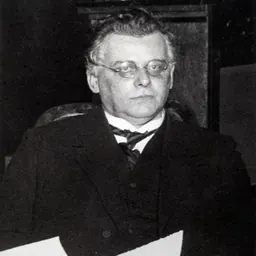
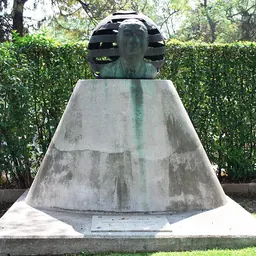
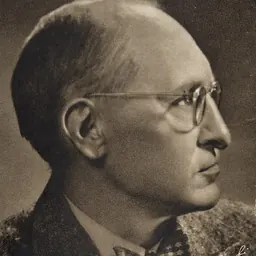
Contemporaries
People whose lives overlapped Maarouf Al Rasafi's
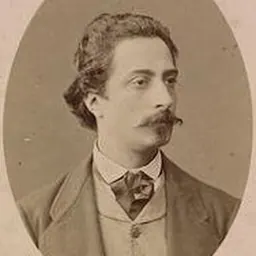


Frequently asked questions
Who was Maarouf Al Rasafi?
Iraqi poet
When was Maarouf Al Rasafi born?
Maarouf Al Rasafi was born in 1875 in Al-Rusafa.
When did Maarouf Al Rasafi die?
Maarouf Al Rasafi died on 16 March 1945.
What was Maarouf Al Rasafi's occupation?
Maarouf Al Rasafi was a poet, teacher, politician, writer, journal editor and journalist.
What nationality was Maarouf Al Rasafi?
Maarouf Al Rasafi was Iraqi.
Sources & further reading
· Wikipedia: Maarouf Al Rasafi
Cite this page
APA: Biography.guide. (2026). Maarouf Al Rasafi. https://biography.guide/maarouf-al-rasafi/
MLA: "Maarouf Al Rasafi." Biography.guide, https://biography.guide/maarouf-al-rasafi/.
Chicago: "Maarouf Al Rasafi." Biography.guide. https://biography.guide/maarouf-al-rasafi/.
Data last updated: 2026-09-26 · Spot an error? Report a correction.
Page generated 2026-09-27 05:15 UTC