
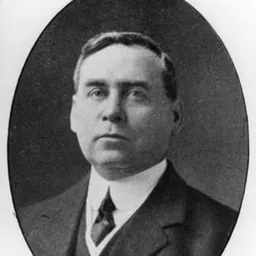
M S Ananthapadmanabha Rao
Kannada Laureate, poet, Writer and Gamaki
About M S Ananthapadmanabha Rao
Lived 1903 – 1987 (aged 84). M S Ananthapadmanabha Rao was an Indian spoken word artist, poet, coorg State and gamaka (storytelling).
Gamaka Vidwan M S Ananthapadmanabha Rao (6 September 1903 – 29 November 1987) was an Indian Kannada-language poet, writer, and gamaki. He was the author of the magnum opus Karnata Bharatha Kathamanjari containing the last eight parvas of the Kannada translation of the Mahabharatha that Kumaravyasa had left unfinished.
Biography
Early life Rao was born on 6 September 1903. He pursued his education at Madikeri under the guidance and tutelage of veteran laureate Panje Mangesh Rao.
Family Rao married Lakshmi Devi. They had 4 children.
Career Ananthapadmanabha Rao had chosen shorthand, bookkeeping and typewriting as his specialisations. After completing his matriculation, he joined the Department of State Excise under the then Coorg Government. In recognition of his abilities, in the year 1930 the Coorg Government posted Ananthapadmanabha Rao to Vellore to get trained in shorthand. He learnt Kannada shorthand and later joined the Police Department as the first ever reporter specialising in Kannada Shorthand.
Coorg later became a Part C State and was granted the status of Independent State, for the first time forming an independent legislative assembly. Ananthapadmanabha Rao, was appointed as the Kannada Reporter in the Independent Coorg Legislative Assembly.
Contributions to Kannada literature
Kannada Koota Panje Mangesh Rao established and started a Kannada Koota (Kannada Group) with the support of his fellow teachers and colleagues B S Kushalappa, Shenoy Master, G Shrinivas Murthy and C M Rama Rao who also became the first members of the group. Ananthapadmanabha Rao and his friends B K Subba Rao, G S Keshavacharya and a few others became the youth workers.
Literary works
Short stories Doddanchina Seere Nammadalla Ayyo Bhoota Gopu Maduve Putta Kittana Guttu Kalavida Head Munshi
Drama Shrungiya Shaapa Devammaaji Shava Samskaara
Kaavya Mahatma Kabir – composed in Bhamini Shatpadi, published in the Chamaraja Nagar's "Kadambari Sangraha” Kaveri Kathamrutham – in the Sarala Ragale style of poetry Karna (Preamble by Shri. B M Shri) – This was given the status of a text book in the then Madras University. Ramakrishna Paramahamsa Tulasi Ramayana (Kannada Translation of Ramacharita Maanas by Shri. Tulasi Das) with a preamble by Shri. DVG. Shri. Shamanna, Ananthpadmanabha Rao's friend's father suggested to translate the Hindi Ramacharita Manas to Kannada. Ananthapadmanabha Rao replied saying "I do not know Hindi, neither do I excel in Sanskrit. How can I translate this great piece of work?" Shri. Shamanna, who had an expertise in Hindi language, pursuing his suggestion, started to spend every day with Ananthapadmanabha Rao, reading out 5 verses a day and explaining the meaning of it. With the notes made during these daily meetings, Ananthapadmanabha Rao eventually translated the epic Ramacharita Maanas and composed the "Tulasi Ramayana" in the Vardhaka Shatpadi style containing more than 2500 poems. Shri Krishna Charitamrutam – in the Vardhaka Shatpadi style of Poetry Shri Madhwacharita Maanasa – in the Vardhaka Shatpadi style of Poetry Vishwamithra
Poetry Brindavana Kanike Guru Keertana Mala
Bruhat Kavya (Magnum Opus of Ananthapadmanabha Rao) Karnata Bharata Kathamanjari (Kumaravyasa'a unfinished last 8 parvas of Mahabharata, containing more than 8000 poems. This is in the Bhamini Shatpadi style of Poetry)
Audio In the year 2000, Madikeri Nagendra released "Yatiwara Banda Raghavendra" music album consisting of songs composed by Ananthapadmanabha Rao under his direction. While he was the singer and music composer of the Album, Tirumale Srinivas had composed the background music. Paneesh Rao had produced this music album under the Parimala Creations banner.
Awards and honors Mysore's Devaraja Bahaddur Datti Award in 1952 for his work, Tulasi Ramayana Kannada Sahitya Academy Award for the Year 1977 – 78 Gamaka Ratnakara honour by the Karnataka Gamaka Kala Parishat in the year 1983
Death Ananthapadmanabha Rao died on 29 November 1987.
Don’t just read it —
keep it.
Full-length biographies made to live with: read them, listen on the way to work, watch them tonight.
- E-book
- Audio
- Video
Instant download · yours to keep · every purchase keeps this site free
Important facts
People in M S Ananthapadmanabha Rao's life
Named in this biography and alive at the same time

Related people
Same field, nearest in time





Contemporaries
People whose lives overlapped M S Ananthapadmanabha Rao's

Frequently asked questions
Who was M S Ananthapadmanabha Rao?
Kannada Laureate, poet, Writer and Gamaki
When was M S Ananthapadmanabha Rao born?
M S Ananthapadmanabha Rao was born on 6 September 1903 in Madikeri.
When did M S Ananthapadmanabha Rao die?
M S Ananthapadmanabha Rao died on 29 November 1987 in Bengaluru.
What was M S Ananthapadmanabha Rao's occupation?
M S Ananthapadmanabha Rao was a spoken word artist, poet, coorg State and gamaka (storytelling).
What nationality was M S Ananthapadmanabha Rao?
M S Ananthapadmanabha Rao was Indian.
Sources & further reading
· Wikipedia: M S Ananthapadmanabha Rao
· DBpedia: M. S. Ananthapadmanabha Rao
Cite this page
APA: Biography.guide. (2026). M S Ananthapadmanabha Rao. https://biography.guide/m-s-ananthapadmanabha-rao/
MLA: "M S Ananthapadmanabha Rao." Biography.guide, https://biography.guide/m-s-ananthapadmanabha-rao/.
Chicago: "M S Ananthapadmanabha Rao." Biography.guide. https://biography.guide/m-s-ananthapadmanabha-rao/.
Data last updated: 2026-09-20 · Spot an error? Report a correction.
Page generated 2026-09-27 05:22 UTC