
About M. P. Paul
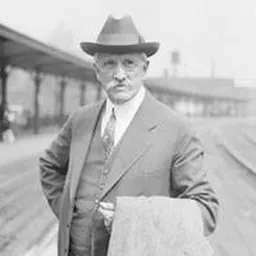
Lived 1904 – 1952 (aged 48). M. P. Paul was an Indian writer, literary critic, academic and translator.
Menacherry Poulose Paul (1904–1952) was an Indian academic, educationist, scholar and literary critic of Malayalam. Considered by many as one of the major literary critics of Malayalam literature, Paul inaugurated comparative literature in Malayalam through his works, Novel Sahithyam and Cherukatha Prasthanam. He was the founder of parallel college education system in Kerala, one of the major forces behind the Purogamana Sahitya Prasthanam and was the founder president of Sahithya Pravrthaka Sahakarana Sangham, the writers' cooperative movement.
Life sketch
M. P. Paul was born on the May Day of 1904 at Puthenpally Varapuzha, in Ernakulam district of the south Indian state of Kerala to Rosamma and Poulose of the Menacherry house. After early schooling locally, he did his high school studies at St. Albert's High School, Ernakulam and though he completed his high school course with scholarship, he could not appear for the Secondary School Leaving Certificate in 1918 as he was under age at the time of the examination. Subsequently, he passed the examination the next year and completed his intermediate course at St. Thomas College, Thrissur before graduating in history from St Joseph's College, Tiruchirappalli in 1924. He started his career as a tutor at the same college following his graduation and during his stay in Tiruchirappalli, he unsuccessfully attempted the Indian Civil Service examination. Returning to Kerala in 1928, he joined St. Thomas College, Thrissur as a faculty and stayed there until 1931; in between, he earned a master's degree in English literature in 1929. In 1931, he was dismissed from service due to his differences with the management of the college which eventually escalated into a court case. He had a second stint at St. Berchmans College during 1944–46 but moved to Thiruvananthapuram in 1950 to join Mar Ivanios College as a professor. In 1952, he also made an attempt to revive his parallel college in Kottayam which had stopped functioning. he died on July 12, 1952, at the age of 48, at Thiruvananthapuram, succumbing to illnesses contracted during one of his trips to Kottayam. The Church refused to allow him a catholic burial due to his constant confrontations with them and his mortal remains were buried at a public cemetery in Pattoor, Thiruvananthapuram.
Legacy and honours Without him there wouldn't have been any Basheer. The preface he wrote for Basheer's Balyakalasakhi was a striking one, said M. K. Sanu, about M. P. Paul, on the occasion of his 60th death anniversary. and define the literary genres of novel, short story and essays, is credited with introducing a modern approach to literary criticism in Malayalam literature. He was known to be instrumental in democratising the renaissance movement in Malayalam literature for taking its benefits to the masses. Along with a group of literary enthusiasts, he founded Sahitya Pravarthaka Sahakarana Sangham, a cooperative society for helping the writers to publish their works as well as getting them a decent remuneration during a time when even established writers like Vaikom Muhammad Basheer struggled to get adequate remuneration; Paul was its founder president. He was active in theatre, too, and, in 1937, founded the Shakespeare Theatre.
Paul introduced western literature to Malayalam and was the first critic in Malayalam literature to launch comparative literature which he attempted in his work, Novel Sahithyam where he exposed the similarities between Cymbeline and Kundalatha as well as Marthanda Varma and Ivanhoe. His work has been detailed in a biographical book, M. P. Paul -Kalapathinte Thiruseshippukal, written by George Onakkoor. Rosy Thomas, Paul's daughter, wrote a book, Urangunna Simham (The Sleeping Lion) on him, which is a compilation of her memories of her father.
M. P. Paul Charitable Trust, the eponymous charitable organization, has instituted M P Paul Award, an annual literary award for honouring literary excellence in Malayalam language studies and history. MP Paul award 2023 won by M Leelavathi.
Don’t just read it —
keep it.
Full-length biographies made to live with: read them, listen on the way to work, watch them tonight.
- E-book
- Audio
- Video
Instant download · yours to keep · every purchase keeps this site free
Important facts
People in M. P. Paul's life
Named in this biography and alive at the same time
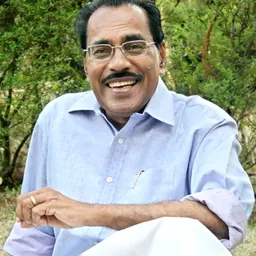
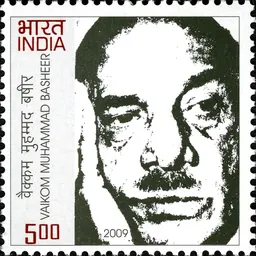

Related people
Same field, nearest in time

Contemporaries
People whose lives overlapped M. P. Paul's



Frequently asked questions
Who was M. P. Paul?
Indian writer (1904-1952)
When was M. P. Paul born?
M. P. Paul was born on 1 May 1904 in Ernakulam, Kingdom of Cochin, Varappuzha.
When did M. P. Paul die?
M. P. Paul died on 12 July 1952 in Thiruvananthapuram.
What was M. P. Paul's occupation?
M. P. Paul was a writer, literary critic, academic and translator.
What nationality was M. P. Paul?
M. P. Paul was Indian.
Sources & further reading
Cite this page
APA: Biography.guide. (2026). M. P. Paul. https://biography.guide/m-p-paul/
MLA: "M. P. Paul." Biography.guide, https://biography.guide/m-p-paul/.
Chicago: "M. P. Paul." Biography.guide. https://biography.guide/m-p-paul/.
Data last updated: 2026-09-20 · Spot an error? Report a correction.
Page generated 2026-09-27 04:57 UTC