
About Lupus Hellinck
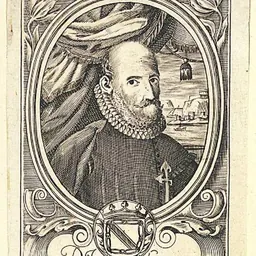
Lived 1493 – 1541 (aged 47–48). Lupus Hellinck was a French composer.
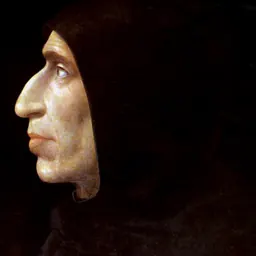
Lupus Hellinck (also Wulfaert) (1493 or 1494 – ) was a Flemish composer of the Renaissance. He was a prominent composer of masses, as well as German chorales and motets. Although he was a Roman Catholic all of his life, his music shows evidence of sympathy for the Protestant Reformation, and three of his motets—including a famous setting of In te domine speravi—were probably inspired by the prison writings of the martyred reformer Girolamo Savonarola.
Life Hellinck was probably born in Axel. Little else is known about him until he appears as a choirboy in Bruges at St. Donatian on 24 March 1506. He left in 1511 to go to school, returning to St. Donatian in 1513 as a cleric, where he stayed until 1515.
Until recently, nothing was known of his activities for the next four years, but in 1989 some records from the Vatican archives were published that showed that he spent this time in Rome. One of these documents, dated April 1518, gave his age as 24, which gives a birth date of 1493 or 1494. During this time he was a member of the household of Pope Leo X, and around 1518 he was ordained as a priest. A further confusion, not definitively solved, is that music theorist and writer Vincenzo Galilei, father of the astronomer, included a "Lupus" from northern Europe in a list of distinguished musicians in the 1513 court of Leo X; however, Vincenzo was writing several decades later.
By June 1518 Hellinck was probably in Ferrara, in the employ of Sigismondo d'Este (that this was the same "Lupus" has been disputed, but scholarly consensus is emerging that both composers named Lupus were the same); about a year later he returned to the Low Countries, and by October 1519 was back in Bruges, where he was again employed at St. Donatian. In 1521 he became a succentor at the nearby Church of Our Lady, and he returned again to St. Donatian in 1523 to serve in the same position there.
Hellinck seems to have remained in Bruges for the rest of his life. One event which is recorded gives an indication of his attitude towards the Protestant Reformation: his participation, in 1539, in a dramatic competition at Ghent, in a production of a play which was later placed by the Catholic Church on the Index of banned books. Along with his widely distributed setting of In te domine speravi, and his two settings of the Miserere (Psalm 6 and Psalm 50, respectively), all of which have been seen as tributes to the executed reformer Savonarola, this indicates his sympathy, if not his active participation in the movement for ecclesiastical reform.
Music and influence Hellinck wrote masses, motets, German chorales, French chansons, and songs in Dutch. All of his masses use the parody technique, and many are derived from his own motets. Stylistically they are contrapuntal and highly unified, with many passages repeated in whole or part. Contrasting homophonic sections appear: for example, the passage et incarnatus est is usually set in slow-moving chords, a dramatically effective procedure also used by Josquin des Prez, as in his Missa Pange Lingua. Hellinck's closing "Agnus Dei" sections are usually made up of material heard earlier in the mass, unifying the entire composition thematically in a way which foreshadowed compositional procedures hundreds of years later.
The three of Hellinck's motets which were Savonarola-inspired were all likely written in Ferrara. In te domine speravi most likely dates from 1518 or 1519, although it may have been written shortly after his return to Bruges. The first of two settings of the Miserere, Miserere mei deus, based on a collection of diverse psalm verses and stylistically reminiscent of Josquin's Miserere setting, exists in an Italian source copied around 1520, and thus was probably composed in Ferrara. The other, Miserere mei domine, is based on Psalm 6, and again is reminiscent of Josquin's setting, which itself was composed in Ferrara two decades earlier.
Later in his life Hellinck wrote 11 German chorale settings in a motet style. The chorale tune is in the tenor, but differs little from the other voices rhythmically. The existence of these pieces also testifies to his support for the Protestant Reformation.
Recordings Hellinck Missa Peccata Mea. Egidius Kwartet & College. Etcetera 2015 Hellinck Missa Surrexit pastor Johannes Lupi Te Deum, motets. The Brabant Ensemble Stephen Rice . Hyperion 2020
Don’t just read it —
keep it.
Full-length biographies made to live with: read them, listen on the way to work, watch them tonight.
- E-book
- Audio
- Video
Instant download · yours to keep · every purchase keeps this site free
Important facts
People in Lupus Hellinck's life
Named in this biography and alive at the same time


Related people
Same field, nearest in time


Contemporaries
People whose lives overlapped Lupus Hellinck's


Frequently asked questions
Who was Lupus Hellinck?
Franco-Flemish composer and singer
When was Lupus Hellinck born?
Lupus Hellinck was born in 1493 in Axel.
When did Lupus Hellinck die?
Lupus Hellinck died in 1541 in Bruges.
What was Lupus Hellinck's occupation?
Lupus Hellinck was a composer.
What nationality was Lupus Hellinck?
Lupus Hellinck was French.
Sources & further reading
Cite this page
APA: Biography.guide. (2026). Lupus Hellinck. https://biography.guide/lupus-hellinck/
MLA: "Lupus Hellinck." Biography.guide, https://biography.guide/lupus-hellinck/.
Chicago: "Lupus Hellinck." Biography.guide. https://biography.guide/lupus-hellinck/.
Data last updated: 2026-09-20 · Spot an error? Report a correction.
Page generated 2026-09-27 05:21 UTC