
About Luke the Evangelist
Lived AD 1 – AD 84 (aged 82–83). Luke the Evangelist was a physician, painter, writer, iconographer and evangelist.
Authorship of Luke and Acts
Critical opinion on the traditional attribution to Luke the Physician was assessed to be roughly evenly divided near the end of the 20th century. The Gospel does not claim to be written by a direct eyewitness, but states dependence on eyewitnesses and information passed down. While Acts beginning in the sixteenth chapter implies that its author was a traveling companion of Paul, Some scholars argue that Acts thus represents a forgery. However, in most translations the author suggests that they have investigated the book's events and notes the name (Theophilus) of that to whom they are writing.
The earliest manuscript of the Gospel (Papyrus 75 = Papyrus Bodmer XIV-XV), dated AD 200, ascribes the work to Luke; as did Irenaeus writing AD 180, and the Muratorian fragment, a 7th-century Latin manuscript thought to be copied and translated from a Greek manuscript as old as AD 170.
The Gospel of Luke and the Acts of the Apostles make up a two-volume work which scholars call Luke–Acts. Together they account for 27.5% of the New Testament, the largest contribution by a single author. St. Luke painting the Virgin, by Maarten van Heemskerck, 1532
As a historian
Most scholars understand Luke's works (Luke–Acts) in the tradition of Greek historiography. Luke 1:1–4, drawing on historical investigation, identified the work to the readers as belonging to the genre of history. There is disagreement about how best to treat Luke's writings, with some historians regarding Luke as highly accurate, and others taking a more critical approach.
Based on his accurate description of towns, cities and islands, as well as correctly naming various official titles, archaeologist William Mitchell Ramsay wrote that "Luke is a historian of the first rank; not merely are his statements of fact trustworthy. ...[He] should be placed along with the very greatest of historians." Professor of Classics at Auckland University, Edward Musgrave Blaiklock, wrote: "For accuracy of detail, and for evocation of atmosphere, Luke stands, in fact, with Thucydides. The Acts of the Apostles is not shoddy product of pious imagining, but a trustworthy record. ...It was the spadework of archaeology which first revealed the truth." New Testament scholar Colin Hemer has made a number of advancements in understanding the historical nature and accuracy of Luke's writings.
On the purpose of Acts, New Testament scholar Luke Timothy Johnson has noted that "Luke's account is selected and shaped to suit his apologetic interests, not in defiance of but in conformity to ancient standards of historiography." Such a position is shared by Richard Heard, who sees historical deficiencies as arising from "special objects in writing and to the limitations of his sources of information."
In modern times, Luke's competence as a historian is questioned, depending upon one's a priori view of the supernatural. Since post-Enlightenment historians work with methodological naturalism, such historians would see a narrative that relates supernatural, fantastic things like angels, demons etc., as problematic as a historical source. Mark Powell claims that "it is doubtful whether the writing of history was ever Luke's intent. Luke wrote to proclaim, to persuade, and to interpret; he did not write to preserve records for posterity. An awareness of this, has been, for many, the final nail in Luke the historian's coffin."
Robert M. Grant has noted that although Luke saw himself within the historical tradition, his work contains a number of statistical improbabilities, such as the sizable crowd addressed by Peter in Acts 4:4. He has also noted chronological difficulties whereby Luke "has Gamaliel refer to Theudas and Judas in the wrong order, and Theudas actually rebelled about a decade after Gamaliel spoke (5:36–7)", though this report's status as a chronological difficulty is hotly disputed.
Brent Landau writes: So how do we account for a Gospel that is believable about minor events but implausible about a major one? One possible explanation is that Luke believed that Jesus' birth was of such importance for the entire world that he dramatically juxtaposed this event against an (imagined) act of worldwide domination by a Roman emperor who was himself called "savior" and "son of God"—but who was nothing of the sort. For an ancient historian following in the footsteps of Thucydides, such a procedure would have been perfectly acceptable.
Symbol
In traditional depictions, such as paintings, evangelist portraits, and church mosaics, Saint Luke is often accompanied by an ox or bull, usually having wings. The ox is mentioned in both Ezechiel 1:10 and Revelation 4:7. Sometimes only the symbol is shown, especially when in a combination of those of all Four Evangelists. "St Luke is suggested by the ox, a sacrificial animal, because his Gospel stresses the sacrificial nature of Christ's ministry and opens with Zechariah performing his priestly duties."
Veneration
Eastern Orthodoxy The Eastern Orthodox Church commemorated Saint Luke, Apostle of the Seventy, Evangelist, companion (coworker) of the holy Apostle Paul, hieromartyr, physician, first icon painter with several feast days. The following are fixed feast days: 4 January - The Synaxis of the Seventy Apostles. 22 April - Feast of Apostles Nathaniel (Nathanael), Luke the Evangelist, Clement of Sardice or Clement of Rome and Apelles of Heraklion (Greek sources say that Saint Luke (Loukias) was someone other than the Evangelist Luke). This feast is held also on 10 September. 20 June - Translation of the relics and garments of the Apostles Luke, Andrew, and Thomas, the Prophet Eliseus, and Martyr Lazarus of Persia found , during the time of the emperor Romanos Lakapenos (919–44) in a monastery of Saint Augusta into the Church of the Holy Apostles in Constantinople under Emperor Constantine Porphyrogenitus (c. 956–70) by Saint Patriarch Polyeuctus of Constantinople (956–70). 10 September - Feast of Apostles of the Seventy: Nathaniel (Nathanael), Luke the Evangelist, Clement of Sardice or Clement of Rome and Apelles of Heraklion (Greek sources say that Saint Luke (Loukias) was someone other than the Evangelist Luke). The commemoration is held again on 22 April. 18 October - Feast of the Apostle and Evangelist Luke (Gregorian calendar) 31 October - Feast of the Holy Apostle and Evangelist Luke (Julian calendar) There are also moveable feasts in which Luke is commemorated: Synaxis of All Saints of Achaia - Moveable holiday the Sunday before the feast of Saint Andrew (30 November). Synaxis of All Saints of Boeotia - Moveable holiday on the last Saturday of May.
Roman Catholicism The Roman Catholic Church commemorates Luke the Evangelist on 18 October.
Oriental Orthodoxy The Coptic Orthodox Church commemorates the martyrdom of Luke on Paopi 22.
Anglicanism The Church of England commemorates Luke the Evangelist on 18 October.
Relics Despot George of Serbia purportedly bought the relics from the Ottoman sultan Murad II for 30,000 gold coins. After the Ottoman conquest of Bosnia, the kingdom's last queen, George's granddaughter Mary, who had brought the relics with her from Serbia as her dowry, sold them to the Venetian Republic.
In 1992, the then Greek Orthodox Metropolitan Ieronymos of Thebes and Livadeia (who subsequently became Archbishop Ieronymos II of Athens and All Greece) requested from Bishop Antonio Mattiazzo of Padua the return of "a significant fragment of the relics of St. Luke to be placed on the site where the holy tomb of the Evangelist is located and venerated today". This prompted a scientific investigation of the relics in Padua, and by numerous lines of empirical evidence (archeological analyses of the Tomb in Thebes and the Reliquary of Padua, anatomical analyses of the remains, carbon-14 dating, comparison with the purported skull of the Evangelist located in Prague) confirmed that these were the remains of an individual of Syrian descent who died between AD 72 and AD 416. The Bishop of Padua then delivered to Metropolitan Ieronymos the rib of Saint Luke that was closest to his heart to be kept at his tomb in Thebes. |Genetic characterization of the body attributed to the evangelist Luke
While there is a large margin of error, that man probably lived in 300 AD.
Gallery
Don’t just read it —
keep it.
Full-length biographies made to live with: read them, listen on the way to work, watch them tonight.
- E-book
- Audio
- Video
Instant download · yours to keep · every purchase keeps this site free
Important facts
People in Luke the Evangelist's life
Named in this biography and alive at the same time
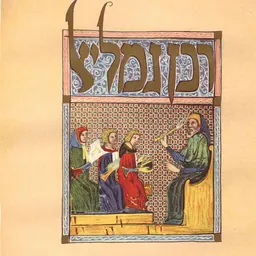


Related people
Same field, nearest in time



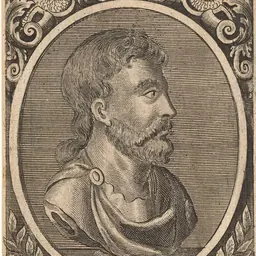
Contemporaries
People whose lives overlapped Luke the Evangelist's

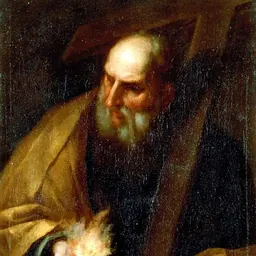
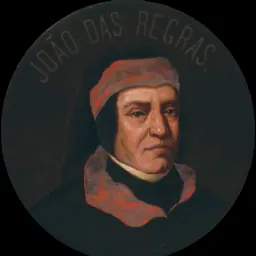
Frequently asked questions
Who was Luke the Evangelist?
one of the four evangelists
When was Luke the Evangelist born?
Luke the Evangelist was born in AD 1 in Antioch.
When did Luke the Evangelist die?
Luke the Evangelist died in AD 84 in Thebes.
What was Luke the Evangelist's occupation?
Luke the Evangelist was a physician, painter, writer, iconographer and evangelist.
Sources & further reading
· Wikipedia: Luke the Evangelist
· DBpedia: Luke the Evangelist
Cite this page
APA: Biography.guide. (2026). Luke the Evangelist. https://biography.guide/luke-the-evangelist/
MLA: "Luke the Evangelist." Biography.guide, https://biography.guide/luke-the-evangelist/.
Chicago: "Luke the Evangelist." Biography.guide. https://biography.guide/luke-the-evangelist/.
Data last updated: 2026-09-20 · Spot an error? Report a correction.
Page generated 2026-09-27 05:29 UTC