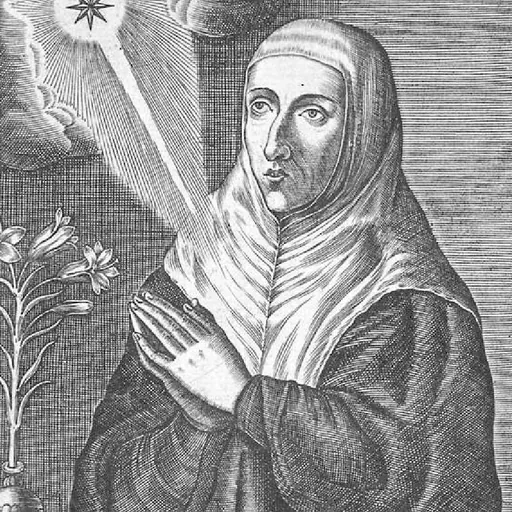
About Luisa Carvajal y Mendoza
Lived 1566 – 1614 (aged 48). Luisa Carvajal y Mendoza was a Spanish poet, writer and missionary.
Luisa Carvajal y Mendoza (formerly known as Doña Luisa de Carvajal y Mendoza; January 2, 1566 – January 2, 1614) is best known for her mystical religious poetry as well as her fight to spread Catholicism throughout England, by preaching against Anglicanism. She was imprisoned on two occasions, once in 1608 and again in 1613 for her Catholic proselytizing activities in England. Although her cause of death makes her ineligible to be considered a martyr, she took a vow for martyrdom in 1598.
Early life Carvajal y Mendoza was born in Jaraicejo, Spain. She was born into a family of wealth and royal lineage. Her father was Francisco de Carvajal, whose father was a respected theologian and enthusiast of the Jesuit order. Carvajal's mother was Maria de Mendoza, who was a descendant of one of the most recognized families in Spain. However, at the age of six, both of her parents died of illness, and she was placed under the care of her aunt Maria Chacon, who was a governess in Madrid.
Following the death of her uncle in 1592, Carvajal in her writings suggests that this granted her a sense of freedom in that she could now fully live for Christ as she so desired to do. In a time when women either got married or went to convents to become nuns, she opted to pursue neither of these paths. Although she was acquainted with religion, it was not something that she was willing to give her life for until later on in her life.
Penitential practices During Carvajal's time with her uncle Francisco Hurtado, penitential exercises became a habitual practice for Carvajal. Although in modern times, these penitential practices can appear to be a form of physical abuse and torture, it is important to realize that this mode of devotion was prominent during the 16th century in Spain. This form of penitence demonstrated one's devotion to God and the more one practiced this, the more the individual became empowered because they felt they were commemorating the death of Christ with their own bodies. Although women would punish themselves to mimic Christ's passion, in her adolescence her uncle ordered her punishment. These penitential practices influenced Carvajal in that later on in her life she would mortify her flesh as a symbol of meditating on Christ's Passion. Here is vivid description by Carvajal remembering her time in her uncle's household:
Later my uncle found another person among the same women of the household to serve in this, and at times he would order one [to discipline me], at times the other. And so, he would order at times that they lead me unclothed and barefoot, with my feet on the extremely cold floor, with a cap on my head that only held my hair, and a towel tied to my waist, a rope at my neck, which sometimes was made of hair bristles and others of hemp, and my hands tied with it, from one room to another, like an evil-doer, until arriving at the last small oratory that was beyond. It was a closed room and removed from the rest of the house and in a very secret part, and in front of me, pulling lightly by the rope, went one of the servile people of Our Lord of whom I have spoken, and at times she uttered words of humiliation and shame. Carvajal writes about the importance of martyrdom:
Life in London Carvajal's motive to move to England was for the sole purpose of converting Anglicans to Catholicism and she was willing to die as a martyr for this cause. On January 24, 1605, Carvajal made her way from Valladolid to London. Father Henry Garnet had made the arrangements. She arrived in late 1605 shortly prior to the Gunpowder Plot. Her poetry ranges from different styles such as pastoral poetry to sonnets. Carvajal's letters depict the ongoing political turmoil Catholics were facing in England at the time. Her letters contain extensive descriptions of her daily life in England as well as prayers asking those close to her for spiritual strength and prayers.
Perhaps the most frequent correspondent of Carvajal was ; who after a close friendship would not write again after she opposed Carvajal remaining in England. Ines de la Asuncion was another woman who kept extensive communication with Carvajal. Asuncion lived with Carvajal in Madrid and wanted to go to England but was not allowed to because her motive was not sufficiently religious.
Poem by Luisa Carvajal y Mendoza Below is one of Carvajal's poem titled Spiritual Sonnet (18) which illustrates through analogy the process of allowing the word of God to enter one's life.
Spiritual Sonnet (18) Receive, Silva, from your sweet Beloved this close embrace, with immense love brimming, and through my right side's opening enter, little dove, within my breast.
Repose on the sacred flowering bed and inflame yourself with love so passionate that not until the strong knot has fully tied will it ever be wholly satisfied.
See how I relinquish to you, my love, all my being and eminence sublime. cherish this gift by my love proffered,
You will find in me such glorious company, and in my very own arms held tenderly you will enjoy what no one has deserved.
Death and legacy Shortly after being released from her second imprisonment, Carvajal contracted a bronchial illness resulting in her death on her forty-eighth birthday in 1614. She died in London at the Spanish embassy.
Immediately after her death, friends and priests such as Ines de la Asuncion began to circulate her life story throughout Europe with hopes of beginning the beatification process for Carvajal. However, there has been some controversy regarding Carvajal's death. Since Carvajal died from a respiratory illness, rather being executed for her faith, this disqualifies her from being considered a martyr.
After Carvajal took her vow of poverty, she stated that she wanted to have her remains lie in a Jesuit church or college, however, Carvajal's will went unfulfilled as her wishes were not met. The Spanish ambassador Diego Sarmiento de Acuña, was ordered by King Phillip III to send her remains to Madrid, where they lie in the Royal Monastery of la Encarnación to this day.
The Iberian Airbus A340-313X located in Mexico City was named after Carvajal y Mendoza in 1990.
Don’t just read it —
keep it.
Full-length biographies made to live with: read them, listen on the way to work, watch them tonight.
- E-book
- Audio
- Video
Instant download · yours to keep · every purchase keeps this site free
Important facts
People in Luisa Carvajal y Mendoza's life
Named in this biography and alive at the same time
Related people
Same field, nearest in time


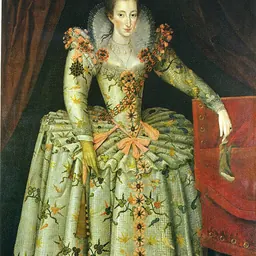
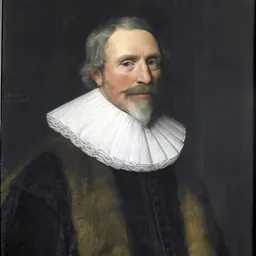
Contemporaries
People whose lives overlapped Luisa Carvajal y Mendoza's


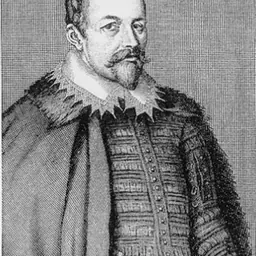


Frequently asked questions
Who was Luisa Carvajal y Mendoza?
Spanish religious poet
When was Luisa Carvajal y Mendoza born?
Luisa Carvajal y Mendoza was born on 2 January 1566 in Jaraicejo.
When did Luisa Carvajal y Mendoza die?
Luisa Carvajal y Mendoza died on 2 January 1614 in London.
What was Luisa Carvajal y Mendoza's occupation?
Luisa Carvajal y Mendoza was a poet, writer and missionary.
What nationality was Luisa Carvajal y Mendoza?
Luisa Carvajal y Mendoza was Spanish.
Sources & further reading
· Wikipedia: Luisa Carvajal y Mendoza
· DBpedia: Luisa Carvajal y Mendoza
Cite this page
APA: Biography.guide. (2026). Luisa Carvajal y Mendoza. https://biography.guide/luisa-carvajal-y-mendoza/
MLA: "Luisa Carvajal y Mendoza." Biography.guide, https://biography.guide/luisa-carvajal-y-mendoza/.
Chicago: "Luisa Carvajal y Mendoza." Biography.guide. https://biography.guide/luisa-carvajal-y-mendoza/.
Data last updated: 2026-09-22 · Spot an error? Report a correction.
Portrait: Wikimedia Commons · author & licence
Page generated 2026-09-27 05:03 UTC