
Luis Vernet
Merchant. Military and Civil Commander of the Falkland Islands and the Islands adjacent to Cape Horn
About Luis Vernet
Lived 1791 – 1871 (aged 79). Luis Vernet was an Argentine politician and merchant, known for Governor of the Falkland Islands.
Luis Vernet (born Louis Élie Vernet; March 6, 1791 – January 17, 1871) was a merchant from Hamburg of Huguenot descent. Vernet established a settlement on East Falkland in 1828, after first seeking approval from both the British and Argentine authorities. As such, Vernet is a controversial figure in the history of the Falkland Islands sovereignty dispute.
Biography Vernet was born in Hamburg but later claimed a French birthplace in his effort to have the French Government intercede with the British Government on his behalf. As a result, some sources refer to him a native of Hamburg, while others refer to him as French born.
Vernet variously referred to himself as Ludwig, Louis, Lewis or Luis depending on the language he was using. He was multilingual, being fluent in German, French, English and Spanish.
Family background Elias Luis Vernet (Vernet and Louis Elie) was born on 6 March 1791 in Hamburg. His ancestors were Huguenots, probably from Avignon, who settled first in Belgium and then Hamburg. His parents were the tobacco and tea merchant Jacques Vernet (1730–1813) and Maria Vernet. He had three brothers, Peter Alexander, Emilio and Federico.
At the age of 14, in 1805, he was appointed by his father to a trading company and sent to Philadelphia. There he joined the trading house of Krumbhaar, staying with Lewis Krumbhaar, who became a father figure. He became a merchant travelling to Portugal, Brazil and Hamburg.
Emigration to South America The U.S. government sent a diplomatic Commission to the newly independent United Provinces of the River Plate. Luis Vernet took passage in the frigate USS Congress, arriving in Montevideo in February 1818 (whilst it was a Brazilian possession) and on to Buenos Aires. He remained in Buenos Aires and organized a trading company with the port of Hamburg.
Together with the Montevideo-based Conrad Rücker (died 1866, Hamburg), he ran a trading company until 1821. Rücker was also his best man when on 17 August 1819 he wed María Saez Pérez (1800–1858) from Montevideo. With her he had seven children: Luis Emilio, Luisa, Sofia, Matilde (1830–1924), Gustavo, Carlos Federico.
Later he established an Estancia about 100 km south of Buenos Aires on the Río Salado, where he captured and slaughtered wild cattle. At this stage this represented the border of the colonised areas.
Falkland Islands venture
Luis Vernet had a close personal friendship with Jorge Pacheco, one of the heroes of the Liberation War and the British invasions of the River Plate. Pacheco was owed money by the Government of Buenos Aires and entered into an agreement with Vernet, whereby Vernet would support Pacheco until the debt was repaid, whereupon Vernet would receive half of the money owed. Vernet learned of the wild cattle in the Falklands through his wife María, who was related to a former Spanish Governor of Puerto Soledad, and conceived of a plan to exploit the cattle in the islands. Together with Pacheco he approached the Government in Buenos Aires with a plan to establish a settlement to exploit the wild cattle. In 1823, the United Provinces of the River Plate granted by decree rights to Jorge Pacheco and Luis Vernet. Governor Martin Rodriguez offered Pacheco the usufruct of the wild cattle in the Falkland Islands as payment for his debt.
Undeterred, Vernet persisted, but by now was aware of conflicting British claims to the islands and sought permission from the British consulate before departing for the islands. The second expedition was delayed until Winter 1826 by a Brazilian blockade, this did not succeed as Vernet had hoped. The expedition intended to exploit the feral cattle on the islands but the boggy conditions meant the Gauchos could not catch cattle in their traditional way. Vernet concluded that in order to succeed the horses would need to be retrained and set to work with the result that by 1828 he had a troop of well-trained horses.
In January 1828, he approached the Buenos Aires Government but they were unable to help. Instead, the government granted Vernet all of East Falkland including all its resources, and exempted him from taxation if a colony could be established within three years. He took settlers, later joined by the British Captain Matthew Brisbane (who had sailed to the islands earlier with Weddell), and before leaving once again sought permission from the British Consulate in Buenos Aires. The British asked for a report for the British government on the islands, and Vernet asked for British protection should they return. Vernet arrived in Puerto Soledad in 1829 and reverted to the use of the original French name as Puerto Luis. Vernet was anxious to establish the colony quickly due to the promise that it would be free from taxation if it could be established within 3 years. In order to control island resources, Vernet applied to the authorities in Buenos Aires for a warship to put an end to these activities. and instead appointed Vernet as Military and Civil Commander of Falkland Islands and the Islands adjacent to Cape Horn by the Government of Buenos Aires (his appointment was in the name of the Republic of Buenos Aires). In addition to the proclamation giving Vernet the authority to act with his own means, he was provided with 4 × 8-pdr cannons and 50 rifles, plus blacksmithing tools. In reference to the announcement of his appointment, Vernet later told Parish he had accepted the appointment out of concern that if another governor were appointed it might be detrimental to his business interests. Vernet's deputy, Matthew Brisbane, returned in March 1833 and endeavoured to resurrect the settlement but later that year was murdered alongside senior members of the settlement by disgruntled Gauchos.
The settlement at Port Louis was left in a derelict state following the murders, Lt Smith the first British resident set about making the buildings habitable. As a naval settlement the issue of Vernet's property became a matter for the admiralty and initially Lt Smith was instructed to take care of Vernet's property and provide accounts to Vernet.
In Buenos Aires, Vernet was effectively bankrupt and attempts to obtain compensation from the US Government for losses from the Lexington raid proved fruitless. The situation in Buenos Aires was chaotic and diplomatic relations with the US remained ruptured till 1839. He made several approaches to the British Government asking for support to re-establish his business at Port Louis, receiving support from Woodbine Parish (British chargé d'affaires in Buenos Aires from 1825 to 1832) as the best qualified person to develop the islands. who formed the Falkland Islands Commercial Fishery and Agricultural Association. This organisation was a key factor in persuading the British Government to establish a colony in the islands, rather than a military base. He provided Samuel Lafone, a businessman key to the formation of the Falkland Islands Company, with maps of the island and knowledge of the potential of the feral cattle population of the islands.
Later years Vernet's settlement with the British Government was reduced in order to settle promissory notes such as this left in the Falkland IslandsVernet was later credited with the discovery of a preservative treatment for leather; the process permitted the rapid growth of leather exports to Europe and elsewhere. He would also develop a method to improve the storage of oils and spirits. The money he made with these processes enabled him to travel to London in 1852 to press his claim for compensation for his losses. He claimed a sum total of £14,295 for horses, domesticated cattle, stone houses and beef left at the settlement, which with interest was inflated to £28,000. After some five years of wrangling he was awarded £2,400 in a settlement of his claim of which he received £1,850 the balance being used to pay off his promissory notes. Although he signed a waiver against further claims he attempted to press for further compensation in 1858 without success.
Vernet returned to Buenos Aires and in 1869 signed a contract with his eldest son to pursue claims against the US Government for the Lexington raid, against Britain for unsatisfactory compensation and against Silas E. Burrows, owner of the Superior for breaking the contract signed by Captains Davison and Congar in 1831.
Luis Vernet's mausoleum in La Recoleta Cemetery, Buenos Aires. Luis Vernet died in San Isidro, Buenos Aires, in 1871, and was interred in La Recoleta Cemetery.
The Vernet family persisted with the claims. In 1868, whilst Vernet was still alive, the Argentine government had granted Isla de los Estados part of Vernet's original 1828 concession to Luis Piedra Buena. His sons successfully petitioned the Argentine Government and received compensation for this loss but not for the loss of East Falkland. In 1884, he received support from the Government of President Julio Argentino Roca who reopened both the Lexington claim with the US and the Falklands claim with Britain. The US Government of President Cleveland rejected the claim in 1885. Argentine government protests over the Falklands had ceased with the signing of the Convention of Settlement but were revived in the Affair of the Map in 1884.
Legacy Vernet is considered as a national hero in Argentina as he was proclaimed Military and Civil Commander of Falkland Islands and the Islands adjacent to Cape Horn by the Republic of Buenos Aires in 1829, on the other hand he is also perceived as an unpatriotic merchant who acted in his own interest and made a pact with the British. The US Government accused Vernet of piracy, whilst the British regard him as an entrepreneur who began the opening up of the Falkland Islands economy.
Vernet was a complex character who impressed almost everyone who met him as a man of intelligence, charm and drive. He was not always truthful in what he said and his falsehoods have sometimes misled historians.
Don’t just read it —
keep it.
Full-length biographies made to live with: read them, listen on the way to work, watch them tonight.
- E-book
- Audio
- Video
Instant download · yours to keep · every purchase keeps this site free
Important facts
Family & relationships
People in Luis Vernet's life
Named in this biography and alive at the same time

Related people
Same field, nearest in time


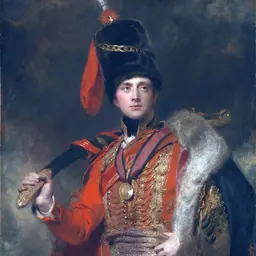

Contemporaries
People whose lives overlapped Luis Vernet's
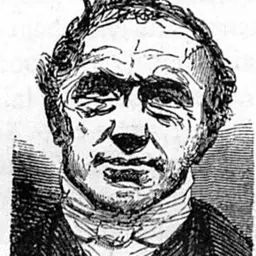
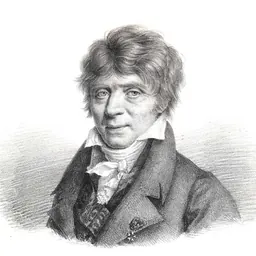


Frequently asked questions
Who was Luis Vernet?
Merchant. Military and Civil Commander of the Falkland Islands and the Islands adjacent to Cape Horn (1791-1871)
When was Luis Vernet born?
Luis Vernet was born on 6 March 1791 in Hamburg.
When did Luis Vernet die?
Luis Vernet died on 17 January 1871 in San Isidro.
What was Luis Vernet's occupation?
Luis Vernet was a politician and merchant.
What was Luis Vernet known for?
Luis Vernet was known for Governor of the Falkland Islands.
What nationality was Luis Vernet?
Luis Vernet was Argentine.
Sources & further reading
Cite this page
APA: Biography.guide. (2026). Luis Vernet. https://biography.guide/luis-vernet/
MLA: "Luis Vernet." Biography.guide, https://biography.guide/luis-vernet/.
Chicago: "Luis Vernet." Biography.guide. https://biography.guide/luis-vernet/.
Data last updated: 2026-09-22 · Spot an error? Report a correction.
Page generated 2026-09-27 05:33 UTC