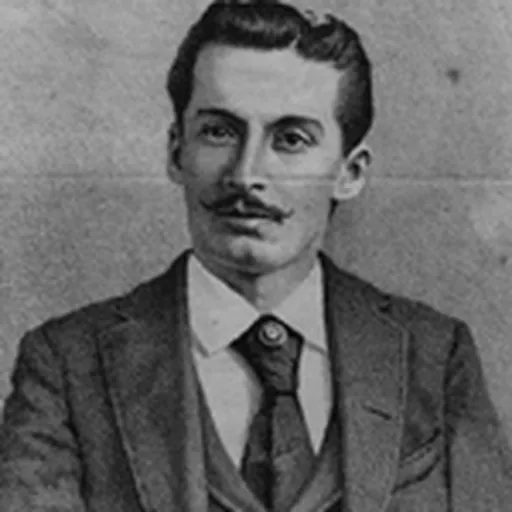
About Luis T. Romero
Lived 1854 – 1893 (aged 38–39). Luis T. Romero was an American composer, classical guitarist and guitarist.
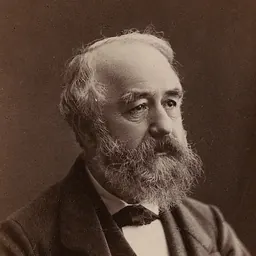
Luis Toribio Romero (1854 – November 19, 1893) was an American classical guitarist and composer of Spanish Californio heritage. Emerging as one of the earliest notable figures in American classical guitar music, Romero developed a distinguished career as a performer, composer, and teacher in California and later Boston. He contributed significantly to the promotion of plucked-string instruments, founding one of the first mandolin and guitar clubs on the West Coast. Through his compositions, arrangements, teaching, and performances in salons, civic events, and parlour concerts, Romero helped establish a foundation for classical guitar in the United States, leaving a lasting legacy within American music history.
Early life and musical education Luis T. Romero was born in San Luis Obispo, California in 1854. His family was of Spanish descent and had migrated to California before his birth. Growing up after the Gold Rush, he was exposed to a blend of Mexican Californian and European musical traditions. He began playing the guitar as a child, quickly developing advanced skill. Although little is documented about his early general education, by his teens he was proficient enough to pursue formal musical training. In addition to performing, Romero taught private lessons, fostering a community of amateur guitarists who contributed to the region’s lively musical culture. The ensemble, comprising mandolins, guitars, violins, and cellos, performed arrangements of European classical works and contemporary popular music. Their debut concert on May 24, 1888, was widely praised for showcasing the expressive range of plucked-string instruments. His California works blended Romantic European styles with Latin American folk influences, reflecting the cultural crosscurrents of post-Gold Rush California. By the late 1880s, his reputation had grown enough to attract attention from musicians and publishers beyond the West Coast, leading to his eventual move to Boston.
Life and Career in Boston (1889–1893) In 1889, Romero relocated to Boston, Massachusetts, seeking broader professional opportunities. Boston, already a major center for music publishing and performance in the late 19th century, offered Romero access to a vibrant artistic community and a growing demand for guitar and mandolin instruction. Upon his arrival, he quickly established himself as a respected teacher, attracting a steady stream of students from Boston’s Ideal Banjo, Mandolin, and Guitar Club — an ensemble that included many amateur and semi-professional musicians of the period.
In addition to teaching and performing, Romero remained active as a composer and arranger. Between 1889 and 1893, he published a significant portion of his music through Jean White Publishing Co., based in Boston. His output during this period included virtuosic concert pieces, arrangements of operatic melodies, and popular folk-inspired works such as his celebrated guitar setting of "La Paloma" and fantasias based on Verdi’s Rigoletto.
Notable compositions and arrangements Romero composed numerous original works for solo guitar and arranged popular songs and operatic melodies. His music blends virtuosic technique with the Romantic style of the late 19th century. Notable compositions include: Fantasie Americaine (or Fantasia Americaine) – a showpiece with lyrical and bravura passages. Souvenir d'Amérique – likely drawing on American patriotic tunes. Dance pieces such as Bella Bocca Polka and Un Beso – Mazurka, reflecting the era's taste for social dance music. Two gavottes, Gavotta in D major and Gertrude Gavotte, which demonstrate his use of Baroque‑inspired forms. La Típica and a Barcarolle, surviving in manuscript or published form. Chamber works including a waltz duet for two guitars. Selections from Giuseppe Verdi's Rigoletto for guitar, including a fantasia on its themes, published in San Francisco in 1889.
Public reception and legacy Romero was widely lauded by contemporaries on both coasts. West Coast publications praised his technical mastery and expressive tone, while Eastern periodicals such as S.S. Stewart's Banjo and Guitar Journal highlighted his success in Boston's musical circles, noting his ability to "captivate audiences with warmth and fluency."
Don’t just read it —
keep it.
Full-length biographies made to live with: read them, listen on the way to work, watch them tonight.
- E-book
- Audio
- Video
Instant download · yours to keep · every purchase keeps this site free
Important facts
People in Luis T. Romero's life
Named in this biography and alive at the same time

Related people
Same field, nearest in time



Contemporaries
People whose lives overlapped Luis T. Romero's



Frequently asked questions
Who was Luis T. Romero?
American musician
When was Luis T. Romero born?
Luis T. Romero was born in 1854 in San Luis Obispo.
When did Luis T. Romero die?
Luis T. Romero died on 19 November 1893 in Boston.
What was Luis T. Romero's occupation?
Luis T. Romero was a composer, classical guitarist and guitarist.
What nationality was Luis T. Romero?
Luis T. Romero was American.
Sources & further reading
Cite this page
APA: Biography.guide. (2026). Luis T. Romero. https://biography.guide/luis-t-romero/
MLA: "Luis T. Romero." Biography.guide, https://biography.guide/luis-t-romero/.
Chicago: "Luis T. Romero." Biography.guide. https://biography.guide/luis-t-romero/.
Data last updated: 2026-09-23 · Spot an error? Report a correction.
Portrait: Wikimedia Commons · author & licence
Page generated 2026-09-27 05:07 UTC