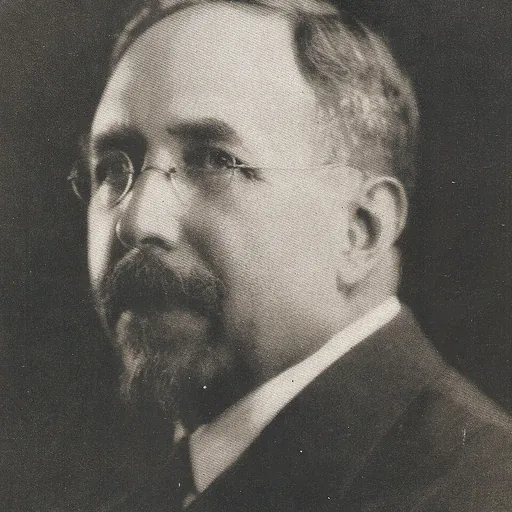
About Luis Cabrera Lobato
Lived 1876 – 1954 (aged 77). Luis Cabrera Lobato was a Mexican writer, politician, lawyer, diplomat and jurist.
The United States–Mexico Commission. Standing from left to right are: Stephen Bonsal, Attache of the State Department and Advisor to the American Commission; American Secretary of State Robert Lansing; Eliseo Arredondo, the Mexican ambassador designate, and Leo Stanton Rowe, the Secretary to the American Commission. Sitting from left to right are John Mott of New York City; Judge George Gray of Wilmington, Delaware; Secretary of the Interior Franklin Knight Lane; Luis Cabrera Lobato, chairman of the Mexican delegation and Secretary of the Treasury of Mexico; Alberto J. Pani, President of the National Railways of Mexico; and Ignacio Bonillas, Minister of Communications and Public Works.. The image was taken at the Biltmore Hotel in New York City on 9 September 1916. Luis Vicente Cabrera Lobato (17 July 1876 – 12 April 1954) was a Mexican lawyer, politician and writer. His pen name for his political essays was Lic. Blas Urrea; his more literary works appeared under the name of Lucas Rivera. During the late presidency of Porfirio Díaz, he was a vocal critic of the regime. He became an important civilian intellectual in the Mexican Revolution (1910–1920).
He was a co-founder of the Anti-Re-electionist Party, which backed the candidacy of Francisco I. Madero, and when armed revolutionaries forced Díaz to resign, he counseled Madero not to make a deal with the old regime. During the Madero administration, he drafted a reform land law, which Madero did not sign. After Madero's murder in the February 1913 coup d'état, Cabrera was a key civilian adviser to the Primer Jefe of the Constitutionalist Army, Venustiano Carranza. He retired from politics following Carranza's ouster and murder in 1920.
Biography Cabrera was born in Zacatlán, Puebla, the son of the baker Cesáreo Cabrera Ricaño and Gertrudis Lobato; an uncle, Daniel Cabrera Rivera (1858-1914), was a journalist and head of the anti-Díaz publication El Hijo del Ahuizote and was the older brother of the physician and governor of Puebla (1917–1920) Alfonso Cabrera. Luis married Guillermina Nevraumont (1884–1968) and was later married to Elena Cosío. Additionally he wrote for several journals. In July 1909 he became a co-founded of the Anti-Re-electionist Party, started a critical campaign against the científico group of Positivist advisers of Porfirio Díaz. In his articles he also supported the campaign against Porfirio Díaz, who had initially said he would not run in the 1910 elections and then reneged.
Both he and Molina Enríquez were supporters of Bernardo Reyes to succeed Díaz in 1910, but Reyes declined to run and was sent on a military mission to Europe. Cabrera then joined in support of Francisco I. Madero and the Anti-Reelectionist Party. During the interim presidency of Francisco León de la Barra, who assumed the presidency after Díaz's ouster and exile and before the election of Madero to the presidency, Cabrera was offered a government post, which he declined in favor of running for the post of federal deputy. Following Madero's election to the presidency, Cabrera was rejected by the president's advisers for the position of secretary of development, and he then served as a deputy for the Federal District.
Following Madero's assassination in February 1913 during General Victoriano Huerta's coup d'état and then restoration of Porfirian policies, Cabrera joined the Constitutionalist faction headed by Venustiano Carranza. Cabrera was "one of the 'First Chief's' principal aides, often credited for being the intellectual behind and theorist of Carrancismo". a street, and a plaza in the Colonia Roma of Mexico City are named in his honor.
Works Cabrera wrote for several newspapers, and predominantly translated foreign works into Spanish, but was also author of own works.
Essays Las manzanas de Zacatlán, 1940 El matrimonio, 1951
Poetry Musa peregrina (includes versions of other poets), 1921
Collected works Obra jurídica, 1972 Obra literaria, 1974 Obra política, 1975
Don’t just read it —
keep it.
Full-length biographies made to live with: read them, listen on the way to work, watch them tonight.
- E-book
- Audio
- Video
Instant download · yours to keep · every purchase keeps this site free
Important facts
Family & relationships
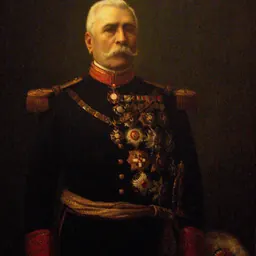
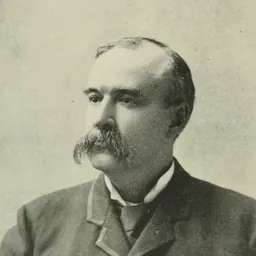
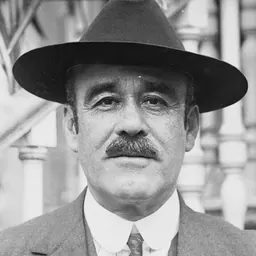
People in Luis Cabrera Lobato's life
Named in this biography and alive at the same time




Related people
Same field, nearest in time


Contemporaries
People whose lives overlapped Luis Cabrera Lobato's

Frequently asked questions
Who was Luis Cabrera Lobato?
Mexican politician
When was Luis Cabrera Lobato born?
Luis Cabrera Lobato was born on 17 July 1876 in Zacatlán.
When did Luis Cabrera Lobato die?
Luis Cabrera Lobato died on 12 April 1954 in Mexico City.
What was Luis Cabrera Lobato's occupation?
Luis Cabrera Lobato was a writer, politician, lawyer, diplomat and jurist.
What nationality was Luis Cabrera Lobato?
Luis Cabrera Lobato was Mexican.
Sources & further reading
· Wikipedia: Luis Cabrera Lobato
· DBpedia: Luis Cabrera Lobato
Cite this page
APA: Biography.guide. (2026). Luis Cabrera Lobato. https://biography.guide/luis-cabrera-lobato/
MLA: "Luis Cabrera Lobato." Biography.guide, https://biography.guide/luis-cabrera-lobato/.
Chicago: "Luis Cabrera Lobato." Biography.guide. https://biography.guide/luis-cabrera-lobato/.
Data last updated: 2026-09-22 · Spot an error? Report a correction.
Portrait: Wikimedia Commons · author & licence
Page generated 2026-09-27 05:03 UTC