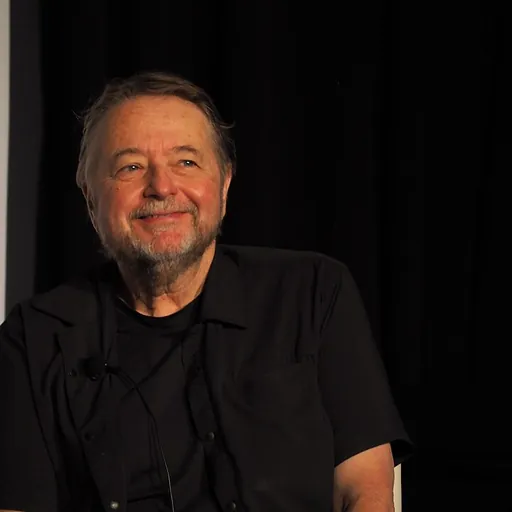
About Luis Alberto Urrea
Born 1955. Luis Alberto Urrea is a Mexican novelist, university teacher, writer, poet, humanitarian and essayist.
Luis Alberto Urrea (born August 20, 1955 in Tijuana, Mexico) The family moved again in 1965 to Clairemont, a newer subdivision in the city of San Diego. Urrea completed his graduate studies at the University of Colorado at Boulder. His father was murdered on a trip to his home village in 1977, seeking money there to spend on his son's college education.
In two heavily researched historical novels, The Hummingbird's Daughter and Queen of America, Urrea tells the story of his father's aunt, Teresita Urrea, who was known as "The Saint of Cabora" and "The Mexican Joan of Arc."
Awards Urrea's first book, Across the Wire, was named a New York Times Notable Book and won the Christopher Award in 1993.
In 1994, he won the Colorado Book Award in poetry for The Fever of Being as well as the Western States Book Award in poetry. He was also included in The 1996 Best American Poetry collection.
In 1999, Urrea won an American Book Award for his memoir, Nobody's Son: Notes from an American Life.
His book of short stories, Six Kinds of Sky, was named the 2002 small-press Book of the Year in fiction by the editors of ForeWord magazine.
In 2000, he was voted into the Latino Literature Hall of Fame the Border Regional Library Association's Southwest Book Award, and was a finalist for the Pulitzer Prize and for the Pacific Rim Kiriyama Prize. It was also optioned for a film by CDI Producciones. The book was adopted as the 2010 One Book for Sac State.
His short story "Amapola", which can be found in Phoenix Noir edited by Patrick Millikin and Urrea's own The Water Museum, won the Edgar Award in 2010 for best mystery short story.
In 2019, he was presented the Founders Award at the Tucson Festival of Books. The award recognizes exceptional literary achievement.
Criticism Mythili G. Rao of the New York Times compares both of Urrea's heavily researched novels in an article titled "The Most Dangerous Girl in Mexico goes to America"; Rao writes, "Where The Hummingbird's Daughter was driven by an otherworldly mysticism and the call of fate, its sequel is largely occupied with the ordinary troubles of mortal life". Stacey D'Erasmo, also from the New York Times has reviewed Urrea's novel "The Hummingbird's Daughter". Praising him for his literature style she writes, "The style that Urrea has adopted to tell Teresita's—and Mexico's—story [is]...simultaneously dreamy, telegraphic and quietly lyrical. Like a vast mural, the book displays a huge cast of workers, whores, cowboys, rich men, bandits and saints while simultaneously making them seem to float on the page". Joanne Omang, from the Washington Post writes, "The Hummingbird's Daughter is paced beautifully, inexorable and slow-seeming as life itself. The daily trivia of Teresita's childhood is as fascinating as the punctuations of amazements, beauties and horrors". Luis Alberto Urrea is also admired by Sandra Dijkstra of Publishers Weekly; she writes, "His brilliant prose is saturated with the cadences and insights of Latin-American magical realism and tempered by his exacting reporter's eye and extensive historical investigation".
The House of Broken Angels, his novel published in March 2018, is based in part on the death of the author's eldest brother, his half-brother raised in Mexico. Urrea said in an interview with Terry Gross that he expanded the novel with a sense of the status between Mexico and the United States since Trump became president of the United States in 2017: "But then as I expanded it... it started taking on more of a cultural statement and turned into a novel, which seemed to want to become epic. I couldn't shake my growing sense of rage and astonishment at the tone." Michael Upchurch in the Chicago Tribune remarked the wonderful turns of phrase in the novel about a family sprawling across the United States-Mexico border and the sense of place, "You couldn't ask for a more vivid sense of place either, whether you're talking physical surroundings ("The funeral home had a fake Germanic facade and stood across the street from a taco shop, a gas station and a Starbucks") or the way people think and speak. In an interview with Claire Kirch published in Publishers Weekly, Urrea said that "he has never before received so much prepub buzz as he has for The House of Broken Angels. Kirch quoted him as saying that "It seems to be striking a nerve," he says. "I wasn't really trying to be subversive, but I was trying to be subversive at the same time. I'm always trying to, using literature, subvert people's responses."
Don’t just read it —
keep it.
Full-length biographies made to live with: read them, listen on the way to work, watch them tonight.
- E-book
- Audio
- Video
Instant download · yours to keep · every purchase keeps this site free
Important facts
People in Luis Alberto Urrea's life
Named in this biography and alive at the same time

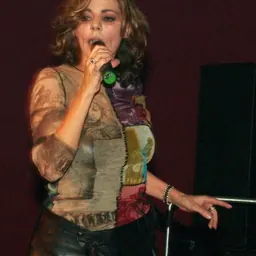
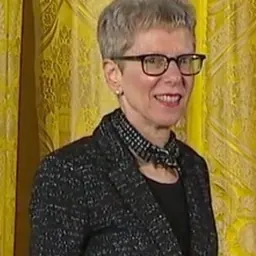

Related people
Same field, nearest in time


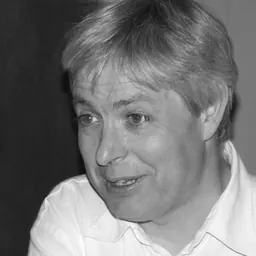


Contemporaries
People whose lives overlapped Luis Alberto Urrea's
Frequently asked questions
Who is Luis Alberto Urrea?
Mexican-American poet
When was Luis Alberto Urrea born?
Luis Alberto Urrea was born on 20 August 1955 in Tijuana, Tijuana Municipality.
What is Luis Alberto Urrea's occupation?
Luis Alberto Urrea is a novelist, university teacher, writer, poet, humanitarian and essayist.
What nationality is Luis Alberto Urrea?
Luis Alberto Urrea is Mexican.
Sources & further reading
· Wikipedia: Luis Alberto Urrea
Cite this page
APA: Biography.guide. (2026). Luis Alberto Urrea. https://biography.guide/luis-alberto-urrea/
MLA: "Luis Alberto Urrea." Biography.guide, https://biography.guide/luis-alberto-urrea/.
Chicago: "Luis Alberto Urrea." Biography.guide. https://biography.guide/luis-alberto-urrea/.
Data last updated: 2026-09-20 · Spot an error? Report a correction.
Portrait: Wikimedia Commons · author & licence
Page generated 2026-09-27 04:57 UTC