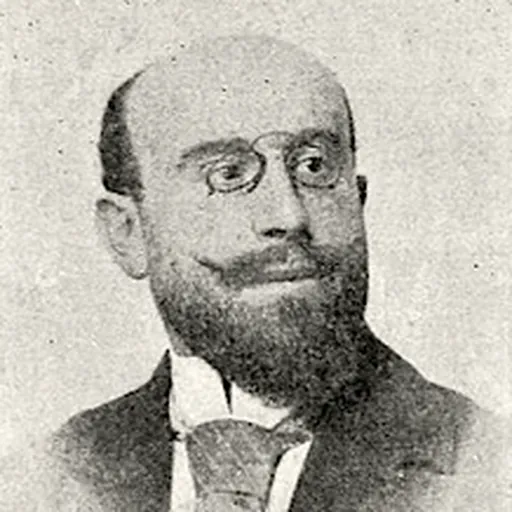
About Ludwig Deutsch
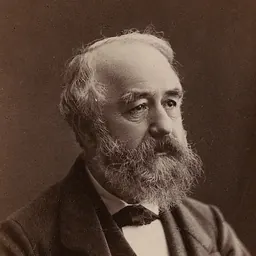
Lived 1855 – 1935 (aged 79). Ludwig Deutsch was an Austrian and French painter.
Ludwig Deutsch (13 May 1855 – 9 April 1935) was a French painter of Austrian origin, who settled in Paris and became a noted Orientalist artist. Having studied at the Vienna Academy of Fine Arts from 1872 to 1875, he moved to Paris in 1878, where he became associated with other Orientalist painters. Most of his works were painted in his studio in Paris, but he had visited Egypt on several journeys from 1885 to 1898. In 1919, he became a French citizen and started to write his name as Louis Deutsch.
Life and career Details of Ludwig Deutsch's life are obscure. He was born in Vienna in 1855 into a well-established Jewish family. His father Ignaz Deutsch was a financier at the Austrian court.
He received his early art training at the Akademie der Bildenden Künste (Academy of Fine Arts Vienna) under the tutelage of Anselm Feuerbach (1875–1877). In 1877, when Feuerbach retired as a teacher, Deutsch and some others students attempted to enter the class of Leopold Carl Müller, who had moved to Paris in 1876, but initially were refused entry. In 1878 Deutsch was finally accepted. At around this time, he may also have studied with Jean-Paul Laurens. In Paris, Deutsch made the acquaintance of artists Arthur von Ferraris, Jean Discart and Rudolf Ernst, who became his lifelong friend. Through these friendships, Deutsch developed an interest in Orientalist art.
Around 1880, he broke his contacts with Vienna and settled permanently in Paris. He established a studio at the Rue Le Pelletier in Paris and began to exhibit paintings with much success.
Though his earliest Orientalist subjects appeared in 1881, Deutsch's first documented journeys to the Middle East were made in 1885, 1890, and 1898, when he visited Egypt. Throughout the 1890s, he visited Egypt at least three times. Like many of his contemporaries, he found inspiration in the North African light, colours, scenery and customs. He collected a vast quantity of Oriental objects, including tiles, furniture, arms, pipes, fabrics, and costumes, which he would subsequently use in his paintings.
Work His early work focused primarily on historical subjects, but after visiting Egypt, he concentrated on Orientalist scenes. He was particularly interested in capturing the rich, opulent scenes of Cairo and its environs. The detail in his paintings is excellent. He was prolific, producing many paintings with the same theme – prayers, guards, musicians, street vendors etc. In order to produce paintings in large volume, he created a very economical approach, using the same settings with different subjects and activities to create an impression of variety.
Many of Ludwig Deutsch's paintings are now in the Shafik Gabr Collection. Amongst his best known works are: The Scribe, painted 6 years after Paul Joanowits did Bashi-Bazouks Before a Gateway but in the same location, and Musical Interlude. Among Austrian Orientalist painters, his works are considered to be some of the most sought after by collectors.
Like many of his contemporaries, including Paul Joanovitch, Rudolf Ernst and Jean-Léon Gérôme, Deutsch made extensive use of photography to ensure archaeological accuracy in his painted renderings of local architectural features (e.g. tiles, ablaq stone work, and the traditional woodwork) in what has been described as "documentary realism". Nissan N. Perez, Curator of Photography at the Israel Museum, wrote for example, that "the details in masonry and the angle of view in Deutsch's paintings El Azhar - The Arab University in Cairo (1890) and The Scribe (1904)" are doubtlessly inspired by photographs of Cairo-based photographer Gabriel Lekegian of the same places. This allowed him to use the Orient as inspiration, but to produce most of his paintings in his Paris studio.
Selected paintings
Select list of paintings
The Domino Players, 1882 An Orientalist Amateur, 1883 (Painting exhibited at the Salon of French Artists, and now presumed lost) The Musician, 1883 The Sentinel, 1885 News from Sudan, 1885 The Answer, 1886 The Sherbert Vendor, 1886 The Hour of Prayer, 1887 The Snake Charmers, 1888 Court of El Azhar University, Cairo, 1890 The Healer, 1891 The Orange Seller, 1892 The Palace Guard, 1892 The Emir's Guard, 1893 The Scribe, 1894 The Scholar, 1895 The Chess Game 1896 The Philosopher, 1897 The Offering, 1897 Prayer at the Tomb, 1898 Leaving the Mosque, 1900 The Learned, 1900 Interior of Mosque, 1902 The Harem Watchman 1903 The Koran School, 1905 Morning Prayer, 1906 The Narghil Smoker, 1907 Le Maitre, 1907 The Procession of the Mahmal through the Streets of Cairo, 1909 At Prayer, 1911 The Scribe, 1911 The Treasure Chest, 1920 At Prayer, 1923 The Fortune Teller, 1927 Musical Interlude, 1932
Don’t just read it —
keep it.
Full-length biographies made to live with: read them, listen on the way to work, watch them tonight.
- E-book
- Audio
- Video
Instant download · yours to keep · every purchase keeps this site free
Important facts
People in Ludwig Deutsch's life
Named in this biography and alive at the same time





Related people
Same field, nearest in time

Contemporaries
People whose lives overlapped Ludwig Deutsch's



Frequently asked questions
Who was Ludwig Deutsch?
Austrian orientalist painter (1855-1935)
When was Ludwig Deutsch born?
Ludwig Deutsch was born on 13 May 1855 in Vienna.
When did Ludwig Deutsch die?
Ludwig Deutsch died on 9 April 1935 in Paris.
What was Ludwig Deutsch's occupation?
Ludwig Deutsch was a painter.
What nationality was Ludwig Deutsch?
Ludwig Deutsch was Austrian and French.
Sources & further reading
Cite this page
APA: Biography.guide. (2026). Ludwig Deutsch. https://biography.guide/ludwig-deutsch/
MLA: "Ludwig Deutsch." Biography.guide, https://biography.guide/ludwig-deutsch/.
Chicago: "Ludwig Deutsch." Biography.guide. https://biography.guide/ludwig-deutsch/.
Data last updated: 2026-09-23 · Spot an error? Report a correction.
Portrait: Wikimedia Commons · author & licence
Page generated 2026-09-27 05:06 UTC