
Ludolf König
20th Grandmaster of the Teutonic Order
About Ludolf König
Lived 1280 – 1347 (aged 66–67).
Ludolf König von Wattzau (between 1280 and 1290 – 1348 or later), sometimes referred to as simply Ludolf König in English translations, was the 20th Grandmaster of the Teutonic Order, ruling the order's state in the Baltics from 1342 to 1345.
Biography
He came from a Saxon noble family.
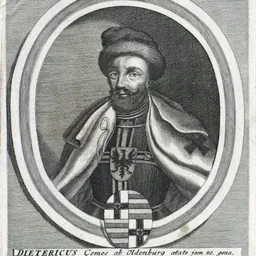
From 1331 to 1338, he was the chief treasurer of the Teutonic Order, after which, he became Grand Commander of the Teutonic Order, and "komtur" or commander of the Teutonic capital of Marienburg in 1338. Under his tenure, the city of Marienburg and its surroundings underwent large-scale development and colonization. In January 1342, the Teutonic Order's chapter elected him Grandmaster in the wake of Dietrich von Altenburg's death in October 1341.
Ludolf's reign's as grandmaster of the Teutonic Order was highlighted by the 1343 Treaty of Kalisz between the order, and the Kingdom of Poland, under King Casimir III the Great. The treaty formally concluded the Polish–Teutonic War of 1326–1332 and resulted in territorial exchanges between the two parties. Though there were still disputes (most notably over Pomerelia), the treaty ultimately led to 66 years of peace between Poland and the Teutonic Knights, ending with the Polish–Lithuanian–Teutonic War of 1409–1411.
Following in the steps of his predecessors, he pursued a campaign against the Lithuanians as part of the greater Lithuanian Crusades fought against the still-pagan Lithuanian peoples. The expedition was a disaster for the order, with much of Prussia being razed by the Lithuanians in retaliation. According to some sources, the stress spurred from the war's failure sent Ludolf into mental illness. He resigned as grandmaster, being downgraded to being commander of Engelsburg, or Pokrzywno. He was succeeded by Heinrich Dusemer. He spent the rest of his life at Engelsburg, apparently recovered from his mental illness, and died as early as 1348. He was buried under the chapel of St. Anne in the Malbork Castle.
He, along with three other Teutonic grandmasters, were found in crypts unveiled by archaeologists in 2007 within the chapel of St. Anne.
Don’t just read it —
keep it.
Full-length biographies made to live with: read them, listen on the way to work, watch them tonight.
- E-book
- Audio
- Video
Instant download · yours to keep · every purchase keeps this site free
Important facts
People in Ludolf König's life
Named in this biography and alive at the same time

Contemporaries
People whose lives overlapped Ludolf König's



Frequently asked questions
Who was Ludolf König?
20th Grandmaster of the Teutonic Order
When was Ludolf König born?
Ludolf König was born in 1280.
When did Ludolf König die?
Ludolf König died in 1347.
Sources & further reading
· DBpedia: Ludolf König von Wattzau
Cite this page
APA: Biography.guide. (2026). Ludolf König. https://biography.guide/ludolf-konig/
MLA: "Ludolf König." Biography.guide, https://biography.guide/ludolf-konig/.
Chicago: "Ludolf König." Biography.guide. https://biography.guide/ludolf-konig/.
Data last updated: 2026-09-20 · Spot an error? Report a correction.
Page generated 2026-09-27 05:23 UTC