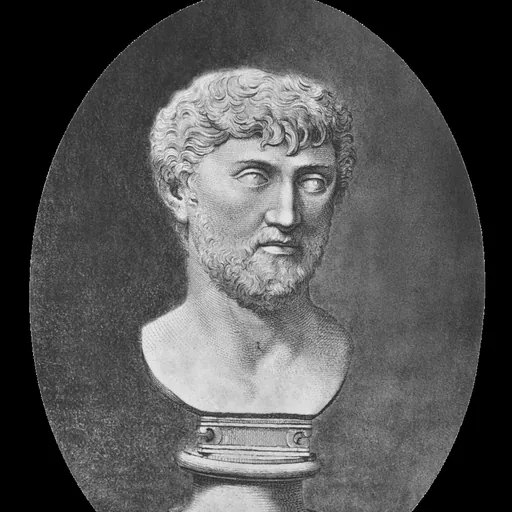
About Lucretius
Lived 94 BC – 55 BC (aged 38–39). Lucretius was a Roman poet, philosopher and writer.
Biography
Virtually nothing is known about the life of Lucretius, and there is insufficient basis for a confident assertion of the dates of Lucretius's birth or death in other sources. A brief biographical note is found in Aelius Donatus's Life of Virgil, which seems to be derived from an earlier work by Suetonius. The note reads: "The first years of his life Virgil spent in Cremona until the assumption of his toga virilis on his 17th birthday (when the same two men held the consulate as when he was born), and it so happened that on the very same day Lucretius the poet passed away." However, although Lucretius certainly lived and died around the time that Virgil and Cicero flourished, the information in this particular testimony is internally inconsistent: if Virgil was born in 70 BC, his 17th birthday would be in 53. The two consuls of 70 BC, Pompey and Crassus, stood together as consuls again in 55, not 53.
Another, yet briefer, note is found in the Chronicon of Donatus's pupil, Saint Jerome. Writing four centuries after Lucretius's death, he enters under the 171st Olympiad: "Titus Lucretius the poet is born." If Jerome is accurate about Lucretius's age (43) when Lucretius died (discussed below), then it may be concluded he was born in 99 or 98 BC. Less specific estimates place the birth of Lucretius in the 90s BC and his death in the 50s BC, in agreement with the poem's many allusions to the tumultuous state of political affairs in Rome and its civil strife.
Lucretius probably was a member of the aristocratic gens Lucretia, and his work shows an intimate knowledge of the luxurious lifestyle in Rome. Lucretius's love of the countryside invites speculation that he inhabited family-owned rural estates, as did many wealthy Roman families, and he certainly was expensively educated with a mastery of Latin, Greek, literature, and philosophy.
Another note regarding Lucretius's biography found in Jerome's Chronicon, claims that Lucretius "was driven mad by a love potion, and when, during the intervals of his insanity, he had written a number of books, which were later emended by Cicero, he killed himself by his own hand in the 44th year of his life." and the religious explanations of the natural world.
Within this work, Lucretius makes reference to the cultural and technological development of humans in his use of available materials, tools, and weapons through prehistory to Lucretius's own time. He specifies the earliest weapons as hands, nails, and teeth. These were followed by stones, branches, and fire (once humans could kindle and control it). He then refers to "tough iron" and copper in that order, but goes on to say that copper was the primary means of tilling the soil and the basis of weaponry until, "by slow degrees", the iron sword became predominant (it still was in his day) and "the bronze sickle fell into disrepute" as iron ploughs were introduced. He had earlier envisaged a pre-technological, pre-literary kind of human whose life was lived "in the fashion of wild beasts roaming at large". From this beginning, he theorised, there followed the development in turn of crude huts, use and kindling of fire, clothing, language, family, and city-states. He believed that smelting of metal, and perhaps too, the firing of pottery, was discovered by accident: for example, the result of a forest fire. He does specify, however, that the use of copper followed the use of stones and branches and preceded the use of iron.
Reception In a letter by Cicero to his brother Quintus in February 54 BC, Cicero said: "The poems of Lucretius are as you write: they exhibit many flashes of genius, and yet show great mastership." In the work of another author in late Republican Rome, Virgil writes in the second book of his Georgics, apparently referring to Lucretius, "Happy is he who has discovered the causes of things and has cast beneath his feet all fears, unavoidable fate, and the din of the devouring Underworld."
Natural philosophy
Lucretius was an early thinker in what grew to become the study of evolution. He believed that nature experiments endlessly across the eons, and the organisms that adapt best to their environment have the best chance of surviving. Living organisms survived because of the commensurate relationship between their strength, speed, or intellect and the external dynamics of their environment. Prior to Charles Darwin's 1859 publication of On the Origin of Species, the natural philosophy of Lucretius typified one of the foremost non-teleological and mechanistic accounts of the creation and evolution of life. In contrast to modern thought on the subject, he did not believe that new species evolved from previously existing ones. Lucretius challenged the assumption that humans are necessarily superior to animals, noting that mammalian mothers in the wild recognize and nurture their offspring as do human mothers.
While Epicurus left open the possibility for free will by arguing for the uncertainty of the paths of atoms, Lucretius viewed the soul or mind as emerging from fortuitous arrangements of distinct particles.
Don’t just read it —
keep it.
Full-length biographies made to live with: read them, listen on the way to work, watch them tonight.
- E-book
- Audio
- Video
Instant download · yours to keep · every purchase keeps this site free
Important facts
People in Lucretius's life
Named in this biography and alive at the same time

Related people
Same field, nearest in time


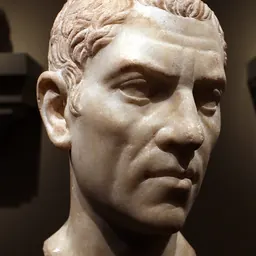


Contemporaries
People whose lives overlapped Lucretius's



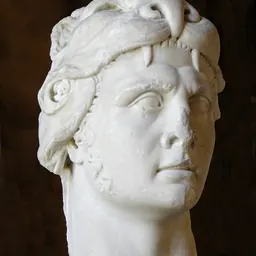
Frequently asked questions
Who was Lucretius?
1st-century BC Roman poet and philosopher
When was Lucretius born?
Lucretius was born in 94 BC in Pompeii.
When did Lucretius die?
Lucretius died in 55 BC in Rome.
What was Lucretius's occupation?
Lucretius was a poet, philosopher and writer.
What nationality was Lucretius?
Lucretius was Roman.
Sources & further reading
Cite this page
APA: Biography.guide. (2026). Lucretius. https://biography.guide/lucretius/
MLA: "Lucretius." Biography.guide, https://biography.guide/lucretius/.
Chicago: "Lucretius." Biography.guide. https://biography.guide/lucretius/.
Data last updated: 2026-09-22 · Spot an error? Report a correction.
Portrait: Wikimedia Commons · author & licence
Page generated 2026-09-27 05:04 UTC