
About Lucebert
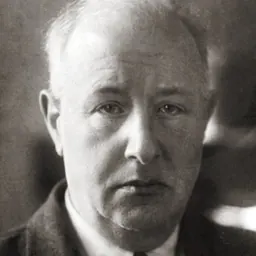
Lived 1924 – 1994 (aged 69). Lucebert was a Dutch poet, painter, lithographer, writer, draftsperson and photographer.
Lubertus Jacobus Swaanswijk (15 September 1924 – 10 May 1994), known professionally as Lucebert , was a Dutch artist who first became known as the poet of the COBRA movement.
He was born in Amsterdam in 1924. He entered the Institute for Arts and Crafts in 1938 and took part in the first exhibition of the COBRA group at the Stedelijk Museum in 1949.
Biography Lucebert's talent was discovered when he started working for his father after school. After half a year of art school, he chose to be homeless between 1938 and 1947. In 1947, a Franciscan convent offered him a roof over his head, in exchange for a huge mural painting. Because the nuns could not appreciate his work, they had it entirely painted over with white paint.
He belonged to the Dutch literary movement of De Vijftigers, which was greatly influenced by the European avant-garde movement COBRA. Lucebert's early work especially shows this influence, and his art in general reflects a rather pessimistic outlook on life.
His strong personality appealed to many. As a poet he laid foundation for revolutionary innovation in Dutch poetry.
Most of his poems were collected in Gedichten 1948–1965. After this period of composing poetry, he worked primarily in the visual arts known as figurative-expressionist from the 1960s. His work is being translated to English on collected works.
Well known is his line "" from the poem ("The very old one sings"). The adjective "weerloos" means "defenseless", "unable to defend oneself", so the meaning is "All things of value are defenseless". This line was put on top of the office building of an insurance company in Rotterdam (near the Blaak station) in neon letters, including his name, sometime in the 1980s or earlier. It wasn't the first but is certainly the most prominent commercial use of the line; today three more buildings in the area display it on their walls. Similarly, written on the city's central library just across the street is " – Erasmus", "All the world is my fatherland – Erasmus".
Attracted by the Mediterranean light and the vibrant community of Dutch artists, Lucebert and his wife Tony Swaanswijk moved to Altea, Spain in 1963, before eventually settling in Jávea in 1968, where they found both a home and a space for artistic creation. In 1973, in the Lluca district of Jávea, they bought a house which also served as Lucebert's studio, became a significant site for the creation of numerous works that showcased his creativity and talent.
Lucebert's strong connection with Spain was further solidified through his close relationship with artist and art collector Antonio Pérez. This relationship led to a permanent exhibition of Lucebert's work in Cuenca, Spain. Following Lucebert's death, his widow, Tony, made a significant donation to the Antonio Pérez Foundation in Cuenca. This donation included a room dedicated to Lucebert, intended to exhibit part of the donated works, thereby preserving and showcasing Lucebert's artistic legacy in Spain.
Lucebert died on 10 May 1994 in Alkmaar, Netherlands.
Lucebert was also a noted anti-apartheid activist.
Exhibitions 1949 – International Exhibition of Experimental Art, Stedelijk Museum, Amsterdam, Netherlands 1959 – Stedelijk Museum, Amsterdam, Netherlands 1959 – Documenta, Kassel, Germany 1959 – First Paris Biennale, Paris, France 1959 – Vitalita nell’Arte, Venice, Italy 1961 – Stedelijk van Abbe-Museum, Eindhoven, Netherlands 1961 – International Exhibition of Contemporary Painting and Sculpture, Carnegie International, Pittsburgh, PA, USA 1963 – Staedtlische Kunstgalerie, Bochum, Germany 1963 – Marlborough New London Gallery, London 1964 – Museum Boymans-van Beuningen, Rotterdam; Kunsthalle Baden-Baden 1964 – Documenta 111, Kassel, Germany 1969 – Stedelijk Museum, Amsterdam 1969 – Kunsthalle Basel, Switzerland – with Karel Appel and Tajiri 1977 – Stedelijk Museum, Amsterdam, Netherlands 1977 – Galería Juana Mordó, Madrid, Spain 1982 – Kunsthalle, Mannheim, Germany 1983 – Kunstverein Hochrhein, Bad Säckingen, Germany 1984 – Stedelijk Museum, Amsterdam, Netherlands 1985 – Rai, Kunstmesse Amsterdam, Netherlands 1987 – Stedelijk Museum, Amsterdam, Netherlands 1988 – Kunstmuseum Winterthur, Kunstverein Freiburg i.Br., Germany 1988 – Landesmuseum Oldenburg, Galerie im Taxispalais, Innsbruck, Austria 1989 – Kunsthalle zu Kiel, Germany 1989 – Städtische Kunstgalerie, Bochum, Germany 1989 – Kunsthaus Grenchen, Grenchen, Switzerland 1996 – Después de Goya Art Exhibition, Zaragoza, Spain 2000 – IVAM, Valencia, Spain 2001 – Lucebert Room (Standing Collection), Fundación Antonio Pérez, Cuenca, Spain
Awards 1954 – Prize for literature from the city of Amsterdam 1959 – "Mediterranean Prize" of the Paris Biennale 1962 – 2nd "Marzotto Prize" 1964 – "Carlo Cardazzo" prize at the 32nd Biennale in Venice, Italy 1965 – "Constantijn Huygensprijs" 1967 – "P.C. Hooftprijs" – the highest Dutch Governmental prize for literature 1983 – "Prijs der Nederlandse Letteren" for Dutch literature
Public collections Among the public collections holding works by Lucebert Swaanswijk are: Museum de Fundatie, Zwolle
Don’t just read it —
keep it.
Full-length biographies made to live with: read them, listen on the way to work, watch them tonight.
- E-book
- Audio
- Video
Instant download · yours to keep · every purchase keeps this site free
Important facts
more
L. J. Swaanswijk, Lucebert Van Libertus Jacobus SwaanswijkPeople in Lucebert's life
Named in this biography and alive at the same time


Related people
Same field, nearest in time



Contemporaries
People whose lives overlapped Lucebert's


Frequently asked questions
Who was Lucebert?
Dutch painter (1924-1994)
When was Lucebert born?
Lucebert was born on 15 September 1924 in Amsterdam.
When did Lucebert die?
Lucebert died on 10 May 1994 in Alkmaar.
What was Lucebert's occupation?
Lucebert was a poet, painter, lithographer, writer, draftsperson and photographer.
What nationality was Lucebert?
Lucebert was Dutch.
Sources & further reading
Cite this page
APA: Biography.guide. (2026). Lucebert. https://biography.guide/lucebert/
MLA: "Lucebert." Biography.guide, https://biography.guide/lucebert/.
Chicago: "Lucebert." Biography.guide. https://biography.guide/lucebert/.
Data last updated: 2026-09-20 · Spot an error? Report a correction.
Page generated 2026-09-27 05:28 UTC