
Luce Fabbri
Italo-Uruguayan anarchist intellectual, writer and teacher
About Luce Fabbri
Lived 1908 – 2000 (aged 92). Luce Fabbri was an Italian writer, university teacher, historian, publisher and anarchist.
Luce Fabbri (pen name, Luz de Alba; 1908–2000) was an Italian-Uruguayan anarchist writer, publisher and teacher. The daughter of Luigi Fabbri, she wrote for anarchist publications from an early age. After studying literature at university, she fled Fascist Italy and joined her parents in exile, eventually making her way to Uruguay. There she witnessed the rapidly changing conditions of the period, began publishing her own journals and writing her own theories on anarchist revolution. She spent the rest of her life teaching at the University of the Republic.
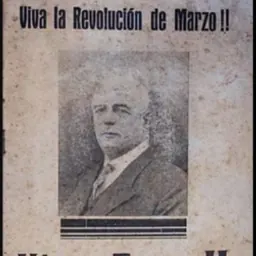
Biography In 1908, Luce Fabbri was born in Rome, the daughter of Italian anarchist Luigi Fabbri. Herself also an anarchist from an early age, she wrote articles for Errico Malatesta's magazine . She studied literature at the University of Bologna, writing her dissertation on the work of French anarchist and geographer Élisée Reclus. In 1929, she fled Fascist Italy and reunited with her parents in Paris, where they had been living in exile. She went with them as they moved to Belgium and then on to Uruguay, finally settling in Montevideo. In 1933, Fabbri witnessed President Gabriel Terra's self-coup and the establishment of a dictatorship. She reported that Uruguay rapidly changed from a free country, to one where people lived under "the harassment of continuous surveillance".
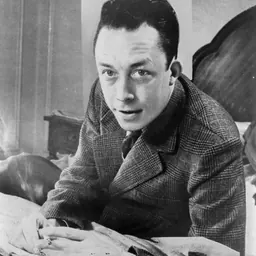
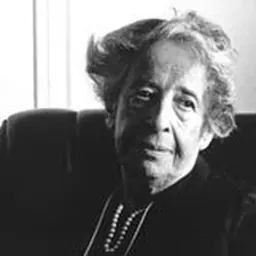
In the Uruguayan capital, Fabbri published numerous journals of her own, including: Studi Sociali, edited by her father until his death in 1946; El Risurgimiento, which she edited during the Spanish Civil War; and Socialismo y Libertad, which she edited during World War II. In her writing, Fabbri developed an anarchist theory of revolution for the contemporary period; drawing from the work of Hannah Arendt and Albert Camus, she re-conceived revolution as a "flexible, contingent, and non-violent process", distinguishing it from the earlier anarchist theories of revolutionary spontaneity. She was also employed as a history and literature teacher, educating students at the University of the Republic from 1949 onwards.
Luce Fabbri died in Montevideo, in 2000.
Don’t just read it —
keep it.
Full-length biographies made to live with: read them, listen on the way to work, watch them tonight.
- E-book
- Audio
- Video
Instant download · yours to keep · every purchase keeps this site free
Important facts
People in Luce Fabbri's life
Named in this biography and alive at the same time



Related people
Same field, nearest in time




Contemporaries
People whose lives overlapped Luce Fabbri's

Frequently asked questions
Who was Luce Fabbri?
Italo-Uruguayan anarchist intellectual, writer and teacher (1908–2000)
When was Luce Fabbri born?
Luce Fabbri was born on 2 July 1908 in Rome, Italy.
When did Luce Fabbri die?
Luce Fabbri died on 19 August 2000 in Montevideo.
What was Luce Fabbri's occupation?
Luce Fabbri was a writer, university teacher, historian, publisher and anarchist.
What nationality was Luce Fabbri?
Luce Fabbri was Italian.
Sources & further reading
Cite this page
APA: Biography.guide. (2026). Luce Fabbri. https://biography.guide/luce-fabbri/
MLA: "Luce Fabbri." Biography.guide, https://biography.guide/luce-fabbri/.
Chicago: "Luce Fabbri." Biography.guide. https://biography.guide/luce-fabbri/.
Data last updated: 2026-09-20 · Spot an error? Report a correction.
Page generated 2026-09-27 05:18 UTC