
Lubo Kristek
Sculptor, painter and performer of Czech origin (born 1943)
About Lubo Kristek
Born 1943. Lubo Kristek is a Czech and German sculptor, painter, performance artist and ceramicist.
Lubo Kristek (born 8 May 1943 ) is a sculptor, painter, and performance artist of Czech origin, who lived in West Germany from 1968 until the 1990s. He specializes in critical assemblages and happenings, He created sculptures for public space. He is the author of a three-state sculptural pilgrims' way. Testing of borders, experiments, and crossing the conventional frame is typical for his work. At that time, he also experimented with using fire as a means of expression. He deliberately suppressed or sometimes annulled his artistic handwriting. From Landsberg, Kristek travelled to other places in Europe (Belgium, Luxembourg, Liechtenstein, the Netherlands, France, Italy, Spain, Republic of San Marino, Switzerland, Austria) to study and create.
Kristek was influenced by Arno Lehmann who lived in Salzburg, where Kristek used to go to meet him. A sphere dominates the top as a symbol of artistic heritage that Kristek adopted from Lehmann.
In 1989, after the Velvet Revolution, he returned to Czechoslovakia. On the apex of the house, he located the sculpture Divine Ephemerality of Tone – a piano balancing on one leg.
Kristek's 16-metre-high sculpture Tree of Knowledge (1981) that he made for the Ignaz-Kögler-Gymnasium (high school) in Landsberg am Lech rises up through three floors of the building. The Munich magazine Steinmetz + Bildhauer noted:
In 1988, Kristek created the bronze fountain The Drinking for the Theresianbad Greifenberg, Germany.
In 1992, he made a kinetic sculpture called Tree of the Wind Harp.
In 2006, Kristek created bronze sculpture The Seekers that was located on the confluence of the rivers Thaya and March. Using the fragment, Kristek created a new metal sculpture for the place and called it The Seekers – Organic Forms. The sculpture was inaugurated in 2015.
The Czech art historian Barbora Putova wrote: Kristek linked together the sculptures to inspire people to take a walk through the landscape. The route includes eleven stations, which were open by the series of ten happenings. The eleventh's station remains secret as a challenge for the pilgrim. The project was under the auspices and was supported by the five regions of the three states it runs through.
Critical assemblage Critical assemblages by Lubo Kristek address various social phenomena, such as oppression, consume approach, addiction to new technologies, and the medical ethics.
One of his early assemblages, called Vision – Burning of Christ (1964) belongs to his artworks shaped by flame. The burned Christ symbolizes "melting of faith" in Czechoslovakia at that time. It is connected to Kristek's emigration from Czechoslovakia to Germany, for which he was sentenced, in absentia, to 1.5 years in prison and the confiscation of all his property in Czechoslovakia. and Sea Horse (1986) made of material that was cast out by the sea on the Italian coast near Rome.
In 2015–2017, the artist transformed his house in Brno into a monumental assemblage Kristek House.
Painting
The Heavenly Highway of Aunt Fränzi (1974–75), Neues Stadtmuseum. In 1977, Kristek created a monumental altar painting for the sacral space, the cemetery chapel in Penzing, Germany. He called the 7 m high painting Transcendental Composition between Suffering and Hope. However, in the happening The Way of the Cross (2014), the ballerina consumes all that is left after the destruction. In the painting Peculiar Pole Vault (2016), the ballerina appears as Death.
Performance art
Kristek has organised happenings in Germany, the US, Canada, Italy, Spain, Czech Republic, Austria, Turkey, Belgium, Poland and Slovakia. His events can be described as happenings, performances or sometimes even site-specific, but he uses the original expression happening, because the involvement of the public as well as the authentic experience are crucial for him.
In 1971, he started the Kristek's Night Vernissages in his studio with garden in Landsberg am Lech. These experiments were at the interface between theatre, music, improvisation and ritual. Kristek studies the crowd behavior, explores the border between performer and audience, and also the death taboo in his happenings.
Promenade with a Neurotic Fox In 1975, Kristek went for a walk with a fox's skeleton on a leash on the colonnade in Landsberg am Lech and observed the reactions of the people. His aim was to study the crowd behavior and the death taboo.
Pyramidae-Klipteon II Kristek's performances can often be interpreted as a critique of consumerism. At the climax of his happening in 2002 in Podhradí nad Dyjí, he crawled out of bowels of a cow carcass to read his manifest against the destructive and self-destructive tendencies of society.
Visio Sequentes or Concerning the Prematurely Cloned Age of a Planet This piece took place at the Znojmo Castle, Czech Republic in 2003. The artist dissolved the boundary between the auditorium and the stage. In the climax of the happening, he dispersed the artists, mentally disabled people, amongst the spectators. Kristek travelled with this happening series to the Czech Republic (Znojmo), Austria (Vienna), Germany (Landsberg am Lech) and Poland (Sucha Beskidzka)
The art historian Hartfrid Neunzert noted on Kristek's legacy in his foreword for the monography published by the Neues Stadtmuseum in 2008:
Don’t just read it —
keep it.
Full-length biographies made to live with: read them, listen on the way to work, watch them tonight.
- E-book
- Audio
- Video
Instant download · yours to keep · every purchase keeps this site free
Important facts
People in Lubo Kristek's life
Named in this biography and alive at the same time


Related people
Same field, nearest in time
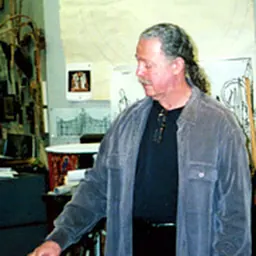
Contemporaries
People whose lives overlapped Lubo Kristek's


Frequently asked questions
Who is Lubo Kristek?
sculptor, painter and performer of Czech origin (born 1943)
When was Lubo Kristek born?
Lubo Kristek was born on 8 May 1943 in Brno.
What is Lubo Kristek's occupation?
Lubo Kristek is a sculptor, painter, performance artist and ceramicist.
What nationality is Lubo Kristek?
Lubo Kristek is Czech and German.
Sources & further reading
Cite this page
APA: Biography.guide. (2026). Lubo Kristek. https://biography.guide/lubo-kristek/
MLA: "Lubo Kristek." Biography.guide, https://biography.guide/lubo-kristek/.
Chicago: "Lubo Kristek." Biography.guide. https://biography.guide/lubo-kristek/.
Data last updated: 2026-09-20 · Spot an error? Report a correction.
Page generated 2026-09-27 05:28 UTC