
About Lowell Fitz Randolph
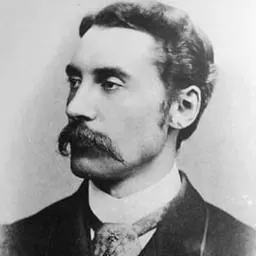
Lived 1894 – 1980 (aged 85). Lowell Fitz Randolph was a botanist, known for Chromosomes and Genetics.
Lowell Fitz Randolph (7 October 1894 – 28 May 1980) was an American scientist, in the field of genetics, botany and horticulture. He was a Cornell College graduate who became Professor of Botany and was also employed as an associate cytologist for the United States Department of Agriculture. He was also an avid iris collector and wrote a book on the Iris genus. He carried out research into plant chromosomes of iris, orchid genus and corn plants (such as maize). He was sometimes known as "Fitz" by his friends and associates.
Education and early life Lowell Fitz Randolph, was born on 7 October 1894 in Alfred, New York. Lowell's family had over 200 years of history of being deeply involved in the Seventh Day Baptist Church community, and that Lowell and his sister Vida were the first to break with that community and strong tradition and follow independent, secular paths pursuing their passion for science.
In 1918, he then went to Cornell College to complete his Ph.D. and work as an assistant in botany under Rollins A. Emerson and Lester W. Sharp.
In 1920, he attend the meetings of the American Association for the Advancement of Science in Chicago, and presented a paper to the American Naturalist Division on 'A case of maternal inheritance in Maize: Cytological Relations'. He is a member of the Association and of the Botanical Society of America. He also became a member of the Gamma Alpha Graduate Scientific Fraternity and of the Cornell Biological Society. in the botany department. They then started to apply the smear technique to pollen cells of corn and hypothesized the origin of polyploidy in Maize. Randolph and McClintock's study techniques were very different. Randolph was very careful, cautious and meticulous, where as McClintock liked to try out and modify new techniques. Randolph ended their collaboration and McClintock began to work under Sharp, who gave her more freedom.
But he stilled carried on his maize research, and in 1932, he published 'Some effects of high temperature on polyploidy and other variations in Maize', in Genetics Vol.18 on page 222–229.
Randolph and his wife Fannie made several trips to Europe collecting irises. They travelled to England (between 1936 and 1939, also in 1950 and 1959), France (in 1950 and 1954), Denmark (in 1950), and Sweden (in 1950). He also led expeditions in search of new forms of iris, including Iris pumila.
In a complaint letter to Marcus Morton Rhoades (Editor of Genetics journal) in 1942, he criticised Barbara McClintock's editing the work of a pupil of Randolph's. Calling her a prima donna, who wants to be the goddess of science and godmother to aspiring young scientists everywhere.
He was appointed chairman of the Scientific Committee of the American Iris Society, between 1945, and 1946. He started the counting of chromosomes of iris, growing seeds in vitro and classification of the genus. Finding and publishing Tripsacum zopilotense Hernandez-Xolocotzi, E. & Randolph, L.F. in 1950, in Guerrero, Mexico.
In 1954, he went to Europe and the Middle East on an iris hunting field trip, which included Switzerland, France, Italy, Yugoslavia, Germany, Austria, Cypress, Turkey, Lebanon, and Egypt.
He then spent six months in 1957–58 at Aligarh Muslim University in India with a Fulbright Award,
In 1959, he wrote and had published Garden Irises, which has 575 pages. Within the book, the chapter, 'Chromosomes of Garden varieties of Bearded Iris',(pages315-324) showed his academic interest. He also re-organised the William Dykes classification of irises, by moving certain irises into different sections and subgenra. This classification is still used by the American Iris Society.
He served as the vice president and then became the 9th, Randolph and his wife, kept an extensive collection of iris in his garden at their home in Ithaca, which attracted many visitors.
After nearly 40 years at Cornell, he retired in 1961, but started working part-time during the winters, at the Fairchild Tropical Garden, in Miami, Florida as a research collaborator. Including work on Tripsacum grasses, He then spent his summers back home at Ithaca. The species was named after Ira S. "Ike" Nelson, professor of horticulture at the University of Louisiana, Lafayette, and one of the founders, and early show managers, of the Society for Louisiana Irises. Nelson collaborated with Randolph, and together they identified Iris nelsonii, and Randolph named it after Nelson.
In 1967, Randolph, I.S. Nelson and R.L. Plaisted published 'Negative evidence of introgression affecting the stability of Louisiana Iris species' Cornell Univ Ag. Exp. Station Mem. Vol.398 (pages 1–56). This paper reviewed the morphological and pollen fertility data collected for Iris fulva, Iris brevicaulis and Iris hexagona and other hybrid iris populations. He concluded that between the Louisiana iris species was localized hybridization.
In 1976, he published 'Contributions of wild relatives of maize to the evolutionary history of domesticated maize: a synthesis of divergent hypotheses in Economic Botany, Vol.30 (pages321-345), which discounted the role of teosinte as an ancestor of maize.
Lowell died in Ithaca in 1980.
Awards and honours He was award many honours including; The Randolph-Perry Medal, this is the highest award given by the American Iris Society, started in 2000 and is restricted to species hybrid Irises. It was named after Dr Randolph and Amos Perry (1871-1953), (Father-in-law of Frances Perry) and a British nurserymen and iris hybridizer, and the winner of the first ever Dykes Medal, named after William Rickatson Dykes. Elizabeth Jane (Randolph) DeMott (later of Herndon, Virginia, Randolph, L. F., & Mitra, J., (1962), The dwarf bearded Iris hybrids of Goos and Koeneman. Caryolog. 15, 3: 477–483.
Don’t just read it —
keep it.
Full-length biographies made to live with: read them, listen on the way to work, watch them tonight.
- E-book
- Audio
- Video
Instant download · yours to keep · every purchase keeps this site free
Important facts
People in Lowell Fitz Randolph's life
Named in this biography and alive at the same time






Related people
Same field, nearest in time




Contemporaries
People whose lives overlapped Lowell Fitz Randolph's


Frequently asked questions
Who was Lowell Fitz Randolph?
botanist (1894-1980)
When was Lowell Fitz Randolph born?
Lowell Fitz Randolph was born on 7 October 1894 in Alfred.
When did Lowell Fitz Randolph die?
Lowell Fitz Randolph died on 28 May 1980 in Ithaca.
What was Lowell Fitz Randolph's occupation?
Lowell Fitz Randolph was a botanist.
What was Lowell Fitz Randolph known for?
Lowell Fitz Randolph was known for Chromosomes and Genetics.
Sources & further reading
· Wikipedia: Lowell Fitz Randolph
· DBpedia: Lowell Fitz Randolph
Cite this page
APA: Biography.guide. (2026). Lowell Fitz Randolph. https://biography.guide/lowell-fitz-randolph/
MLA: "Lowell Fitz Randolph." Biography.guide, https://biography.guide/lowell-fitz-randolph/.
Chicago: "Lowell Fitz Randolph." Biography.guide. https://biography.guide/lowell-fitz-randolph/.
Data last updated: 2026-09-20 · Spot an error? Report a correction.
Page generated 2026-09-27 05:30 UTC