
About Lourdes Casal
Lived 1938 – 1981 (aged 42). Lourdes Casal was a Cuban and American writer, civil rights advocate, poet and psychologist.
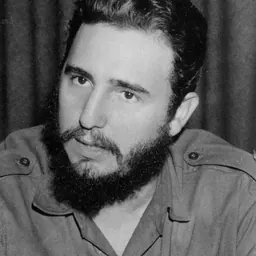
Lourdes Casal (April 5, 1938 – February 1, 1981) was an important poet and activist within the Cuban community. She was internationally known for her contributions to psychology, writing, and Cuban politics. Born and raised in Cuba, she sought exile in New York due to Cuban communist rule. Casal received a master's degree in psychology in 1962 and later, a doctorate in 1975 from the New School for Social Research. She wrote the book El caso Padilla: literatura y revolucion en Cuba, which illustrated the failing relationship between writers and Cuban officials. A year later, she co-founded a journal named Nueva Generation which focused on creating dialogue on relationships between Cubans living abroad and on the island. Casal earned notoriety by attempting to reconcile Cuban exiles in the United States. She was instrumental in organizing a dialogue between Cuban immigrants and Fidel Castro, which led to the release of thousands of Cuban prisoners. She was the first Cuban-American to receive the Casa de las Américas Prize, which was awarded to her posthumously in 1981.
Early life Lourdes Emilia de la Caridad Casal y Valdés was born on April 5, 1938, in Havana to Emilia Valdés, a teacher, and Pedro Casal, a dentist and physician. Her family was of mixed-racial descent, including African, Chinese, and Spanish ancestry. She was privately educated until 1951, when she entered Institute No. 2 in El Vedado. She graduated in 1954 with a bachelor's degree in science and letters, with the simultaneous certification as a land appraiser and surveyor. Furthering her studies, Casal enrolled in St. Thomas of Villanova Catholic University (Villanova), pursuing a degree in chemical engineering. She became the editor of several publications while studying, including Memoria and Revista Insula, as well as a regular contributor to the newspaper El Quibú. She joined the Cultural Association and served as its secretary general and became president of the women's section of the Catholic Youth Organization, of Villanova. She won the second prize in the literary competition of the 1956-1957 academic term with a paper on the work of Father Félix Varela, which led her to change academic direction the following term and enroll in the school of psychology.
As Cuba radicalized, Casal became involved with the Catholic elements of the 26th of July Movement, participating with other students from Villanova.
Career Professorship Settling in New York in 1962, Casal enrolled in psychology courses at the New School for Social Research and completed her master's degree in 1962. She taught at the City University of New York and simultaneously began a prolific writing career. Her works focused on her need to understand people; she analyzed topics in literature, politics, and the social sciences. Casal later moved to Rutgers University She also taught at Dominican College of Blauvelt.
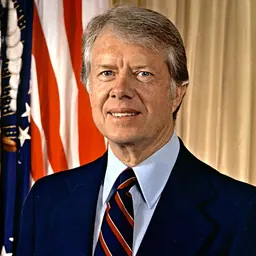
Writings Casal wrote many poems and articles about Cuba and explored identity as a person in exile. Racial and social inequality, the suppressive politics of both her homeland and adopted home, and struggle to understand changed Casal from an opponent of the Cuban government to a supporter in the early 1970s. When President Jimmy Carter agreed to allow a selected group of Cuban exiles to return in 1978, Casal assisted in drafting the list of participants. The meeting, which became known as "The Dialogue" brought members of the Cuban diaspora to Havana to discuss topics of interest with Cuban officials. The members of the Brigade were born mostly in the United States or Puerto Rico and were allowed to return to Cuba as a result of "The Dialogue". The Cuban government welcomed and accepted these former exiles, using different forms of propaganda that catered to them. This raid and other raids like it resulted in violence against LGBTQ+ people in Cuba. Even though homosexuality was persecuted against, Casal did not criticize this persecution or the Cuban government. In Cuban revolutionary politics, the idea of being homosexual and a revolutionary seemed to be impossible. Hiding ones' sexuality was a common practice for many members of the Revolution, including those who occupied higher ranks within the government. Casal believed the suppression of her homosexuality to be a necessary price to pay in order to feel connected to Cuba. She aimed not to become a further target for those who opposed her writing and activism.
Legacy Casal died on February 1, 1981, aged 42 in Havana from complications of her illnesses. Her final work, Polabras juntan revolución (Words Join Revolution) received the Casa de las Américas Prize, posthumously shortly after her death. The impact she had on Cubans internationally left an important legacy for having begun the conversation between Cuban politicians and refugees through both her writing and advocacy. Her stance on reconciliation between the diaspora and Cuban politicians and support of the regime, impacted her status as an exile and for a period of time, and she was consequently omitted from Cuban-American literature compilations. A reawakening of her legacy coincided with talks of normalization of the US–Cuban relationship at the turn of the 21st century.
Don’t just read it —
keep it.
Full-length biographies made to live with: read them, listen on the way to work, watch them tonight.
- E-book
- Audio
- Video
Instant download · yours to keep · every purchase keeps this site free
Important facts
People in Lourdes Casal's life
Named in this biography and alive at the same time
Related people
Same field, nearest in time


Contemporaries
People whose lives overlapped Lourdes Casal's



Frequently asked questions
Who was Lourdes Casal?
Cuban-American poet and activist (1938-1981)
When was Lourdes Casal born?
Lourdes Casal was born on 5 April 1938 in Havana.
When did Lourdes Casal die?
Lourdes Casal died on 1 February 1981 in Havana.
What was Lourdes Casal's occupation?
Lourdes Casal was a writer, civil rights advocate, poet and psychologist.
What nationality was Lourdes Casal?
Lourdes Casal was Cuban and American.
Sources & further reading
Cite this page
APA: Biography.guide. (2026). Lourdes Casal. https://biography.guide/lourdes-casal/
MLA: "Lourdes Casal." Biography.guide, https://biography.guide/lourdes-casal/.
Chicago: "Lourdes Casal." Biography.guide. https://biography.guide/lourdes-casal/.
Data last updated: 2026-09-22 · Spot an error? Report a correction.
Page generated 2026-09-27 05:25 UTC