
About Louise Sauvage
Born 1973. Louise Sauvage is an Australian athletics competitor.
Alix Louise Sauvage, OAM (born 18 September 1973) is an Australian paralympic wheelchair racer and leading coach.
Sauvage is often regarded as the most renowned disabled sportswoman in Australia. She won nine gold and four silver medals at four Paralympic Games and eleven gold and two silver medals at three IPC Athletics World Championships. She has won four Boston Marathons, and held world records in the 1500 m, 5000 m and 4x100 m and 4x400 m relays. She was Australian Female Athlete of the Year in 1999, and International Female Wheelchair Athlete of the Year in 1999 and 2000. In 2002, her autobiography Louise Sauvage: My Story was published.
Early life
Sauvage was born in 1973 in Perth, Western Australia, the daughter of Rita (née Rigden) and Maurice Sauvage. Her mother was a Ten Pound Pom from Leicestershire, England, while her father was born in the British colony of Seychelles. She was born with a severe congenital spinal condition called myelomeningocele, which inhibits the function of the lower half of the body, giving limited control over the legs. In 1976 she was Perth's Telethon Child as part of a Channel 7 fund-raiser for children with disabilities. Her myelomeningocele required her to have 21 surgical operations by the time she was ten years old. and at 14, she had surgery to fix a curvature in her spine, Sauvage started to compete in wheelchair sport at the age of eight. Before that time, she had attempted to play school sport with her classmates but her disability made it difficult.
In 1990, Sauvage competed in her first international competition in Assen, Holland, where she won gold in the 100 m setting a new world record. She also won the 200 m race but was disqualified for moving out of her lane. At the Stoke Mandeville Games in England the same year, Sauvage took gold in the 100 m, 200 m, 400 m, and two relays.
Paralympic Games
Before the start of the 1992 Summer Paralympics, Sauvage held Australian records for the 100 m, 200 m, 800 m, 1500 m and marathon in women's wheelchair racing events. She was being marketed by the Australian Paralympic Federation as Australia's top female wheelchair road racer. At the Barcelona Paralympic Games, she won gold medals in the 100 m, 200 m and 400 m and a silver in the 800 m TW4 events and finished sixth in Marathon TW3-4. Sauvage was in danger of not going to the 1992 Paralympics because of funding issues for the Australian Paralympic Federation. The Federation made an emergency appeal for funding from the public in order to cover the cost of transporting the Australian team to Barcelona. The Federation found funding through a variety of small donations that allowed Sauvage and other Australian athletes to compete.
At the 1996 Atlanta Paralympic Games, she won four gold medals - 400 m (T53), 800 m (T53), 1500 m (T52-53) and 1500 m (T52-53) and finished fourth in Marathon (T52-53). At her final Paralympics in Sydney, 2000, she won two gold medals - 1500 m and 5000 m T54 events and silver medal in 800 m T54.
Road racing 1993 was Sauvage's first year on the international wheelchair racing circuit, competing in the US and Europe. It was also the year that she got her first kneeling wheelchair. Sauvage won the prestigious Oz Day 10K Wheelchair Road Race ten times – 1993–1999 and 2001–2003.
Demonstration events From 1993 to 2001, Sauvage won every IAAF wheelchair demonstration event at IAAF World Athletics Championships. In that same period, she also won the demonstration events for wheelchair racing in the 800 metre race at the Olympic games. The 800 metre event does not require that athletes stay in their lanes after the first turn. For this reason, athletes like Sauvage are required to wear helmets when racing. In 2000, Sauvage won the Olympic demonstration event and was expected to win the Paralympic gold. She was upset by Canadian Chantal Petitclerc.
I think I was just so pumped up from the 5000 m, and warm enough, and hearing the anthem for Dave Evans [who had just won the men's 1500 m event] – that was fantastic to hear that in the background. — Louise Sauvage She was subsequently coached by Jenni Banks, who oversaw much of Sauvage's development as an elite wheelchair athlete, from her first international success at the World Games in Assen in 1990, to her best ever medal tally at the Olympic and Paralympic Games in Atlanta in 1996. Andrew Dawes was her coach after the 1996 Paralympics.
Coaching career After her retirement from competition, she became involved in coaching young wheelchair athletes, In 2004, Sauvage started coaching other wheelchair athletes. The first athlete that she coached was Angie Ballard. Sauvage's coaching helped Ballard win gold 400 m and silver in the 100 m, 200 m, 800 m and 1500 m at the Summer Down Under Series in 2005. and 2011 IPC Athletics World Championships. She is currently Wheelchair Track & Road Elite Development Coach at the New South Wales Institute of Sport and coaches Madison de Rozario.
Retirement
During her retirement from being an athlete, Sauvage created a consulting company that she works for.
In February 2011, Sauvage participated in the Charter Hall Malabar Magic Ocean Swim. The event was created to raise funds for Rainbow Club. It was Sauvage's first ocean swim. She finished the 1 km race in 25:19.
Disability rights Sauvage and Paul Nunnar lobbied Virgin Blue during 2006 to drop a requirement that people in wheelchairs be accompanied by a carer if they wish to ride on a Virgin Blue aircraft. Previously, both athletes had tried to lobby Qantas to lift a limit of only two electric wheelchairs on domestic flights flying on Boeing 737s. The pair were ineffective because the change would have required a change in law, not in airline policy. Sauvage and Nunnar did receive an invitation to help train Qantas staff and help make staff more aware of the needs of disabled people. In 1998, she won the Australian of the Year Award in the ABIGGRIUOP National Sports Award category.
At the 2000 Summer Paralympics in Sydney, Sauvage lit the cauldron during the opening ceremonies for the games.
In 2001, the State Transit Authority named a SuperCat ferry after Sauvage. Sauvage and New South Wales Treasurer Michael Egan christened the park on 6 March 2003.
She was inducted onto the Victorian Honour Roll of Women in 2001 and into the Sport Australia Hall of Fame in 2007. In 2009, Sauvage was awarded Legend status in the New South Wales Hall of Champions. In 2011, she was one of the first people to be inducted into the Australian Paralympian Hall of Fame, along with Frank Ponta and George Bedbrook. In 2012, she was inducted into the International Paralympic Hall of Fame. In 2014, she was inducted into the Athletics Australia Hall of Fame and the Sydney Olympic Park Athletic Centre Path of Champions.
In November 2018, Sauvage was awarded Sport NSW Coach of the Year. Young Athlete of the Year with a Disability. In 2019, Sauvage was made a Legend in the Sport Australia Hall of Fame. She became the first Australian Paralympian to be awarded Legend status.
Sauvage was awarded Paralympics Australia 2020 Coach of the Year.
In November 2021, she was awarded New South Wales Institute of Sport Coach of the Year. In 2025, she was an inaugural inductee of the Stadium Australia Hall of Fame.
Several Paralympians cite Sauvage as inspiring them to become athletes, including wheelchair racer Kurt Fearnley.
Don’t just read it —
keep it.
Full-length biographies made to live with: read them, listen on the way to work, watch them tonight.
- E-book
- Audio
- Video
Instant download · yours to keep · every purchase keeps this site free
Important facts
People in Louise Sauvage's life
Named in this biography and alive at the same time
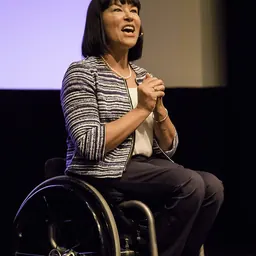

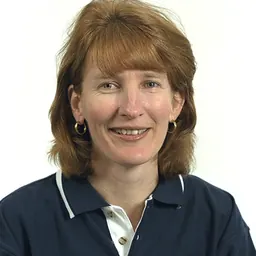

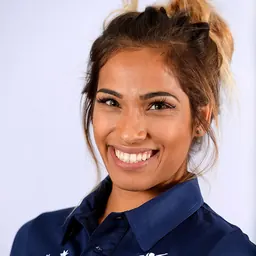


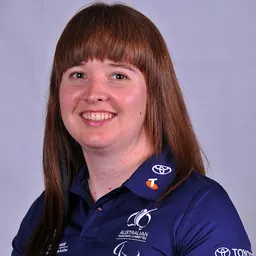
Related people
Same field, nearest in time





Contemporaries
People whose lives overlapped Louise Sauvage's


Frequently asked questions
Who is Louise Sauvage?
Australian paralympic athlete
When was Louise Sauvage born?
Louise Sauvage was born on 18 September 1973 in Sydney.
What is Louise Sauvage's occupation?
Louise Sauvage is an athletics competitor.
What nationality is Louise Sauvage?
Louise Sauvage is Australian.
Sources & further reading
Cite this page
APA: Biography.guide. (2026). Louise Sauvage. https://biography.guide/louise-sauvage/
MLA: "Louise Sauvage." Biography.guide, https://biography.guide/louise-sauvage/.
Chicago: "Louise Sauvage." Biography.guide. https://biography.guide/louise-sauvage/.
Data last updated: 2026-09-20 · Spot an error? Report a correction.
Page generated 2026-09-27 05:25 UTC