
Louise, Princess Royal
Third child and eldest daughter of Edward VII of the United Kingdom and Alexandra of Denmark
About Louise, Princess Royal
Lived 1867 – 1931 (aged 63). Louise, Princess Royal was a British aristocrat.
Louise, Princess Royal (Louise Victoria Alexandra Dagmar; 20 February 1867 – 4 January 1931) was the third child and eldest daughter of King Edward VII and Queen Alexandra of the United Kingdom. She was a younger sister of King George V. Louise was granted the title of Princess Royal in 1905. Known for her reserved and quiet nature, she remained a low-profile member of the royal family throughout her life.
Early life
Louise was born at 6:30 am on 20 February 1867 at Marlborough House, the London residence of her parents, Albert, Prince of Wales (later Edward VII), and Alexandra, Princess of Wales (later Queen Alexandra). Her father was the eldest son of Queen Victoria and Prince Albert, and her mother was the eldest daughter of Christian IX and Queen Louise of Denmark. She was named Louise Victoria Alexandra Dagmar, after her maternal grandmother Queen Louise; her paternal grandmother, Queen Victoria; her mother, Alexandra; and her aunt, the Tsesarevna of Russia. From birth, as a male-line granddaughter of the British monarch, she had the title Her Royal Highness Princess Louise of Wales. She was baptised at Marlborough House on 10 May by Charles Longley, Archbishop of Canterbury.
Her birth occurred under difficult circumstances. Her mother had been seriously ill with rheumatic fever late in pregnancy, making Louise's arrival precarious and causing concern for both mother and child. Although both survived, her mother was left with a permanent limp. Louise herself was regarded as a delicate child and was frequently unwell. The Wales children were raised largely at Marlborough House and Sandringham, where they enjoyed a relatively informal and happy childhood.
Louise and her sisters, Princess Victoria and Princess Maud were educated at home under private tutors and studied guitar under Catharina Pratten. They were noted for spirited and playful behaviour, often engaging in pillow fights and other "unladylike pastimes." Their mother's strong influence meant the girls remained close to home.
As a child, Louise accompanied her mother and siblings on several extended family visits to Copenhagen and to Bernstorff Palace, where her mother had grown up. Like her sisters, she was a bridesmaid at the wedding of her paternal aunt Princess Beatrice to Prince Henry of Battenberg in 1885.
Louise was an accomplished musician and sometimes played the organ during services at St Mary Magdalene Church, Sandringham. She was known within the family as Lulu or Toots.
Marriage and children
As daughter of the Prince of Wales, Louise was regarded as a highly desirable match. She had grown tired of her over‑protective mother and longed for independence, yet without making a "grand marriage" to a European prince, following the example of her aunt the Duchess of Argyll, who had married outside royalty. Louise was introduced to Alexander Duff, 6th Earl of Fife, at the wedding of her aunt Beatrice in 1885. He was a regular companion of her father and 18 years her senior. Four years later, she asked her grandmother Queen Victoria for permission to marry him, insisting that if she were not allowed to marry him she would surely die an old maid.
Queen Victoria recorded in her journal that she gladly gave her consent: "I was much pleased, and readily gave my consent, and kissed her and wished her all possible happiness." Their engagement was announced in June 1889. There was criticism at court, where it was thought improper for a princess to marry someone not of royal blood. Princess Victoria Mary of Teck wrote to her aunt Augusta, Grand Duchess of Mecklenburg-Strelitz, that "for a future Princess Royal to marry a subject seems rather strange." Alexander was a very wealthy landowner; he inherited the Duff family estates in Scotland, which included large tracts of land in Aberdeenshire. At his death, he held about 249,000 acres.
Despite her mother's attempts to keep her daughters unmarried and by her side, on 27 July 1889 Louise married Alexander in the Private Chapel at Buckingham Palace, with the Archbishop of Canterbury officiating at the service. They were third cousins through an illegitimate line, as Alexander was a great-grandchild of William IV and his mistress Dorothea Jordan. Her bridesmaids were Maud and Victoria, Victoria Mary of Teck, Marie Louise and Helena Victoria of Schleswig-Holstein, and the Countesses Feodora, Helena and Valda Gleichen.
Two days after the wedding, Queen Victoria created Alexander Duke of Fife and Marquess of Macduff in the Peerage of the United Kingdom. The letters patent creating this dukedom contained the standard remainder to heirs male of the body lawfully begotten. After the birth of their two daughters, on 24 April 1900, Queen Victoria signed letters patent creating a second Dukedom of Fife, along with the Earldom of Macduff in the Peerage of the United Kingdom, with a special remainder: in default of a male heir, these peerages would pass to the daughters of the 1st Duke, and then to their male descendants.
Louise and Alexander had three children: which she first applied in planning the interior decoration of Fife House. When a plumber's candle accidentally caused a fire that destroyed the original Mar Lodge, the new Mar Lodge, comprising 120 rooms, was constructed from a rough sketch drawn by Louise and further elaborated by their architect.
Though happiest in the countryside, Louise was an avid theatre and opera-goer when in London. She supported the performing arts throughout her life and, in her youth at Balmoral, took part as an amateur actress in many plays and tableaux vivants. On one occasion, she was coached by Ellen Terry.
Louise and Alexander made their main home at Mar Lodge, a sporting lodge built for them by Alexander Marshall Mackenzie. They owned Fife House in Brighton, where they sometimes lived, and East Sheen Lodge in Richmond from 1889 until they sold the Lodge in 1908.
London residence In the lead-up to their marriage, Alexander purchased the lease of a London townhouse at 15 Portman Square, London in July 1889. Louise continued to live at 15 Portman Square following her husband's death in 1912 until her own death in 1931, after which a large auction of the contents of the house was held in February 1932. In December 1933, newspapers reported that Louise's younger daughter, Maud, had agreed to loan the house for an exhibition of English needlework in aid of the Artists' Benevolent Institution, to be held during February and March 1935. The houses at 15 to 18 Portman Square were demolished in 1935, and a large apartment building was constructed on the site by May 1936.
Princess Royal
On 9 November 1905, Edward VII created Louise the Princess Royal, the highest honour bestowed on a female member of the royal family, succeeding her aunt, Victoria, German Empress, who died in 1901. At the same time, the King declared that the two daughters of Louise would be styled as princesses, with the style and attribute of "Highness" and with precedence immediately after all members of the royal family bearing the style of "Royal Highness".
In November 1905, Louise inaugurated the King's Labour Tents in Kingsway, London, a charitable initiative organised by the Church Army to provide temporary employment, food, and shelter to unemployed and destitute men. The tents offered men the opportunity to earn modest wages or meals by performing simple manual labour, such as preparing firewood, while also providing basic lodging and sustenance. Accompanied by Alexander, Louise visited the tents, spoke with the men, and sampled the soup provided, demonstrating her personal engagement with social welfare and her support for the Church Army's work in alleviating poverty in London.
Louise was noted for her steady involvement in charitable and public-service work throughout her life. She supported a wide range of organisations, taking a particular interest in the activities of the Church Army and serving as patron of the Alexandra Girls' Club. In addition to her regular charitable visits and engagements, she held roles in several civic and philanthropic bodies, including serving as President of the London branch of the British Red Cross Society and supporting groups such as the Theatrical Ladies' Guild, the Greater London Fund for the Blind, the RSPCA, and the British and Foreign Sailors' Society. She also served as patron of the Ladies' Association in aid of Princess Christian's Fund for the Deaf and Dumb, a charitable organisation established under her aunt, Princess Christian. Although known for her generally reserved public profile, she maintained a consistent commitment to charitable causes.
In 1911, Louise served as Lady Sponsor of the battlecruiser HMS Princess Royal, taking part in its ceremonial launch by breaking a bottle of champagne on the ship's bow. During the First World War, she supported the armed forces, including presenting a Union Jack flag and shield, given by the League of Empire, to Australian troops stationed in England at Wellington Barracks on 29 July 1916.
Louise became Colonel-in-Chief of the 7th Dragoon Guards in June 1914, a regiment historically tied to the title "Princess Royal." Earlier, on 5 April 1906, she presented a new regimental standard to the 7th Dragoon Guards, the first occasion on which a Princess Royal attended a parade of the regiment. The 7th Dragoon Guards were merged with the 4th Dragoon Guards in 1922; as the 4th had no Colonel‑in‑Chief, Louise accepted the position for the combined 4th/7th Dragoon Guards on 20 November 1922 and remained in the post until her death. The next Colonel‑in‑Chief of the regiment was the Duchess of Kent, appointed in 1977.
Louise held a strong association with Braemar, Scotland, through her marriage to Alexander. He donated part of his Mar Estate to provide a permanent venue for the Braemar Gathering, one of Scotland's most prestigious Highland Games. Louise was patron of the Braemar Royal Highland Society and annually attended these events, along with other members of the royal family. The grounds were later named the Princess Royal and Duke of Fife Memorial Park in recognition of the Fife family.
On 12 December 1911, she attended the coronation of her brother King George V. Later that month, while sailing aboard the P&O's SS Delhi to Egypt, Louise and her family were shipwrecked off the coast of Morocco. She and her husband refused to leave until all the women and children had been rescued and were among the last to depart. During the rescue, Louise lost her jewel case, and both Alexandra and Maud were thrown into the sea by a large wave. Although they were otherwise unharmed, Alexander fell ill with pleurisy, probably contracted as a result of the shipwreck.
Later life and death
After the death of her husband, Louise led a reclusive life, yet remained an active member of the royal family. She divided her time between Mar Lodge in Braemar and her London residence at Portman Square. In her later years, Louise faced financial difficulties stemming from the mismanaged affairs of her family friend Horace Farquhar, 1st Earl Farquhar, who had been involved in investments connected to the Fife family. In his final years Farquhar reportedly suffered mental decline, and when he died in 1923 his estate was found to be disordered and heavily indebted. Although not legally liable, Louise sold part of her art collection, including several Romneys, as well as furnishings from her London residence, to protect her finances and the family's reputation.
In later life, Louise suffered from recurring gastric haemorrhages, including serious attacks in April 1925 and October 1929 at Mar Lodge, and was brought back to London for nursing care at her home in Portman Square, where she was largely confined to bed. Her last letter to Queen Mary spoke of going out in the morning and then returning to bed. Spending so much time resting, she was grateful for the regular gifts of flowers, "which make my room so light."
In December 1930, shortly before her death, Louise made one final public engagement by presenting badges at the Haymarket Theatre to members of the Theatrical Ladies' Guild, an organisation of which she was patron.
On 4 January 1931 at 2:30 pm, Louise died in her sleep at her home at 15 Portman Square, London, with her two daughters, Alexandra and Maud, at her bedside. King George V, Queen Mary, the Prince of Wales, the Duke and Duchess of York, and other members of the Royal Family were present as the Dean of Windsor pronounced the words "Grant us safe lodging, holy rest, and peace at last." At Louise's own request, the organ played the triumphal march from Verdi's Aida as her coffin was lowered into the royal vault beneath the chapel.
Honours and arms 1885: Royal Order of Victoria and Albert 6 August 1887: Imperial Order of the Crown of India 1929: Dame Grand Cross of the Venerable Order of St John of Jerusalem (GCStJ) 1888–1929: Lady of the Venerable Order of St John of Jerusalem (LJStJ)
Honorary military appointments 1911: Lady Sponsor of HMS Princess Royal 1914: Colonel-in-chief of the 7th Dragoon Guards 1922: Colonel-in-chief of the 4th/7th Royal Dragoon Guards The inescutcheon was dropped by royal warrant in 1917.
Ancestors
Don’t just read it —
keep it.
Full-length biographies made to live with: read them, listen on the way to work, watch them tonight.
- E-book
- Audio
- Video
Instant download · yours to keep · every purchase keeps this site free
Important facts
more
The Princess Louise, The Princess Louise Victoria Alexandra Dagmar, The Princess Louise of Wales, The Princess Louise Victoria Alexandra Dagmar of Wales Princess Royal and Duchess of Fife, Princess Louise of the United Kingdom, Princess Louise Victoria Alexandra Dagmar of the UnitedFamily & relationships
People in Louise, Princess Royal's life
Named in this biography and alive at the same time


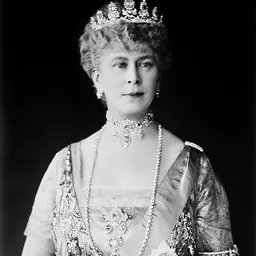

Related people
Same field, nearest in time


Contemporaries
People whose lives overlapped Louise, Princess Royal's



Frequently asked questions
Who was Louise, Princess Royal?
third child and eldest daughter of Edward VII of the United Kingdom and Alexandra of Denmark (1867-1931)
When was Louise, Princess Royal born?
Louise, Princess Royal was born on 20 February 1867 in Marlborough House.
When did Louise, Princess Royal die?
Louise, Princess Royal died on 4 January 1931 in Portman Square.
What was Louise, Princess Royal's occupation?
Louise, Princess Royal was an aristocrat.
What nationality was Louise, Princess Royal?
Louise, Princess Royal was British.
Sources & further reading
· Wikipedia: Louise, Princess Royal
· DBpedia: Louise, Princess Royal
Cite this page
APA: Biography.guide. (2026). Louise, Princess Royal. https://biography.guide/louise-princess-royal/
MLA: "Louise, Princess Royal." Biography.guide, https://biography.guide/louise-princess-royal/.
Chicago: "Louise, Princess Royal." Biography.guide. https://biography.guide/louise-princess-royal/.
Data last updated: 2026-09-20 · Spot an error? Report a correction.
Page generated 2026-09-27 05:21 UTC