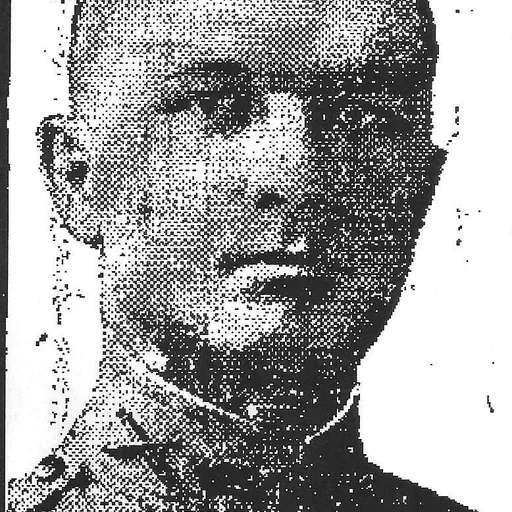
About Louis Jordan
Lived 1890 – 1918 (aged 28). Louis Jordan was an American american football player.
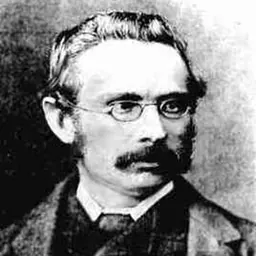
Louis John Jordan (January 30, 1890 – March 5, 1918) was an American college football player. He played for the University of Texas from 1911 to 1914 and was the first Texas Longhorns player to be selected as an All-American. Jordan was killed by a German artillery barrage while serving in France during World War I. He was among the first four individuals, and the first athlete, inducted into the Longhorn Hall of Honor. He was also selected as the honorary captain for the all-time University of Texas football team in 2009.
Biography Early life Jordan was born and raised in Gillespie County, near Fredericksburg, Texas. He received his state teaching certificate at age 16 and taught at the Honey Creek school. His performance in the loss to Notre Dame became a Texas legend. According to a Texas newspaper account, Notre Dame sought to drive Jordan from the field by using four guards against him and subjecting him to the pounding of fullback Ray Eichenlaub. Prior to the Notre Dame game, Jordan had played every minute of every game on offense and defense, and he did not want to quit against Notre Dame. However, Texas coach Dave Allerdice "would not let the big fellow take any more punishment" and finally pulled him from the game.
During the 1914 Texas–Oklahoma game, Oklahoma's Hap Johnson ran the opening kickoff back 85 yards for a touchdown, but Jordan gathered his teammates around him. Teammate Clyde Littlefield later recalled that Jordan "told us in no mincing words, with a few cuss words in German and some in English, 'nobody leaves this field until we beat the hell out of them.'" Texas scored 32 unanswered points and won the game, 32–7. In Jordan's four seasons as a player for the Texas football team, the Longhorns had a record of 27–4 and outscored their opponents 875–158.
Jordan was the first University of Texas football player to be named as an All-American. Camp was notorious for overlooking football players who did not play for the Ivy League schools of the East, and Jordan's selection, even to Camp's second team, was seen as a major concession to Jordan's talent. Damon Runyon, the New York sports writer, saw Jordan play and said, "Were that man in the East playing with Harvard or Yale he would be heralded from coast to coast as one of the greatest guards of all time."
University of Texas football historian and media relations director Bill Little later wrote of Jordan's contributions in the early years of Longhorns football:"One of the most popular students at The University of Texas from 1911 through 1915 was a young man of German heritage from Fredericksburg, Texas, named L.J. 'Louis' Jordan. Jordan was like everybody's big brother. He was a round-faced blond who stood over 6 feet tall and weighed 205 pounds -- that was big for the time ... Jordan, in fact, was so gentle by nature he had to be coaxed to play football. But when he did, he became the greatest lineman, both offensively and defensively, of his era."
Jordan's death was reported in Texas newspapers as a major story. The Galveston Daily News opened its account of the event as follows:"Lieutenant Louis Jordan of Fredericksburg, whose death occurred in action on the American fighting line in France, March 5, was one of the most famous athletes ever produced at the University of Texas. He was the first Texas officer to give his life in the struggle to make the world safe for democracy. Louie, as he was known to his friends, was a giant both mentally and physically. He measured six feet four inches in height and weighed 225 pounds just before his last football game ... He counted his friends by the hundreds and his admirers were all who met him. Before the reburial, Jordan's remains lay in state at the county courthouse, "the coffin draped with an American flag and under a profusion of flowers." Hundreds of Texans filed past the casket "paying silent respects" to Jordan. The Jordan memorial was unveiled on Thanksgiving Day 1924 before the Texas-Texas A&M game and was the first monument to be placed in Memorial Stadium.
The flagpole remained in place at the south end of the stadium until it was removed in 1972 for the installation of a new scoreboard. In November 2000, at a dedication ceremony before the Texas-Texas A&M football game, a replica of the flagpole memorial was installed in the southeast corner of the stadium. At the dedication, the honor guard wore World War I uniforms and a lone trumpeter from the marching band played taps in memory of Jordan's service. The memorial continues to be known as the Louis Jordan Flagpole. An exhibit featuring Jordan's 1914 letter sweater, part of his World War I uniform and his shrapnel-pierced diary is on display in a hall beneath the stadium's grandstand.
Don’t just read it —
keep it.
Full-length biographies made to live with: read them, listen on the way to work, watch them tonight.
- E-book
- Audio
- Video
Instant download · yours to keep · every purchase keeps this site free
Important facts
People in Louis Jordan's life
Named in this biography and alive at the same time



Related people
Same field, nearest in time



Contemporaries
People whose lives overlapped Louis Jordan's




Frequently asked questions
Who was Louis Jordan?
American football player (1890–1918)
When was Louis Jordan born?
Louis Jordan was born on 30 January 1890 in Fredericksburg.
When did Louis Jordan die?
Louis Jordan died on 5 March 1918 in Lunéville.
What was Louis Jordan's occupation?
Louis Jordan was an american football player.
What nationality was Louis Jordan?
Louis Jordan was American.
Sources & further reading
· DBpedia: Louis Jordan (American football)
Cite this page
APA: Biography.guide. (2026). Louis Jordan. https://biography.guide/louis-jordan-american-football-player/
MLA: "Louis Jordan." Biography.guide, https://biography.guide/louis-jordan-american-football-player/.
Chicago: "Louis Jordan." Biography.guide. https://biography.guide/louis-jordan-american-football-player/.
Data last updated: 2026-09-22 · Spot an error? Report a correction.
Portrait: Wikimedia Commons · author & licence
Page generated 2026-09-27 05:02 UTC