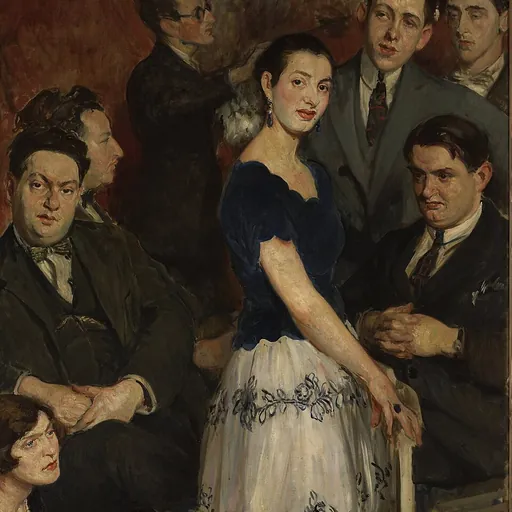
About Louis Durey
Lived 1888 – 1979 (aged 91). Louis Durey was a French composer, conductor and music critic.
Louis Edmond Durey (; 27 May 18883 July 1979) was a French composer. He was among the Les Six group of composers.
Biography Durey was born into a bourgeois Parisian family, the son of a local businessman. It was not until he was nineteen years old that he chose to pursue a musical career after hearing a performance of music by Claude Debussy.
As a composer, he was primarily autodiadictic. From the beginning, choral music was of great importance in Durey's productivity. His L'Offrande Lyrique (1914) has been called the first piece of French twelve-tone music. The first of his works to gain recognition in the music world was for a piano duet titled Carillons. At a 1918 concert, this work attracted the interest of Maurice Ravel, who recommended him to his publisher.
Communicating with his colleague, Darius Milhaud, he asked him to contribute a piano piece that would bring together the six composers who, in 1920 were dubbed Les Six, culminating in L'Album des Six. Despite their acclaim, Durey refused participation in the 1921 collaborative work Les mariés de la tour Eiffel, which gravely offended Jean Cocteau.
Following the Les Six period, Durey continued with his career. Never feeling the need to belong to the musical establishment, he voiced his growing left-wing ideals that put him in an artistic isolation that lasted for the rest of his life.
Following the break with Cocteau, Durey withdrew to his home in Saint-Tropez in the south of France. In addition to chamber music, at Saint-Tropez he wrote his only opera, L'Occasion. In 1929, he married Anne Grangeon and moved back to Paris the following year. In the mid-thirties he joined the Communist Party and became active in the newly formed Fédération Musicale Populaire. When Germany occupied France during World War II, he worked with the French Resistance as a prominent member of the Front National des Musiciens who worked to hide Jews and preserve French music under Nazi rule. He also wrote anti-fascist songs. As others, he stopped composing under Nazi rule and instead arranged and collected older French music and folk songs. a flute sonatina, and Images à Crusoe.
He died in Saint-Tropez in 1979.
Piano works Year Opus Work 1916-8 Op.7 Deux Pièces pour piano a quatre mains, "Carillons" (1916) and "Neige" (1918) 1917 Op.9 Scènes de Cirque 1919 Op.21 Romance sans paroles (for L'Album des Six) 1920 Op.26 Trois Préludes 1920 Op.28 Prélude et Élégie 1921 Op.29 Deux Études 1921(?) Op.30 Le Blé en herbe 1926 Op.36 Trois Sonatines 1928 Op.40 Nocturne en re bémol 1924-8 Op.41 Dix Inventions 1951 Op.68 Dix Basquaises 1953 Op.75 Six Pièces: "L'Automne 53" 1956-7 Op.83 Concertino pour piano, seize instruments à vent, contrebasse et timbales
Don’t just read it —
keep it.
Full-length biographies made to live with: read them, listen on the way to work, watch them tonight.
- E-book
- Audio
- Video
Instant download · yours to keep · every purchase keeps this site free
Important facts
People in Louis Durey's life
Named in this biography and alive at the same time

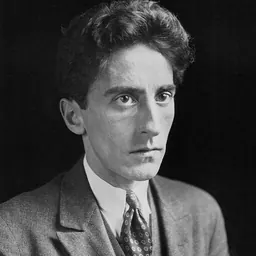
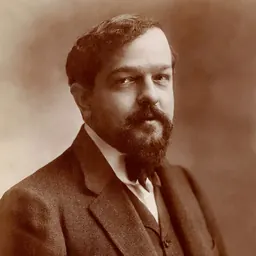
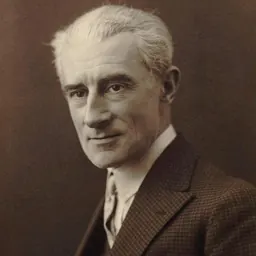
Related people
Same field, nearest in time



Contemporaries
People whose lives overlapped Louis Durey's



Frequently asked questions
Who was Louis Durey?
French composer (1888–1979)
When was Louis Durey born?
Louis Durey was born on 27 May 1888 in 6th arrondissement of Paris.
When did Louis Durey die?
Louis Durey died on 3 July 1979 in Saint-Tropez.
What was Louis Durey's occupation?
Louis Durey was a composer, conductor and music critic.
What nationality was Louis Durey?
Louis Durey was French.
Sources & further reading
Cite this page
APA: Biography.guide. (2026). Louis Durey. https://biography.guide/louis-durey/
MLA: "Louis Durey." Biography.guide, https://biography.guide/louis-durey/.
Chicago: "Louis Durey." Biography.guide. https://biography.guide/louis-durey/.
Data last updated: 2026-09-21 · Spot an error? Report a correction.
Portrait: Wikimedia Commons · author & licence
Page generated 2026-09-27 05:00 UTC