
About Louis de Wohl
Lived 1903 – 1961 (aged 58). Louis de Wohl was a German and Austrian writer, astrologer, screenwriter and science fiction writer.
Louis de Wohl (earlier Ludwig von Wohl, born Lajos Theodor Gaspar Adolf Wohl, 24 January 1903 – 2 June 1961) was a German-born Catholic author.
De Wohl wrote novels which were literary hagiographies of notable Roman Catholic saints and of different periods of the Bible.
His works have been translated into twelve languages, and sold over one million copies worldwide. He also served as an astrologer notable for his work with MI5 in England during World War II.
Life Wohl was born in Berlin to a poor Catholic family and had a Hungarian father and Austrian mother of Jewish descent. When he was only 17 years old, his mother pushed him into an apprenticeship to a banker from which he was dismissed in 1924, at the age of 21. In 1935, he emigrated to England because of his objections to the Nazi regime. Some sources claim that he there had a wife named Alexandra, who fled to Santiago, Chile, where she claimed to be a Romanian princess and was known as "La Baronessa".
Wohl worked as an astrologer for the British intelligence agency MI5 during World War II. Delmer nevertheless continued to employ him until the end of the war and considered his contribution valuable.
During the war, Wohl became increasingly religious, and he had a successful postwar career writing novels regarding Roman Catholic Church history and the lives of the saints.
In 1953, Wohl married Ruth Magdalene Lorch,
In an audience with Pope Pius XII, he was told to "write about the history and mission of the Church in the World". The Cardinal of Milan, Ildefonso Schuster, said to him after reading some of his writings, "Let your writings be good. For your writings you will one day be judged". From that time, he allegedly believed that he had to write for God, and felt that his earlier novels in the German language were of 'small significance compared to the novels he wrote for the glory of God'.
His novel The Spear brought him international acclaim. Even now Louis de Wohl's books are widely read. His non-fiction work, Founded on a Rock: A History of the Catholic Church is often required reading for RCIA students. He wrote books on St. Benedict, St. Francis of Assisi, Joan of Arc, and Constantine I among many others.
List of works Der große Kampf, 1926 Das indische Wunder – Jack McGills geheime Sendung, 1926 Der Präsident von Costa Nueva – Der Roman eines Abenteurers, 1927 Miss Lillebil aus USA, 1928 Lord Spleen, 1928 Knockout Europa, 1928 Punks kommt aus Amerika, 1929 Er und Sie und sehr viel Schwindel, 1929 Die verspielte Prinzessin – Ein Filmroman zwischen Berlin, Hollywood und Kairo, 1929 Um weißes Gift, 1930 Der Vagabund vom Äquator, 1930 Das Testament des Cornelius Gulden, 1930 Die Wohnung, die über Nacht verschwand, 1931 Die Göttin der tausend Katzen, 1931 Der Mann, der die Anleihe stahl, 1931 Der Mann aus der Hölle, 1931 Peter im Pech, 1932 Die weiße Frau des Maharadscha, 1932 Die goldene Wolke, 1932 Der unsichtbare Reporter, 1932 Schwarz ist weiß und weiß ist schwarz, 1933 Kopfsprung ins Leben, 1933 Das große Erlebnis, 1933 Panik im Paradies, 1934 Die Reise nach Pretoria, 1934 Die englische Heirat, 1934 Die Deutschen von Tschau-Fu, 1934 Blutsbrüder, 1934 Tropenluft, 1935 Es kommt ein Mann nach Belawan – Ein Roman auf Sumatra, 1935 Die Türme des Schweigens, 1936 I Follow my Stars, 1937 Secret Service of the Sky, 1938 Common-sense Astrology, 1940 Strange Daughter, 1946 The Living Wood (Emperor Constantine and St. Helena), 1947 Throne of the World (Attila the Hun and Pope Leo I), 1949 Imperial Renegade (Emperor Julian the Apostate and St. Athanasius), 1950 The Quiet Light (St. Thomas Aquinas), 1950 The Restless Flame (St. Augustine of Hippo), 1951 The Golden Thread (St. Ignatius Loyola), 1952 The Stars of War & Peace, 1952 Set All Afire (St. Francis Xavier), 1953 The Second Conquest, 1954 The Spear (St. Longinus), 1955 The Last Crusader (Don Juan of Austria and The Battle of Lepanto), 1956 Saint Joan: The Girl Soldier (St. Joan of Arc), 1957 The Glorious Folly (St. Paul the Apostle), 1957 The Joyful Beggar (St. Francis of Assisi), 1958 Citadel of God (St. Benedict of Nursia), 1959 Adam, Eve, and the Ape, 1960 Founded on a Rock: A History of the Catholic Church, 1961 Lay Siege to Heaven (St. Catherine of Siena), 1961 David of Jerusalem (King David), 1963 Pope Pius XII: Shepherd to the World
Selected filmography My Friend Harry, directed by Rudolf Walther-Fein and Max Obal (1928, based on the novel Das indische Wunder) The Criminal of the Century, directed by Max Obal (1928, based on the novel Jimmy der Schwerverbrecher) The President, directed by Gennaro Righelli (1928, based on the novel Der Präsident von Costa Nueva) A Girl with Temperament, directed by Victor Janson (1928, based on the novel Miss Lillebil aus USA) Once You Give Away Your Heart, directed by Johannes Guter (1929, based on the novel Der Vagabund vom Äquator) Die Jagd nach der Million, directed by Rudolf Walther-Fein and Max Obal (1930, based on the novel Lord Spleen) The Testament of Cornelius Gulden, directed by E. W. Emo (1932, based on the novel Das Testament des Cornelius Gulden) The Legacy of Pretoria, directed by Johannes Meyer (1934, based on the novel Die Reise nach Pretoria) The English Marriage, directed by Reinhold Schünzel (1934, based on the novel Die englische Heirat) Punks Arrives from America, directed by Karlheinz Martin (1935, based on the novel Punks kommt aus Amerika) The Love of the Maharaja, directed by Arthur Maria Rabenalt (German-language version, 1936, based on the novel Die weiße Frau des Maharadscha) A Woman Between Two Worlds, directed by Goffredo Alessandrini (Italian-language version, 1936, based on the novel Die weiße Frau des Maharadscha) Crime Over London, directed by Alfred Zeisler (1936, based on the novel House of a Thousand Windows) Francis of Assisi, directed by Michael Curtiz (1961, based on the novel The Joyful Beggar)
Screenwriter The Sweet Girl (dir. Manfred Noa, 1926) Crooks in Tails (dir. Manfred Noa, 1927) The Eighteen Year Old (dir. Manfred Noa, 1927) The Last Company (dir. Curtis Bernhardt, 1930) Love's Carnival (dir. Hans Steinhoff, 1930) Adventures in the Engadin (dir. Max Obal, 1932) The Oil Sharks (French-language version, dir. Rudolph Cartier and Henri Decoin, 1933) Invisible Opponent (German-language version, dir. Rudolph Cartier, 1933) Homecoming to Happiness (dir. Carl Boese, 1933) Decoy (German-language version, dir. Hans Steinhoff, 1934) The Decoy (French-language version, dir. Roger Le Bon and Hans Steinhoff, 1935) Make-Up (dir. Alfred Zeisler, 1937) Dein Horoskop – Dein Schicksal? (documentary on astrology, dir. Konrad Lustig, 1956)
Don’t just read it —
keep it.
Full-length biographies made to live with: read them, listen on the way to work, watch them tonight.
- E-book
- Audio
- Video
Instant download · yours to keep · every purchase keeps this site free
Important facts
People in Louis de Wohl's life
Named in this biography and alive at the same time

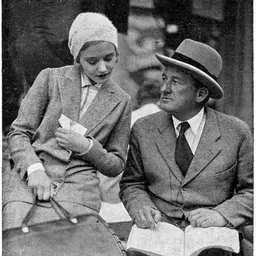
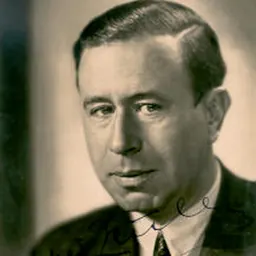



Related people
Same field, nearest in time





Contemporaries
People whose lives overlapped Louis de Wohl's
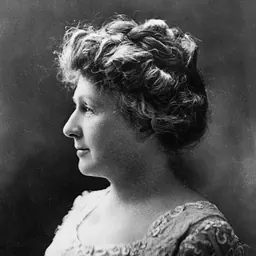
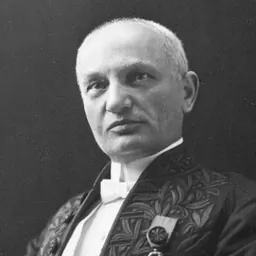
Frequently asked questions
Who was Louis de Wohl?
German–Hungarian writer and astrologer (1903–1961)
When was Louis de Wohl born?
Louis de Wohl was born on 24 January 1903 in Berlin.
When did Louis de Wohl die?
Louis de Wohl died on 2 June 1961 in Lucerne.
What was Louis de Wohl's occupation?
Louis de Wohl was a writer, astrologer, screenwriter and science fiction writer.
What nationality was Louis de Wohl?
Louis de Wohl was German and Austrian.
Sources & further reading
Cite this page
APA: Biography.guide. (2026). Louis de Wohl. https://biography.guide/louis-de-wohl/
MLA: "Louis de Wohl." Biography.guide, https://biography.guide/louis-de-wohl/.
Chicago: "Louis de Wohl." Biography.guide. https://biography.guide/louis-de-wohl/.
Data last updated: 2026-09-20 · Spot an error? Report a correction.
Page generated 2026-09-27 05:24 UTC