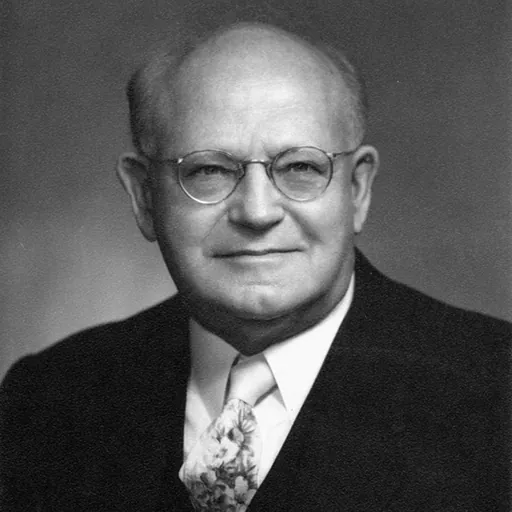
About Louis Bauman
Lived 1875 – 1950 (aged 74). Louis Bauman was an American writer.
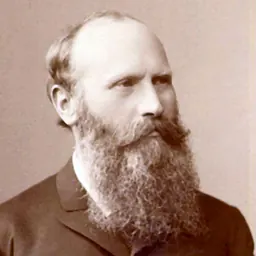
Louis Sylvester Bauman (November 13, 1875 – November 8, 1950) was a Brethren minister, writer, and Bible conference speaker, holding influential leadership in the Brethren Church and the "Grace Brethren" movement which evenly divided the denomination in 1939. He served in several pastorates, in particular the First Brethren Church of Long Beach, California where he was pastor for thirty-four years (1913–1947).
Bauman held to traditional Brethren views regarding baptism, communion, and nonresistance, but also held to evangelical convictions regarding missions and dispensationalism, with the latter views becoming foundational beliefs of Grace Brethren.
Biography Early life
Bauman was born in Nora Springs, Iowa to William J.H. Bauman and Amelia (née Leckington) Bauman. In 1878 his family moved to the Morrill, Kansas. His father was a German Baptist Brethren (as all Schwarzenau Brethren were known as before 1881/82) elder, and Bauman joined the Pony Creek Brethren congregation through a revival held by his father in February 1889. Bauman came from humble beginnings, with both parents at times employed to meet the needs of their four children (Bauman had three sisters). He received his high school education in Lawrence, Kansas and obtained no education higher except for an honorary degree from Ashland College.
He married a teacher named Mary M. Wageman on April 28, 1898; she spoke in the pulpit on occasion and also wrote for The Brethren Evangelist. They had three children: Glenn, Iva Muriel, and Paul. Glenn died at age six (ca. 1907), which spurred Bauman's reading of Biblical prophecies and his thought development toward dispensationalism. Mary died on September 12, 1909, and he remarried to Reta Virginia Stover on April 8, 1912. Bauman and Stover first met at an evangelistic campaign in Sunnyside, Washington in 1911, where Brethren leader and Grace Seminary co-founder Alva J. McClain was converted to Christianity.
Early ministry Bauman gave his first sermon at age seventeen and in 1906 became the board's secretary. Bauman served in the last position until 1945. When he was a Philadelphia streetcar conductor, James Gribble (missionary) was led to the Lord and baptized by Dr. Bauman. James, along with his wife Dr. Florence Gribble became pioneer missionaries to the African French colony of Ubangi-Shari (which in 1960 became the Central African Republic).
Bauman's interest in eschatology was greatly impacted by a well known Brethren premillennialist and through the grieving process of losing his oldest son. Isaac D. Bowman was Bauman's predecessor at the Philadelphia church, published writer, and open premillennialist. Bowman and Bauman remained in close contact throughout their lifetimes, although Bowman's theological views were more traditionally Brethren, and remained with the Ashland Brethren group in the 1939 division. The death of Bauman's son Glenn brought a devoted reading to prophetic texts of the Bible. In his eulogy of Bauman, longtime Long Beach Brethren Church assistant pastor Alan S. Pearce summarizes the experience.
When [Bauman's] firstborn son, Glenn, was taken to be with the Lord, at the age of 6, doubts arose in the mind of Louis Bauman. Why should his boy be taken, while others who got their food from garbage cans in the alleys remain? Why should his boy be taken from him? Determined to get an answer, he was driven, as never before, to the unchangeable "word of God, which liveth and abideth forever." Here he found not only consolation and assurance, but became fascinated with the book of Daniel, he read and reread the prophecies contained in this portion of the Scriptures, and comparing them with other Scriptures, he was convinced that only a God who knew the end from the beginning could be the author of the Bible.
In the next two years two groups emerged in the Brethren Church: those sympathetic with Ashland College and those sympathetic with Grace Seminary. Traditional Brethren, in part because of their drawn out approach and in part because of their distaste of fundamentalist theology, sided with Ashland College, while the fundamentalist led by Bauman and McClain, sided with Grace. In 1939, the Grace Seminary group formed the National Fellowship of Brethren Churches.
Later ministry
After serving at Long Beach, Bauman went on to be pastor at the First Brethren Church of Washington, D.C. from the age of 73 until his death in 1950. Up until his death he remained a prolific writer and dominant voice in the developing Grace Brethren movement. He was buried on what would have been his 75th birthday in the Germantown Cemetery, the Brethren "Mother Congregation" church cemetery located in Germantown, Pennsylvania ) is laid out in The Faith Once for All Delivered unto the Saints. In this work Bauman lays out his convictions in four sections, the first (Basic Doctrine) and last (Prophetic Doctrine) being very fundamentalist in nature and the middle two (The Great Commission and Practical Doctrine) distinctively Brethren.
Several of Bauman's fundamentalist perspectives did create strong disagreement among many of his Brethren Church peers and along with the events at Ashland College brought about the denominational split of the late nineteen thirties. The Sermon on the Mount of Matthew 5–7, a foundational passage for Brethren and Anabaptist groups in general, was viewed by Bauman in a classical dispensationalism framework as a passage intended for the Jews and not the New Testament gospel intended for the Church in the "Age of Grace." Bauman said regarding the Sermon on the Mount that "there's no gospel in it because there's no blood in it." At the height of conflict between "Ashland" and "Grace" Brethren groups, Bauman wrote: We hold in common with our Brethren of The Grace Seminary Group that The Sermon on the Mount, coming from the lips of the incarnate God, is the highest, holiest, purest, most perfect law that ever has fallen, or ever will fall, upon ears of men. It is the law of the Kingdom of Heaven...The Gospel of salvation calls for blood atonement; for a belief in the deity of Jesus Christ, the Son of God; and, for faith in the resurrection of Christ from the dead - not one word of which doctrines are found in the Sermon on The Mount.
Selected works Published books and pamphlets The Faith Once for All Delivered unto the Saints. (1906) The Modern Tongues Movement: Examined and Judged in the Light of the Scripture and in the Light of its Fruits. (1930) God and Gog: or The Coming Meet Between Judah's Lion and Russia's Bear. (1934) Shirts and Sheets; or Anti-Semitism: A Present Day Sign of the First Magnitude! (1934) "The Time of Jacob's Trouble" An Answer to the Question of a Little Jewish Girl: "Tell Me, Father, What Makes Folks Hate Us So?" (1935) The Handbook of Missionary Facts. (1936) Light from Bible prophecy as Related to the Present Crisis. (1936) Three Unclean Spirits like Frogs: Socialism, Communism, Fascism. (1936) "Prepare War!" or Arming for Armageddon. (1937) Russian Events in the Light of Bible Prophecy. (1942) Was Jesus Born on Christmas Day? Should Christians celebrate Christmas? (1947) The Approaching End of This Age. Collection of articles originally published in The King's Business (1952) Biblical Prophecy in an Apocalyptic Age. (1988)
Magazines which Bauman contributed to frequently The Brethren Evangelist Bauman began contributing to the Brethren Church magazine in his late teens, and wrote frequently up until the Ashland/Grace split in 1939. The Brethren Missionary Herald Bauman was a contributor to the Grace Brethren movement newsletter from its start until his death in 1950. The King's Business This monthly publication was produced by the Bible Institute of Los Angeles (BIOLA). Bauman wrote nearly each month, pointing to current events and their alignment with his interpretation of Biblical prophecy. The Sunday School Times
Don’t just read it —
keep it.
Full-length biographies made to live with: read them, listen on the way to work, watch them tonight.
- E-book
- Audio
- Video
Instant download · yours to keep · every purchase keeps this site free
Important facts
People in Louis Bauman's life
Named in this biography and alive at the same time

Related people
Same field, nearest in time





Contemporaries
People whose lives overlapped Louis Bauman's

Frequently asked questions
Who was Louis Bauman?
American minister
When was Louis Bauman born?
Louis Bauman was born on 13 November 1875 in Nora Springs.
When did Louis Bauman die?
Louis Bauman died on 8 November 1950 in Washington, D.C..
What was Louis Bauman's occupation?
Louis Bauman was a writer.
What nationality was Louis Bauman?
Louis Bauman was American.
Sources & further reading
Cite this page
APA: Biography.guide. (2026). Louis Bauman. https://biography.guide/louis-bauman/
MLA: "Louis Bauman." Biography.guide, https://biography.guide/louis-bauman/.
Chicago: "Louis Bauman." Biography.guide. https://biography.guide/louis-bauman/.
Data last updated: 2026-09-23 · Spot an error? Report a correction.
Portrait: Wikimedia Commons · author & licence
Page generated 2026-09-27 05:05 UTC