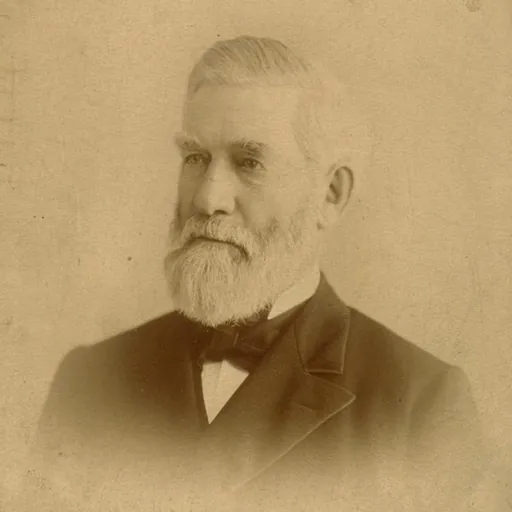
About Lorenzo Sawyer
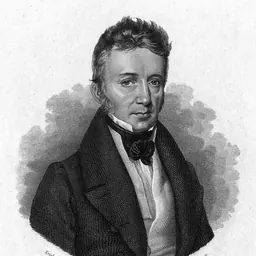
Lived 1820 – 1891 (aged 71). Lorenzo Sawyer was an American lawyer and judge.
Lorenzo Sawyer (May 23, 1820 – September 7, 1891) was an American lawyer and judge who was appointed to the Supreme Court of California in 1860 and served as the ninth Chief Justice of California from 1868 to 1870. He served as a United States circuit judge of the United States Circuit Courts for the Ninth Circuit and of the United States Court of Appeals for the Ninth Circuit. He is best known for handing down the verdict in the case of Woodruff v. North Bloomfield Gravel Mining Company; his verdict is frequently referred to as the "Sawyer Decision."
Early years
Sawyer was born on a farm in Le Roy, New York the eldest of six children. He worked on the farm during the summer and attended the district school in winter. At the age of fifteen he attended, for a short time, a high school at Watertown, New York, called the Black River Institute, where he became interested in the law. In 1837, having reached the age of seventeen, he went out on his own to pursue a course of study preparatory to commencing the study of law. The next eight years were devoted to preparation for the bar, at first in New York and afterward in Ohio. To support himself during this period, he taught in the district schools, and afterward in academies and as a tutor in college.
Career
In 1840, Sawyer emigrated to Ohio, where he pursued his studies for a time at the Western Reserve College (now Case Western Reserve University), and afterward continued his studies at Columbus and at Ohio Central College near Columbus, graduating in 1846. He was admitted to the bar of the Supreme Court of Ohio in May 1846. He afterward went to Chicago, Illinois, where he passed a year in the office of future California Senator James A. McDougall. Soon afterward he entered into a law partnership with the Lieutenant-Governor John Edwin Holmes at Jefferson, Wisconsin, where he was rapidly acquiring an extensive and lucrative practice, when the California Gold Rush happened. He wrote sketches of this trip, which were published in the Ohio Observer, and copied into many of the western papers. They were highly appreciated and were used as a guide by many emigrants of the succeeding year. After working in the mines for a short time, he went to Sacramento and opened a law office there. Ill health, however, compelled him to seek the climate of the mountains, and accordingly he moved to Nevada City and entered upon the practice of law in October of that year, his law library consisting of eleven volumes which he had brought across the plains. With the exception of a few months from February to August 1851 passed in San Francisco, during which time his office was twice burned, he remained in Nevada City until the autumn of 1853, when he returned to San Francisco. In 1853 he was elected City Attorney as a nominee of the Whig Party.
In 1855, Sawyer was a candidate for Justice of the Supreme Court, and came within six votes of reaching the nomination. On March 6, 1861, he was admitted to the bar of the Supreme Court of the United States. In the spring of 1861, he formed a law partnership with the General C. H. S. Williams, and in the winter of 1861-1862 they determined to open a branch office in Virginia City, Nevada. Sawyer went to Virginia City in January 1862 to open the office and establish the business, and while there Governor Leland Stanford of California offered him the appointment of City and County Attorney of San Francisco, which he declined. In June 1862, he was offered a vacant spot in the office of Judge of the Twelfth Judicial District, embracing the city and county of San Mateo, which he accepted, and he was unanimously reelected to office when his first term was up, both political parties giving him their support. During his term, he was noted for the thoroughness and elaborateness of his decisions and held in high regard.
Sawyer died on September 7, 1891, in San Francisco and he was buried at Laurel Hill Cemetery (which no longer exists).
Federal judicial service
Sawyer was nominated by President Ulysses S. Grant on December 8, 1869, to the United States Circuit Courts for the Ninth Circuit, to a new seat authorized by 16 Stat. 44. He was confirmed by the United States Senate on January 10, 1870, and received his commission the same day. Sawyer was assigned by operation of law to additional and concurrent service on the United States Court of Appeals for the Ninth Circuit on June 16, 1891, to a new seat authorized by 26 Stat. 826 (Evarts Act).
Don’t just read it —
keep it.
Full-length biographies made to live with: read them, listen on the way to work, watch them tonight.
- E-book
- Audio
- Video
Instant download · yours to keep · every purchase keeps this site free
Important facts
People in Lorenzo Sawyer's life
Named in this biography and alive at the same time


Related people
Same field, nearest in time



Contemporaries
People whose lives overlapped Lorenzo Sawyer's



Frequently asked questions
Who was Lorenzo Sawyer?
American judge
When was Lorenzo Sawyer born?
Lorenzo Sawyer was born on 23 May 1820 in Le Roy.
When did Lorenzo Sawyer die?
Lorenzo Sawyer died on 7 September 1891 in San Francisco.
What was Lorenzo Sawyer's occupation?
Lorenzo Sawyer was a lawyer and judge.
What nationality was Lorenzo Sawyer?
Lorenzo Sawyer was American.
Sources & further reading
Cite this page
APA: Biography.guide. (2026). Lorenzo Sawyer. https://biography.guide/lorenzo-sawyer/
MLA: "Lorenzo Sawyer." Biography.guide, https://biography.guide/lorenzo-sawyer/.
Chicago: "Lorenzo Sawyer." Biography.guide. https://biography.guide/lorenzo-sawyer/.
Data last updated: 2026-09-20 · Spot an error? Report a correction.
Portrait: Wikimedia Commons · author & licence
Page generated 2026-09-27 04:58 UTC