
About Lorenzo Leonbruno
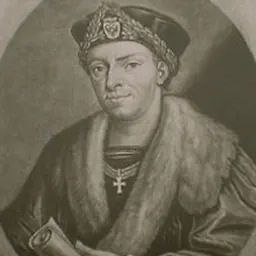
Lived 1477 – 1537 (aged 59–60). Lorenzo Leonbruno was a painter, engineer and architect.
Worcester Art Museum
Lorenzo Leonbruno (10 March 1489 – 1537), also known as Lorenzo de Leombeni, was an Italian painter during the early Renaissance period. He was born in Mantua (Mantova), an Italian commune in Lombardy, Italy. Leonbruno is most well known for being commissioned by the court of Francesco Gonzaga, Marquis of Mantua, and his wife Isabella d'Este. The patronage continued with their eldest son Federico II Gonzaga, who was the fifth Marquis of Mantua. Leonbruno was the court painter for the Gonzaga family from 1506–24.
Leonbruno's most significant artistic commission was his decoration of the Camera Grande in the Gonzaga palace in Mantua, which was completed in 1523 for his patron Isabella d'Este.
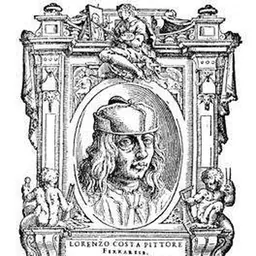
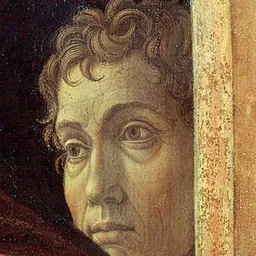
Biography Lorenzo Leonbruno was adopted by the Mantuan court painter Giovanni Luca de' Liombini, and was raised as Liombini's own son. Although there remains little extant documentation on his early life and artistic training, some of Leonbruno's early training is attributed to the workshop of Andrea Mantegna, who was a highly distinguished court painter for Lodovico Gonzaga and the Gonzaga family. Mantegna painted frescoes and portraits for the Gonzaga court in their palace at Mantua in the mid-late 15th century, as well as some interior paintings of the Palazzo di San Sebastiano. Leonbruno's training with Andrea Mantegna ended with Mantegna's death in 1506. After Mantegna's death, the Gongaza's selected several artists from his workshop to replace him as court artists, among them Lorenzo Costa the Elder, whom Leonbruno would train under, and later, Lorenzo Leonbruno. Lorenzo Leonbruno. 1520. Camera Grande: Ceiling Fresco of Isabella d'Este's Widow Apartment, Corte Vecchia, in the Ducal Palace in Mantua. As a young artist, Leonbruno travelled around major artistic cities in Renaissance Italy; mainly Florence (1504-1506), Venice (1511), and Rome (1521). In 1504, Leonbruno was taken under the care of Isabella d'Este, who was one of Liombini and Lorenzo Costa the Elder's patrons. During the short period from 1504-1506, he was sent to Florence on d'Este's recommendation to work in the workshop of Pietro Perugino, since he was a young man and in the early stages of his artistic career.
In 1512, Leonbruno returned to Mantua under the supervision and commission of Lorenzo Costa the Elder. He was assigned the task of painting interior rooms in the Palazzo di San Sebastiano; the favorite residence of Francesco II Gonzaga. For this project, Leonbruno worked alongside another Mantuan artist, Dosso Dossi.
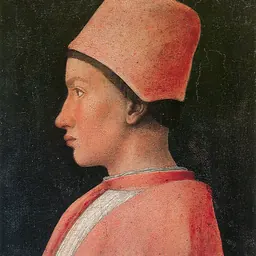
In 1521, Leonbruno was sent to Rome by Federico II Gonzaga-the eldest son of Isabella d'Este- to study the works of Raphael and Michelangelo. Federico ordered the ambassador Baldassare Castiglione to look after Leonbruno during his visit. However, Castiglione held Raphael's lead pupil, Giulio Romano, in higher favor. Romano would soon replace Leonbruno as the Mantuan court painter for the Gonzaga family in 1524. As a result, Leonbruno remained in Rome for one month, and then returned to Mantua. Upon his return to Mantua, Leonbruno was commissioned by Federico Gonzaga to redecorate the interior rooms on the ground floor of Castello di San Georgio, one of the ducal palaces of the Gonzaga family. Following the tradition of Mantuan rulers, and after his accession to power in 1519, Federico had relocated to the apartments on the ground floor of Castello di San Georgio. He thus commissioned the court painter Leonbruno to redecorate his suite with his family's heraldry, symbols of power, and the Gonzaga family coat of arms. The others are the Lamentation Over the Dead Christ, and Saint Jerome Contemplating His Crucifix, although the date of creation remains unknown. The work was a large canvas painting depicting Apollo playing music and the nine Muses singing to Francesco II Gonzaga. This work, along with the rest of his wall paintings in the Palazzo di San Sebastiano, have all been destroyed.
Camera Grande della Palazzo Ducale di Mantova In 1520-1522, Leonbruno was commissioned by Isabella d'Este to decorate the interior vaulted ceiling of her apartment in the Corte Vecchia: the room where she lived as a widow after her husband's death in 1519. The fresco features exquisite gold and white stucco which frame thematic scenes from antiquity. It has been said that this work was inspired by Andrea Mantegna's well-known earlier ceiling paintings in the Camera Picta. The work still survives today, and the date of the decorations created by Leonbruno are mentioned in a document dating to 1522.
List of works and current locations Lorenzo Leonbruno. 1515. The Nativity, National Museum of Western Art, Tokyo Amymone (Allegory of Mantua) c. 1495-1505. Oil on canvas. Private Collection. Adoration of the Shepherds 1505. Oil on panel. Worcester Art Museum. Judgement of Midas 1512-1514. Berlin: Staatliche Museen, Gemäldegalerie. Saint Giovanni Evangelista (Saint John the Evangelist) 1515. Porto Ercole: San Paolo della Croce (Church of Saint Paul of the Cross). The Nativity c. 1515. Oil on panel. Tokyo: National Museum of Western Art. Camera Granda or Scalcheria (19th century name). c. 1522-23. Ceiling Fresco. Mantua: Ducal Palace. Nymph Fishing and a Youth Hunting 1522. Fresco Lunette in the Camera Grande. Mantua: Palazzo Ducale. Sleeping Nymph, or Allegory with Mercury and a Nude 1522-1523. Oil on canvas. Florence: Uffizi Gallery. Calumny of Apelles, or Allegory of Fortune 1524-1525. Oil on wood panel. Milan: Pinacoteca di Brera. Saints Peter, Paul, and Anthony of Padua 1530. Mantua: Church of Sant'Apollonia. Allegorical Scene. Date unknown. Oil on canvas. Verona: Castelvecchio Museum. Madonna and Child in Glory with Archangel Michael, Saint John the Evangelist, and Saint Longinus, attributed to Leonbruno. Date unknown. Altarpiece. Mantua: Palazzo Ducale. Saint Jerome. Date Unknown, but associated with his last phase of painting in 1530s. Mantua: Private Collection. Madonna and Child Enthroned with Saint Lawrence, Saint Peter, and Saint Louis of Toulouse c. 1531. Milan: Museo Poldi Pezzoli. Occasionally attributed to Ippolito Costa, the son of Lorenzo Costa the Elder. Cf. for scholarly debate. Lamentation over the Dead Christ c.1533. Mantua: Museo di Palazzo Ducale. Lorenzo Leonbruno. 1522-23. Sleeping Nymph. Uffizi, Florence. Lorenzo Leonbruno. 1524-1525. Allegory of Fortune, Pinacoteca di Brera, Milan
Don’t just read it —
keep it.
Full-length biographies made to live with: read them, listen on the way to work, watch them tonight.
- E-book
- Audio
- Video
Instant download · yours to keep · every purchase keeps this site free
Important facts
People in Lorenzo Leonbruno's life
Named in this biography and alive at the same time



Related people
Same field, nearest in time



Contemporaries
People whose lives overlapped Lorenzo Leonbruno's





Frequently asked questions
Who was Lorenzo Leonbruno?
Italian painter (1480-1537)
When was Lorenzo Leonbruno born?
Lorenzo Leonbruno was born in 1477 in Mantua.
When did Lorenzo Leonbruno die?
Lorenzo Leonbruno died in 1537 in Mantua.
What was Lorenzo Leonbruno's occupation?
Lorenzo Leonbruno was a painter, engineer and architect.
Sources & further reading
· Wikipedia: Lorenzo Leonbruno
Cite this page
APA: Biography.guide. (2026). Lorenzo Leonbruno. https://biography.guide/lorenzo-leonbruno/
MLA: "Lorenzo Leonbruno." Biography.guide, https://biography.guide/lorenzo-leonbruno/.
Chicago: "Lorenzo Leonbruno." Biography.guide. https://biography.guide/lorenzo-leonbruno/.
Data last updated: 2026-09-20 · Spot an error? Report a correction.
Page generated 2026-09-27 05:24 UTC