
About Lorenzo Hatch
Lived 1856 – 1914 (aged 57). Lorenzo Hatch was an American artist.
Lorenzo James Hatch (July 16, 1856 – February 3, 1914) was an American artist best known for his work as a portrait engraver in Washington, D.C., and New York. He worked for the United States Bureau of Engraving and Printing, private bank note printers, and in China, assisting the government with establishing a government bureau of engraving and printing.
Biography Hatch was born in Hartford, New York, and raised in Dorset, Vermont. He studied at the Washington Art Students' Club and with Robert Henri. Early in his career, he found his talent for engraving intricate portraits in metals. In 1874, the head of the United States Bureau of Engraving and Printing admired Hatch's portrait of George Washington on copper and hired him. During his time in Washington, D.C., Hatch spent his nights studying drawing and watercolor painting. However, his talent to engrave vignettes of presidents and other famous figures proved more impressive. In 1888, Hatch moved to Chicago to work for a private bank note company. There, he met Grace Harrison of California. They were married and had one son, Harrison in 1902. After taking a job in New York City with another bank note company, Hatch solidified his reputation in the field.
The portraits of Ulysses S. Grant and Philip Sheridan on the reverse of the 1896 US five-dollar bill (Electricity as the Dominant Force in the World) were engraved by Lorenzo Hatch. The reverse of the 1896 two-dollar silver certificate (Science presenting steam and electricity to Commerce and Manufacture) was designed by Thomas Morris. The two portraits of Samuel Morse and Robert Fulton were engraved by Lorenzo Hatch.
Around 1908, the Chinese government invited Hatch to establish a Bureau of Engraving and Printing modeled after that of the United States. He accepted a six-year contract to oversee the building of the bureau and train the Chinese to run the office. With his wife, their son, and sister-in-law Effie Harrision, Lorenzo moved to Peking. During his time in China, Lorenzo Hatch succeeded in building the foundations for a modern printing bureau. However, the Xinhai Revolution in China between 1911 and 1912 hindered completion. He described his experiences, perceptions, and insecurities of being in China to his family and friends through letters. Before his contract ended, Hatch died on February 3, 1914. His body was returned to Dorset, Vermont, and is buried in Maple Hill Cemetery across from his boyhood home.
Don’t just read it —
keep it.
Full-length biographies made to live with: read them, listen on the way to work, watch them tonight.
- E-book
- Audio
- Video
Instant download · yours to keep · every purchase keeps this site free
Important facts
People in Lorenzo Hatch's life
Named in this biography and alive at the same time
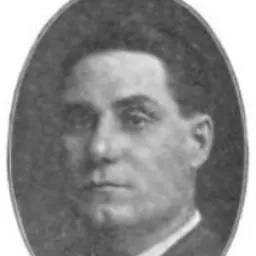
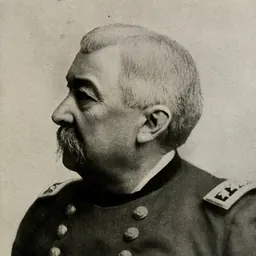
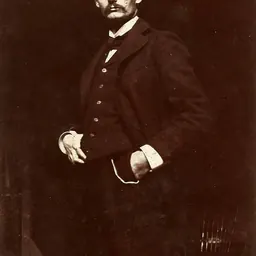


Related people
Same field, nearest in time
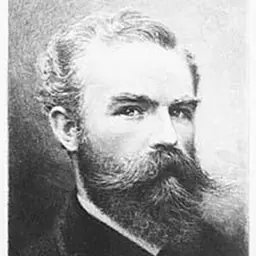




Contemporaries
People whose lives overlapped Lorenzo Hatch's



Frequently asked questions
Who was Lorenzo Hatch?
American artist
When was Lorenzo Hatch born?
Lorenzo Hatch was born on 16 July 1856.
When did Lorenzo Hatch die?
Lorenzo Hatch died on 3 February 1914.
What was Lorenzo Hatch's occupation?
Lorenzo Hatch was an artist.
What nationality was Lorenzo Hatch?
Lorenzo Hatch was American.
Sources & further reading
Cite this page
APA: Biography.guide. (2026). Lorenzo Hatch. https://biography.guide/lorenzo-hatch/
MLA: "Lorenzo Hatch." Biography.guide, https://biography.guide/lorenzo-hatch/.
Chicago: "Lorenzo Hatch." Biography.guide. https://biography.guide/lorenzo-hatch/.
Data last updated: 2026-09-20 · Spot an error? Report a correction.
Page generated 2026-09-27 05:33 UTC