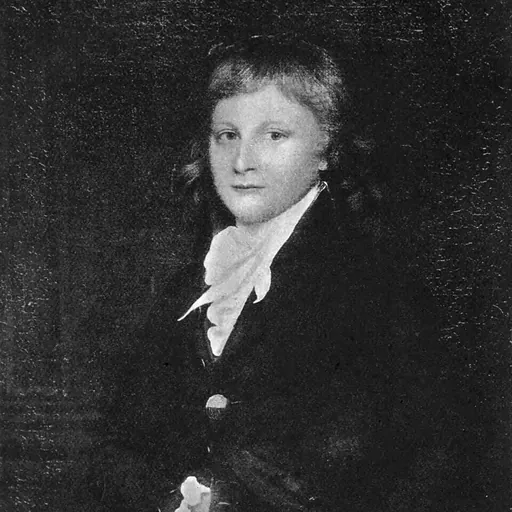
About Lord Frederick Beauclerk
Lived 1773 – 1850 (aged 76). Lord Frederick Beauclerk was a British cricketer.
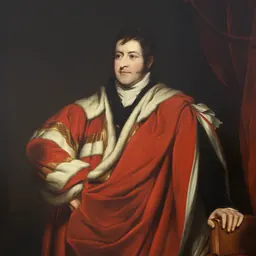
The Revd Lord Frederick de Vere Beauclerk (8 May 1773 – 22 April 1850), a 19th-century aristocratic Anglican priest, was an outstanding but controversial English cricketer, the leading "amateur" player of the Napoleonic era.
Beauclerk served as President of Marylebone Cricket Club (MCC) for 1826–27, after playing cricket for 35 years from 1791 to 1825.
Early life and background Lord Frederick Beauclerk was born in London on 8 May 1773, the fourth son of Aubrey, 5th Duke of St Albans, and his wife Lady Catherine Ponsonby, elder daughter of William, 2nd Earl of Bessborough, by his wife Lady Caroline Cavendish.
After Eton College, Beauclerk went to Trinity College, Cambridge in 1790 aged 17, graduating Master of Arts in 1795. He was later awarded the degree of Doctor of Divinity (Cantab) in 1824.
Ecclesiastical career In common with other younger sons of the nobility, Beauclerk entered into holy orders, being ordained deacon in 1795 and priest in 1797.
He served as Curate of St Bartholomew's Church at Groton, Suffolk, from 1795 to 1797. Baroness Dacre appointed him Vicar of St Peter & St Paul's Church at Kimpton, Hertfordshire, in 1797. In 1827 he was presented to the parish living of St Mary's Church, Redbourn, and then to St Michael's Church, St Albans in 1828.
However, Lord Frederick Beauclerk "never allowed his clerical duties to interfere materially with the claims of cricket"
Cricket career Beauclerk was a right-handed batsman and slow right under-arm bowler. Recognised as an all-rounder, Beauclerk's important debut was for MCC v Gentlemen of Kent at Lord's Old Ground on 2 & 3 June 1791 "now but 18 years of age".
Beauclerk hit 170 playing for Homerton against Montpelier Cricket Club in 1807, a match not widely recognised as having important status. His score set a record for the highest individual innings in all forms of cricket lasting until 1820 when it was beaten by William Ward, who scored 278.
In 1810, Beauclerk and Thomas Howard were due to play George Osbaldeston and William Lambert in a lucrative single wicket match. Squire Osbaldeston was taken ill just before the match and Beauclerk flatly refused to postpone it, exclaiming: "Play or Pay"!
The humiliated and vindictive Beauclerk would have his revenge on Osbaldeston and Lambert in years to come but first he used his influence at MCC to amend the Laws of Cricket with wide balls being banned, for the first time, in 1811.
In 1817, Beauclerk played in a highly controversial match at Nottingham where he captained an England team while Osbaldeston and Lambert were given men for Nottingham Cricket Club. Accusations of match-fixing were made by both teams and Beauclerk was able to produce witnesses who implicated Lambert. As a result, MCC banned Lambert from ever playing again at Lord's Cricket Ground. Osbaldeston's turn came in 1818 after he too lost his temper when beaten at single wicket by George Brown of the Sussex county team. Osbaldeston was so vexed as to resign his MCC membership; later repenting and requesting to be reinstated, Beauclerk refused his application.
Beauclerk served as President of Marylebone Cricket Club in 1826, continuing to play for MCC in minor matches while in office. A "persistent symbol of insensitive autocracy long after his retirement", Beauclerk was invariably accompanied by his "nasty, yapping dog" whereas the rule for other MCC members was: "No dogs allowed".
Style and technique Beauclerk was one of the best single wicket cricket players of the 19th century.
Although his batting style was described as scientific, Beauclerk was also impulsive as "he sometimes lost his wicket by trying to cut straight balls".
Beauclerk was also an astute tactician and it has been recorded that he carefully studied opposing batsmen and had the ability to quickly understand their strengths and weaknesses so as to set his field accordingly. He once threw his hat down on the pitch in frustration at his inability to dismiss the obdurate batsman Tom Walker, known as "Old Everlasting".
Personality Beauclerk became renowned as one of the most controversial figures in cricket history. His competitive approach to the game was well summarised in a verse written by a contemporary:
Beauclerk has been described as "an unmitigated scoundrel". Sadly, there is no record of how many watches Beauclerk may have lost in such fashion.
When Beauclerk died in 1850, his unpopularity was such that The Times did not publish his obituary.
Beauclerk inherited the lordship of the manor and patronage of the advowson of Winchfield, Hampshire, as well as owning a London townhouse at 68 Grosvenor Street in Mayfair, where he died aged 76 on 22 April 1850. by his widow.
Don’t just read it —
keep it.
Full-length biographies made to live with: read them, listen on the way to work, watch them tonight.
- E-book
- Audio
- Video
Instant download · yours to keep · every purchase keeps this site free
Important facts
People in Lord Frederick Beauclerk's life
Named in this biography and alive at the same time

Related people
Same field, nearest in time


Contemporaries
People whose lives overlapped Lord Frederick Beauclerk's





Frequently asked questions
Who was Lord Frederick Beauclerk?
cricketer (1773-1850)
When was Lord Frederick Beauclerk born?
Lord Frederick Beauclerk was born on 8 May 1773 in London.
When did Lord Frederick Beauclerk die?
Lord Frederick Beauclerk died on 22 April 1850 in Westminster.
What was Lord Frederick Beauclerk's occupation?
Lord Frederick Beauclerk was a cricketer.
What nationality was Lord Frederick Beauclerk?
Lord Frederick Beauclerk was British.
Sources & further reading
· Wikipedia: Lord Frederick Beauclerk
· DBpedia: Lord Frederick Beauclerk
Cite this page
APA: Biography.guide. (2026). Lord Frederick Beauclerk. https://biography.guide/lord-frederick-beauclerk/
MLA: "Lord Frederick Beauclerk." Biography.guide, https://biography.guide/lord-frederick-beauclerk/.
Chicago: "Lord Frederick Beauclerk." Biography.guide. https://biography.guide/lord-frederick-beauclerk/.
Data last updated: 2026-09-20 · Spot an error? Report a correction.
Page generated 2026-09-27 05:09 UTC