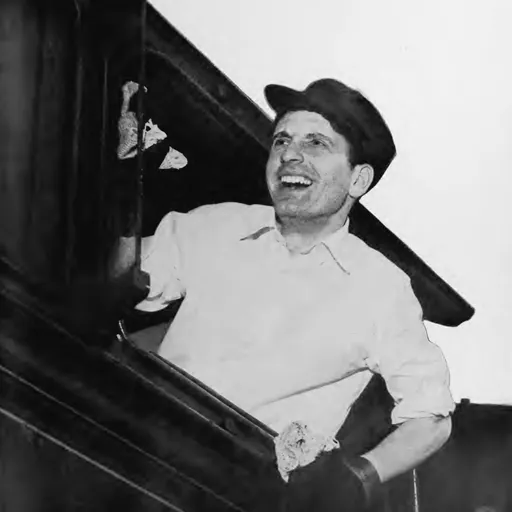
About Lonnie Donegan
Lived 1931 – 2002 (aged 71). Lonnie Donegan was a British singer, banjoist, guitarist, jazz musician, songwriter and composer.
Anthony James "Lonnie" Donegan (29 April 1931 – 3 November 2002) was a British skiffle singer, songwriter and musician, referred to as the "King of Skiffle", who influenced 1960s British pop and rock musicians. Born in Scotland and brought up in England, Donegan began his career in the British trad jazz revival, but transitioned to skiffle in the mid-1950s, rising to prominence with a hit recording of the American folk song "Rock Island Line", which helped spur the broader UK skiffle movement.
Donegan had 31 UK top-30 hit singles, 24 were successive hits and three were number one. He was the first British male singer with two US top-10 hits. He was the son of an Irish mother (Mary Josephine Deighan) and a Scots father (Peter John Donegan), a professional violinist who had played with the Scottish National Orchestra. In 1933, when Donegan was aged two, the family moved to East Ham in Essex. Donegan was evacuated to Cheshire to escape the Blitz in the Second World War and attended St Ambrose College in Hale Barns. He lived for a while on Chiswick Mall in Middlesex.
Trad jazz As a child growing up in the early 1940s, Donegan listened mostly to swing jazz and vocal acts, and became interested in the guitar.
Donegan first played in a major band after Chris Barber heard that he was a good banjo player, and, on a train, asked him to audition. Donegan had never played the banjo, but he bought one for the audition and succeeded more on personality than talent.
In 1953, cornetist Ken Colyer was imprisoned in New Orleans for a visa problem. He returned to Britain and joined Chris Barber's band. They changed the name to Ken Colyer's Jazzmen and made their first public appearance on 11 April 1953 in Copenhagen. The following day, Chris Albertson recorded Ken Colyer's Jazzmen and the Monty Sunshine Trio—Sunshine, Barber, and Donegan—for Storyville Records. These were amongst Donegan's first commercial recordings.
Skiffle While in Ken Colyer's Jazzmen with Chris Barber, Donegan sang and played guitar and banjo in their Dixieland set. He began playing with two other band members during the intervals, to provide what posters called a "skiffle" break, a name suggested by Ken Colyer's brother, Bill, after the Dan Burley Skiffle Group of the 1930s.
His next single for Decca, "Diggin' My Potatoes", was recorded at a concert at the Royal Festival Hall on 30 October 1954.
Donegan went on to successes such as "Cumberland Gap" and "Does Your Chewing Gum Lose Its Flavour (On the Bedpost Overnight?)", During his three years in the role there, he met actress Jill Westlake, who played the title role. The couple announced their engagement in 1964 and later married. Donegan reprised his role as Buttons in Glasgow's Alhambra Theatre in 1966 - his first Scottish season. The Ugly Sisters were played by Stanley Baxter and Ronnie Corbett
Later career Donegan recorded sporadically during the 1960s, including sessions at Hickory Records in Nashville with Charlie McCoy, Floyd Cramer, and the Jordanaires. After 1964, he was a record producer for most of the decade at Pye Records. Justin Hayward was one of the artists with whom he worked. with his third wife, Sharon, whom he married in 1977.
His son Peter Donegan started touring as his father's pianist when he was 18. In 2019, Peter was a contestant on The Voice UK, where he sang "Bless the Broken Road" for his blind audition. After Tom Jones turned his chair for Peter, they duetted the song "I'll Never Fall in Love Again", which Lonnie Donegan wrote, and Jones released in 1967.
Donegan had cardiac problems since the 1970s, and suffered several heart attacks. He died on 3 November 2002, aged 71, after having a heart attack in Market Deeping, Lincolnshire midway through a UK tour. He was due to perform at a memorial concert for George Harrison with the Rolling Stones.
Legacy Mark Knopfler released a tribute to Lonnie Donegan titled "Donegan's Gone" on his 2004 album, Shangri-La, and said he was one of his greatest influences. Donegan's music formed a musical starring his two sons. Lonnie D – The Musical took its name from the Chas & Dave tribute song that started the show. Subsequently, Peter Donegan formed a band to perform his father's material, and has since linked with his father's band from the last 30 years with newcomer Eddie Masters on bass. They made an album together in 2009 titled Here We Go Again. Lonnie Donegan's eldest son, Anthony, also formed his own band, as Lonnie Donegan Jr, who also performed "World Cup Willie" for the 2010 FIFA World Cup in South Africa.
On his album A Beach Full of Shells, Al Stewart paid tribute to Donegan in the song "Katherine of Oregon". In "Class of '58", he describes a British entertainer who is either Donegan or a composite including him. In a 2023 video interview with Steve Houk, Stewart described "Rock Island Line" as a record "that completely changed the complexion of English society, and changed my life and everybody else's".
Peter Sellers recorded Puttin' on the Smile featuring "Lenny Goonigan", who travels to the "Deep South" of Brighton and finds an "obscure folk song hidden at the top of the American hit parade", re-records it and reaches number one in the UK.
David Letterman pretended to try to remember Jimmy Fallon's name during the Tonight Show conflict between Jay Leno and Conan O'Brien, calling Fallon "Lonnie Donegan".
In the 2019 movie Judy, actor John Dagleish portrays Lonnie Donegan, who replaces an ill Judy Garland. He is shown in the (entirely fictional) final scene generously allowing her to make one last appearance on stage.
Quotations "I'm trying to sing acceptable folk music. I want to widen the audience beyond the artsy-craftsy crowd and the pseudo intellectuals–but without distorting the music itself". NME – June 1956. "In Britain, we were separated from our folk music tradition centuries ago and were imbued with the idea that music was for the upper classes. You had to be very clever to play music. When I came along with the old three chords, people began to think that if I could do it, so could they. It was the reintroduction of the folk music bridge which did that". – Interview, 2002. "He was the first person we had heard of from Britain to get to the coveted No. 1 in the charts, and we studied his records avidly. We all bought guitars to be in a skiffle group. He was the man". – Paul McCartney. "He really was at the very cornerstone of English blues and rock". – Brian May. "Remember, Lonnie Donegan started it for you". – Jack White's acceptance speech at the Brit Awards. "You know in my little span of life I've come across such a sea of bigotries and prejudices. I get so fed up with it now. I feel I have to do something about it". – BBC Panorama.
Discography
Lonnie Donegan Showcase (1956) Lonnie (1958) Lonnie Rides Again (1959) Sing Hallelujah (December 1962) The Lonnie Donegan Folk Album (1965) Lonniepops – Lonnie Donegan Today (1970) Lonnie Donegan Meets Leinemann (1974) Country Roads (1976) Puttin' on the Style (1978) Sundown (1978) Muleskinner Blues (1999)
Don’t just read it —
keep it.
Full-length biographies made to live with: read them, listen on the way to work, watch them tonight.
- E-book
- Audio
- Video
Instant download · yours to keep · every purchase keeps this site free
Important facts
People in Lonnie Donegan's life
Named in this biography and alive at the same time

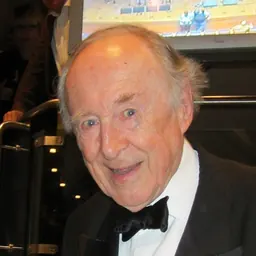

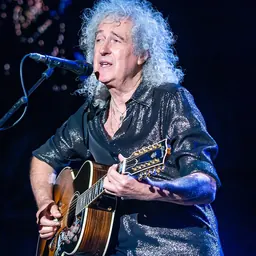
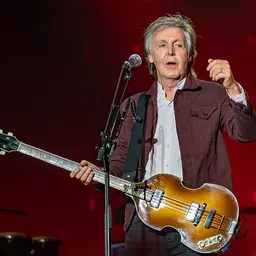
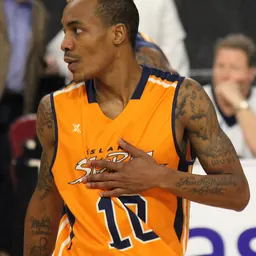

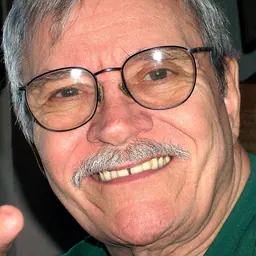
Related people
Same field, nearest in time


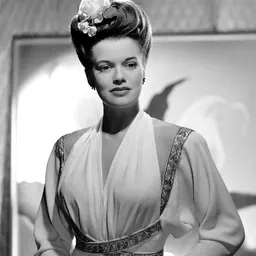



Contemporaries
People whose lives overlapped Lonnie Donegan's
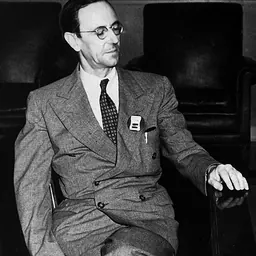

Frequently asked questions
Who was Lonnie Donegan?
Scottish-born skiffle musician (1931–2002)
When was Lonnie Donegan born?
Lonnie Donegan was born on 29 April 1931 in Glasgow.
When did Lonnie Donegan die?
Lonnie Donegan died on 3 November 2002 in Peterborough.
What was Lonnie Donegan's occupation?
Lonnie Donegan was a singer, banjoist, guitarist, jazz musician, songwriter and composer.
What nationality was Lonnie Donegan?
Lonnie Donegan was British.
Sources & further reading
Cite this page
APA: Biography.guide. (2026). Lonnie Donegan. https://biography.guide/lonnie-donegan/
MLA: "Lonnie Donegan." Biography.guide, https://biography.guide/lonnie-donegan/.
Chicago: "Lonnie Donegan." Biography.guide. https://biography.guide/lonnie-donegan/.
Data last updated: 2026-09-22 · Spot an error? Report a correction.
Portrait: Wikimedia Commons · author & licence
Page generated 2026-09-27 05:03 UTC