
About Lon Warneke
Lived 1909 – 1976 (aged 67). Lon Warneke was an American baseball player and politician.
Lonnie Warneke ( ; March 28, 1909 – June 23, 1976), nicknamed "the Arkansas Hummingbird", was an American Major League Baseball player, Major League umpire, county judge, and businessman from Montgomery County, Arkansas, whose career won-loss record as a pitcher for the Chicago Cubs (1930–36, 1942–43, 1945) and St. Louis Cardinals (1937–42) was 192–121.
Warneke pitched for the National League in the first Major League Baseball All-Star Game in 1933, hitting the first triple and scoring the first National League run in All-Star game history. He pitched in two other All-Star Games (1934, 1936) and was also selected in 1939 and 1941.
Warneke pitched in two World Series for the Cubs (1932, 1935), compiling a record of 2–1, with a 2.63 earned run average (ERA). He pitched a no-hitter for the Cardinals on August 30, 1941; opened the 1934 season with back to back one-hitters (April 17 and 22); and set a Major League Baseball fielding record for pitchers (since eclipsed) of 227 consecutive chances without an error, covering 163 games. After retiring as a player in 1945, Warneke was an umpire in the Pacific Coast League for three years and then in the National League from 1949 to 1955. Warneke is the only person who has both played and umpired in both an All-Star Game and a World Series.
Early years Lonnie Warneke, which was his baptismal name, was born March 28, 1909, the fourth of five children to Louis W. ("Luke") Warneke and Martha Belle Scott Warneke in Owley, Arkansas, six miles south of Mount Ida, the county seat of Montgomery County. Mount Ida had a population of 298 in 1920 and 512 in 1930. Luke Warneke (who stood ) had homesteaded 160 acres and was a successful farmer in the farming community of Owley, which consisted of fifteen families. Montgomery County was one of the most rural and sparsely populated counties of Arkansas; by 1910 its population had peaked at 12,455. In his final year he was pressed into service as a relief pitcher: Warneke faced a semi-professional team and struck out five of six batters he faced. Warneke completed the year with another team in the Cotton States League, the Alexandria Reds, a team affiliated with Shreveport of the Texas League. One of Warneke's teammates on Alexandria was Ray Prim, with whom he would pitch for the Cubs in 1943 and 1945. As a converted pitcher in his first professional season, Warneke posted a 1928 combined record for Laurel and Alexandria of 6 wins, 14 losses, with a 5.32 ERA in 176 innings pitched.
Warneke returned to Alexandria for the 1929 season and posted a 16–10 record, with a 3.09 ERA in 245 innings pitched. Alexandria finished first under manager Pete Kilduff. Warneke's success attracted the Chicago Cubs, that year's National League pennant winner. On August 23, just before the Cotton States season closed, the Associated Press carried a story announcing that Warneke had been sold to the Cubs "for $10,000 or more", the highest price ever paid for a Cotton States League player.
Warneke made the regular season roster for the Cubs, although he appeared in only one game before being assigned to the Cubs Class-AA affiliate Reading Keystones on May 23. A week later Warneke pitched a complete game 6–2 victory over Newark, allowing eight hits and striking out five.
Warneke started three more games in 1931, two of them complete games. For the year, Warneke finished 2–4 with a 3.22 ERA in twenty games, including seven starts. In innings pitched he allowed 67 hits and 37 walks while striking out 27. The Cubs ended the year 84–70 in third place, 17 games behind the repeat league champion Cardinals.
Between 1903 and 1942 the Cubs and Chicago White Sox would almost annually face off in a postseason "City Series" when neither team was playing in the World Series. The series was officially sanctioned by Major League Baseball beginning in 1905. Although official rules and league umpires were used, results and statistics, just as those for the World Series, were not added to regular season totals. Other such "city series" were played elsewhere, such as in Boston, Philadelphia, New York, and Ohio. The 1931 Chicago City Series was played on seven consecutive days from Wednesday, September 30 to Tuesday, October 6. Warneke played in Game 1 of the 1931 Chicago City Series, in which 43-year-old Urban (Red) Faber of the White Sox shut out the Cubs 9–0 at Wrigley Field before a crowd of 15,000. Warneke came on in the seventh inning, faced six batters, allowed one hit and one walk, no runs.
After the 1931 season, Warneke returned home to the family farm in Owley and invested part of his summer pay in 200 feeder cattle at $2.00 a head. Soon after fattening his herd, the cattle market bottomed out. Warneke remarked that he would "keep 'em as pets."
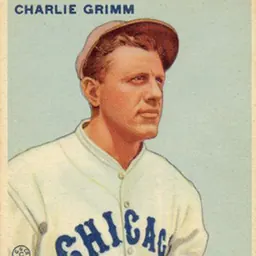
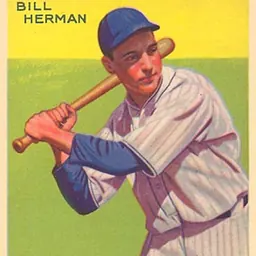
1932: Breakout season In 1932, Cubs manager, Rogers Hornsby credited veteran backup catcher Zack Taylor with helping correct a flaw in Warneke's pitching delivery. Instead of looking at the plate when he threw, he looked down at his feet. Taylor corrected the error and Warneke gained more control over his blazing fastball and hard-breaking curveball. Warneke rose to the top of a pitching staff that included Guy Bush (19–11), Charlie Root (15–10), and Pat Malone, another 15-game winner. Offensive stars included Gabby Hartnett, Charlie Grimm, Riggs Stephenson, Billy Herman.
Warneke opened the season with five straight complete game victories, helping the Cubs to a 17–6 first-place start to the season. From mid-June to late July, Warneke ran off a nine-game winning streak, On August 4, The Sporting News reported on its front page: "Warneke...is the sensation of the outfit, and there is as yet no indication that he is going to slow down." That same day first baseman Charlie Grimm took over as the Cubs' manager, replacing player-manager Rogers Hornsby, whose record was 53–46; the Cubs were in second place, five games behind the Pittsburgh Pirates. On August 11, Warneke started, but did not win, a 3–2 extra inning victory in which the Cubs leapfrogged over the Pirates into first place, where they remained for the last 47 games of the season. Nevertheless, he was the Cubs' most effective starter during the series, throwing Chicago's only complete game, in which he scattered ten hits, all singles. Warneke suffered early game jitters, walking the first two batters he faced (both scored) before striking out Babe Ruth. Warneke allowed two more runs in the third and another in the fifth. He retired the side in the sixth, seventh, and eighth innings, facing the minimum nine batters. He struck out seven Yankees in the game and eight in the Series, the most by any Cubs' starter and twice as many as any other Cubs' pitcher. On just two days rest, with the Cubs down three games to none, Warneke was called upon to relieve in the first inning of Game 4; he departed in the fourth inning with the Cubs ahead.
1932 Accolades Major American newspapers of the day called Warneke the outstanding National League pitcher of the 1932 season and The Sporting News (which had hailed Warneke as "a great pitcher, such as pops up once in a lifetime") honors foreshadowing the then non-existent Cy Young Award.
St. Louis Cardinals (1937–42)
In October 1936 the Cubs traded Warneke to the St. Louis Cardinals for infielder Ripper Collins and pitcher Roy Parmelee. The trade was not popular with many Cub fans and may have cost the Cubs the pennant. Cub's Gabby Hartnett, player-manager from 1938 to 1940, said "That trade hurt us. It probably cost us the pennant in '37."
Chicago Cubs (1942–43 and 1945) On July 8, 1942, two days after the All-Star Game, the Chicago Cubs purchased Warneke's contract for $7,500. Through the remainder of the 1942 season, Warneke had 15 appearances (12 of them starts) with the Cubs, compiling a 5–7 record. In 1943, he made 21 appearances (10 of them starts), and had a 4–5 record.
Warneke was notified that he passed his military pre-induction physical on March 28, 1944, his 35th birthday. He had previously announced that he was ready "to toss hand grenades at Hitler and Hirohito." As a civilian director, Warneke was put in charge of recreation at the Shumaker Naval Ammunition Depot near Camden, Arkansas, where he organized, managed, and pitched in a baseball league comprising teams from nearby cities, colleges, and military facilities. Many civilians worked in supporting positions during World War II, and Warneke's role was consistent with President Roosevelt's 1942 statement that baseball was a morale booster. but pitched in only nine games in his final season as a player, compiling an 0–1 record. Although the Cubs won the pennant, Warneke did not appear in the 1945 World Series.
Umpiring career
Warneke first umpired a major league game in 1940, under unusual circumstances. A game on April 23 between the Cincinnati Reds and St. Louis Cardinals had been postponed, and when it was about to be played at Crosley Field on May 13, it was found that no umpires had been assigned by the National League. Umpire Larry Goetz, who lived in Cincinnati, was summoned to the ballpark and served as home plate umpire. Reds' coach Jimmie Wilson umpired at first base, and Warneke umpired at third base. The game ended as an 8–8 tie after 14 innings, called due to darkness.
After his playing career ended, Warneke umpired in the Pacific Coast League for the 1946, 1947, and 1948 seasons. In 1949, he became a National League umpire, working that season on a three-man umpiring crew with Jocko Conlan and Bill Stewart. Warneke resigned as an umpire after the 1955 season.
Later life and death Warneke was a businessman in Hot Springs, Arkansas, before serving as County Judge of Garland County, Arkansas, from 1963 to 1972. Warneke was elected to the Arkansas Sports Hall of Fame on January 19, 1961, and still leads all Arkansas players in many Major League pitching categories including wins, games started, innings pitched, complete games, and shutouts. Warneke died of a heart attack on June 23, 1976, at his home in Hot Springs; he is buried in Owley Cemetery in Montgomery County. On July 21, 2011, Warneke was posthumously inducted into the Reading Baseball Hall of Fame.
Don’t just read it —
keep it.
Full-length biographies made to live with: read them, listen on the way to work, watch them tonight.
- E-book
- Audio
- Video
Instant download · yours to keep · every purchase keeps this site free
Important facts
People in Lon Warneke's life
Named in this biography and alive at the same time





Related people
Same field, nearest in time

Contemporaries
People whose lives overlapped Lon Warneke's



Frequently asked questions
Who was Lon Warneke?
American baseball player
When was Lon Warneke born?
Lon Warneke was born on 28 March 1909 in Mount Ida.
When did Lon Warneke die?
Lon Warneke died on 23 June 1976 in Hot Springs.
What was Lon Warneke's occupation?
Lon Warneke was a baseball player and politician.
What nationality was Lon Warneke?
Lon Warneke was American.
Sources & further reading
Cite this page
APA: Biography.guide. (2026). Lon Warneke. https://biography.guide/lon-warneke/
MLA: "Lon Warneke." Biography.guide, https://biography.guide/lon-warneke/.
Chicago: "Lon Warneke." Biography.guide. https://biography.guide/lon-warneke/.
Data last updated: 2026-09-20 · Spot an error? Report a correction.
Page generated 2026-09-27 05:23 UTC