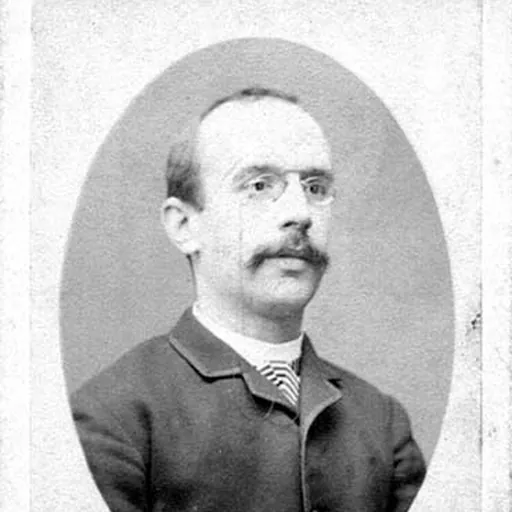
About Lodovico Mortara
Lived 1855 – 1937 (aged 81–82). Lodovico Mortara was an Italian lawyer, politician, magistrate and jurist.
Lodovico Mortara (16 April 1855 – 1 January 1937) was an Italian jurist, magistrate, and politician. He served as Minister of Justice with the first Nitti government.
Early life and academic career Born in Mantua into a Jewish family as an Austrian citizen, Mortara was the son of Marco Mortara (Mordechai), the senior rabbi of the community, and his wife Sara Castelfranco. After graduating in law from the University of Modena in 1874, he practised as a lawyer before embarking on an academic career. Beginning as a freelance lecturer in civil procedure in Bologna in 1882, he obtained the position of extraordinary professor in the Faculty of Law of the University of Pisa in 1886 soon after he published, at the age of thirty, a pamphlet on the politics of law: The Modern State and Justice. He became a full professor there in 1888.
His academic positions prompted him to write a number of teaching works, which went through several editions. These included the two volumes of his Manual of Civil Procedure (1887–1888) and both the Principles of Civil Procedure and the Institutions of the Judicial System (1890). In 1892, together with Carlo Francesco Gabba, he took over the direction of the magazine Giurisprudenza italiana, which he continued for forty-five years. In 1898, he moved to the Faculty of Law of Naples to take up the chair of civil procedure; in the same year he began publishing, in instalments, his commentary on the code and on the laws of civil procedure. Completed in 1909, the work extended to five volumes and was republished several times.
Judicial career In 1902, at the peak of his academic career, Mortara decided to leave academia to become a magistrate. He was general prosecutor in the Court of Appeal of Cagliari in 1905, first president in the Court of Appeal of Ancona in 1906, general prosecutor of the Court of Cassation of Palermo in 1909. and then of the Court of Cassation of Florence and that of Rome in 1911.
Finally, he became First President of the Court of Cassation of Rome, In any event, as proof of Mussolini’s hostility, “only a note written by the Prime Minister himself to minister Oviglio was discovered. The directive—for such it was—carries no date, but the date ‘5 June 1923’ is penciled on it, and it states: ‘For Oviglio. Mortara cannot be President of the Unified Court of Cassation.’ Needless to say, the order was carried out.” .
As a magistrate, Mortara dealt with all sorts of controversies; for example, during his presidency of the Court of Appeal of Ancona in 1906, he upheld the right of ten women teachers from Senigallia to be registered on the electoral lists. He thought a lot about the right of women to be included in the political fabric, despite the prejudices of the time. Later on in a 1922 judgement, he affirmed the unconstitutionality of a decree of the Mussolini government. and
the law of 1922, which introduced the injunction into the Italian legal system.
A Freemason, Mortara was a member of the Grand Orient of Italy. In 1920, he became a member of its Supreme Council of the Scottish Rite.
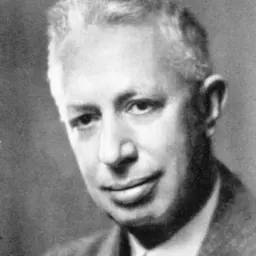
Family life and legacy In 1883, Mortara married Clelia Vivanti, who was his companion for 28 years. They had two sons and three daughters: the eldest son, Giorgio Mortara, became an internationally renowned statistician and economist while one of his daughters, :it:Nella Mortara, was a teacher of experimental physics.
Mortara died in Rome on 31 December 1936. He wanted to be buried in the Jewish cemetery of Mantua, next to his parents and wife, and did not want to be commemorated by the Senate of the Italian fascist regime. No studies in his honour or in his memory were undertaken and his work seemed destined for oblivion until over 30 years after his death in 1968, when Salvatore Satta brought his work to wider attention. In 1997, the Accademia Nazionale dei Lincei dedicated a Lincea day to him.
Major works
(new edition of Principii di procedura civile)
Honours Cavaliere di Gran Croce decorato di Gran Cordone dell'Ordine della Corona d'Italia - ribbon for ordinary uniform Grand Cordon of the Order of the Crown of Italy. Cavaliere di Gran Croce decorato di Gran Cordone dell'Ordine dei Santi Maurizio e Lazzaro - ribbon for ordinary uniform Grand Cordon of the Order of Saints Maurice and Lazarus. Cavaliere dell'Ordine Civile di Savoia - ribbon for ordinary uniform Kinight of the Civil Order of Savoy. Full list Knight of the Order of the Crown of Italy, 25 March 1894. Officer of the Order of the Crown of Italy, 23 January 1896. Commander of the Order of the Crown of Italy, 18 December 1902. Grand Officer of the Order of the Crown of Italy, 29 December 1907. Grand Cordon of the Order of the Crown of Italy, 14 November 1910. Knight of the Order of Order of Saints Maurice and Lazarus, 20 March 1898. Officer of the Order of Order of Saints Maurice and Lazarus, 20 January 1907. Grand Officer of the Order of Saints Maurice and Lazarus, 13 June 1909. Grand Cordon of the Order of Saints Maurice and Lazarus, 27 April 1913. Knight of the Civil Order of Savoy, 8 November 1916.
Don’t just read it —
keep it.
Full-length biographies made to live with: read them, listen on the way to work, watch them tonight.
- E-book
- Audio
- Video
Instant download · yours to keep · every purchase keeps this site free
Important facts
People in Lodovico Mortara's life
Named in this biography and alive at the same time



Related people
Same field, nearest in time


Contemporaries
People whose lives overlapped Lodovico Mortara's




Frequently asked questions
Who was Lodovico Mortara?
Italian lawyer and politician (1855–1937)
When was Lodovico Mortara born?
Lodovico Mortara was born on 16 April 1855 in Mantua.
When did Lodovico Mortara die?
Lodovico Mortara died in 1937 in Rome.
What was Lodovico Mortara's occupation?
Lodovico Mortara was a lawyer, politician, magistrate and jurist.
What nationality was Lodovico Mortara?
Lodovico Mortara was Italian.
Sources & further reading
Cite this page
APA: Biography.guide. (2026). Lodovico Mortara. https://biography.guide/lodovico-mortara/
MLA: "Lodovico Mortara." Biography.guide, https://biography.guide/lodovico-mortara/.
Chicago: "Lodovico Mortara." Biography.guide. https://biography.guide/lodovico-mortara/.
Data last updated: 2026-09-23 · Spot an error? Report a correction.
Portrait: Wikimedia Commons · author & licence
Page generated 2026-09-27 05:08 UTC